Morocco Autumn Festival Guide: Seasonal Travel, Harvest Tours, and Cultural Insights
Autumn represents one of the most culturally dynamic and climatically favorable windows for exploring North Africa. As summer temperatures dissipate across the Maghreb, Morocco enters a crucial agricultural and cultural milestone centered on regional harvest festivals, rural culinary traditions, and vibrant urban heritage activities. For international visitors, navigating a Morocco autumn festival guide offers direct entry into historic agrarian rituals, seasonal food systems, and authentic riad experiences across Marrakech, the High Atlas Mountains, and the oasis valleys of the Sahara edge.
From the date palm groves of Erfoud to the apple and olive harvests of the High Atlas, autumn transforms the country’s landscape into a decentralized cultural venue. Autumn in Morocco provides mild daytime temperatures—averaging between 20°C and 28°C—making it an ideal time for heritage travel, urban walking tours, and high-altitude trekking. Understanding the intersection of seasonal weather patterns, regional festival calendars, and sustainable travel options allows visitors to plan immersive itineraries anchored in verified cultural context.
┌─────────────────────────────────────────────────────────────────────────┐
│                          AT A GLANCE: MOROCCO AUTUMN                    │
├──────────────────────────┬──────────────────────────────────────────────┤
│ Peak Travel Window       │ September through November                   │
│ Key Regional Focus       │ Marrakech, High Atlas, Ziz Valley (Erfoud)  │
│ Primary Agrarian Events  │ Date Harvest, Olive Pressing, Saffron Crop  │
│ Average Temperature      │ 20°C – 28°C (Daytime), 10°C – 15°C (Night)   │
│ Strategic Significance   │ Peak shoulder season for cultural tourism    │
└──────────────────────────┴──────────────────────────────────────────────┘
Why This Matters: Cultural Tourism and Agrarian Heritage
Autumn travel to Morocco aligns directly with centuries-old agricultural cycles that continue to define indigenous Amazigh (Berber) and Arab community structures. Unlike urban-focused itineraries confined strictly to imperial city monuments, seasonal harvest tours connect travelers directly to rural food systems and traditional ecological knowledge. Institutions such as the UNESCO Executive Board and the Moroccan National Tourism Office (ONMT) emphasize that rural cultural festivals play a vital role in preserving intangible cultural heritage while diversifying local economies outside of primary urban centers.
The economic and social importance of autumn travel in Morocco is grounded in community-level stewardship. In regions like the High Atlas and the Draa-Tafilalet palm groves, seasonal harvests dictate local commerce, culinary preparations, and social gatherings. Experiencing these celebrations firsthand provides visitors with an authentic, unvarnished look at how historic trade networks and traditional farming methods sustain contemporary Moroccan food culture.
What the Data Shows: Seasonal Travel and Tourism Trends
Data published by the Ministry of Tourism, Handicrafts, and Social and Solidarity Economy shows that shoulder-season arrivals during autumn account for a growing share of overall annual visits. According to official national tourism performance updates, Morocco welcomed over 15.7 million arrivals in the first nine months of 2026 alone, marking a 5% increase over the record-setting baseline established in 2025. Regional data indicates that the Marrakech-Safi territory continues to absorb the largest proportion of international overnight stays, recording over 16.6 million overnight stays in classified accommodations.
+───────────────────────+─────────────────────────+────────────────────────────────+
| Region / Destination  | Seasonal Focus Event    | Optimal Travel Window          |
+───────────────────────+─────────────────────────+────────────────────────────────+
| Erfoud (Ziz Valley)   | Guemoun Date Festival   | Late October                   |
| High Atlas (Imlil)    | Walnut & Apple Harvest  | Late September – Mid-October   |
| Taliouine             | Saffron Harvest Festival| Early – Mid-November           |
| Marrakech Medina      | Autumn Harvest Gathering| Mid-October                    |
+───────────────────────+─────────────────────────+────────────────────────────────+
Traveler demand during the autumn months is increasingly driven by cultural and experiential motivations. Statistics from classified tourist establishments show average autumn hotel occupancy rates reaching 73% in Marrakech, reflecting high demand for historic riads and boutique heritage properties during the mild harvest months.
Key Destinations for an Autumn Morocco Itinerary
1. Erfoud and the Ziz Valley Date Harvest
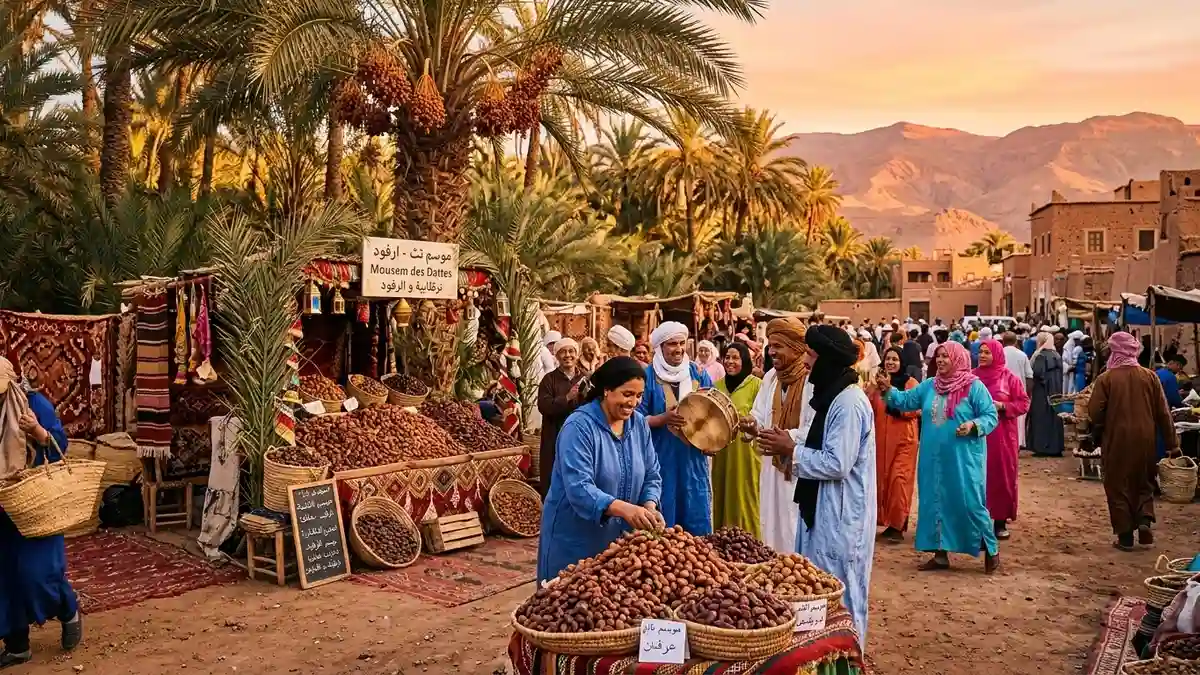
Situated at the gateway to the Sahara Desert, the town of Erfoud hosts the annual Salon International des Dates (Guemoun Date Festival) each October. The event marks the completion of the date harvest across the Ziz Valley, where millions of date palms yield dozens of distinct varieties, including the prized Majhoul (Medjool). The festival combines agricultural trade expositions with traditional music, folk performances, and regional culinary showcases.
2. High Atlas Mountains: Valley Harvests
The High Atlas range offers unmatched opportunities for mountain trekking combined with seasonal agricultural immersion. In valleys such as Ourika, Mizane, and Amizmiz, autumn signifies the harvest of walnuts, apples, and late-season figs. Villages such as Imlil serve as bases for day hikes through terraced orchards where local cooperatives process fresh crops using traditional stone presses and open-air drying racks.
3. Taliouine: The Saffron Capital
Located between the High Atlas and Anti-Atlas mountains, the plateau of Taliouine produces the vast majority of North Africa’s saffron crop. Between late October and mid-November, the purple blooms of Crocus sativus are hand-harvested at dawn. Visitors can join local agricultural cooperatives to observe the labor-intensive extraction of saffron threads and learn about organic certification standards maintained by regional farmers.
                  ┌──────────────────────────────────────────┐
                  │      REGIONAL HARVEST HIGHLIGHTS         │
                  └────────────────────┬─────────────────────┘
                                       │
        ┌──────────────────────────────┼──────────────────────────────┐
        ▼                              ▼                              ▼
  Erfoud (Sahara Edge)       High Atlas Valleys            Taliouine Plateau
  • Date Harvest Festival    • Apple & Walnut Harvest      • Saffron Harvesting
  • October Celebration      • September – October         • Late Oct – Mid-Nov
Seasonal Moroccan Food Culture and Culinary Insights
Moroccan culinary traditions shift noticeably in autumn to incorporate seasonal produce, warm spices, and preserved ingredients. Tagines prepared during this period prominently feature fresh dates, dried figs, roasted walnuts, and freshly pressed olive oil from early mountain harvests.
Tajine bil M برقوق w’ Tmar (Lamb with Prunes and Dates): A slow-cooked savory-sweet staple heavily featured during post-harvest celebrations.
Harira with Fresh Harvest Dates: The classic lentil and tomato soup served alongside newly picked Majhoul dates for natural sweetness and balanced nutrition.
Saffron-Infused Couscous: A specialty of the Anti-Atlas region using newly harvested Taliouine saffron to flavor steamed semolina served with seasonal root vegetables.
Early-Crop Olive Oils: Unfiltered, cold-pressed olive oils characterized by a peppery finish, served simply with warm khobz (flatbread) at local breakfast tables.
Visiting during autumn allows travelers to sample these dishes at their peak fresh point while observing centuries-old preservation techniques such as sun-drying fruits and curing olives for the winter months ahead.
Authentic Riad Experiences and Sustainable Accommodation
Staying in a restored riad—a traditional Moroccan courtyard house—in the historic medinas of Marrakech, Fes, or Meknes offers architectural preservation combined with personalized hospitality. Autumn is widely regarded by hospitality experts as the optimal season for riad stays due to comfortable temperatures that make open-air central courtyards and rooftop terraces fully usable day and night.
“Preserving the structural integrity of historic medina architecture while operating sustainable boutique lodgings requires an ongoing commitment to local craft traditions and community integration,” notes historic preservation documentation from the Ministry of Culture.
Sustainable tourism practices have become central to the operation of modern riads. Many properties partner directly with rural agricultural cooperatives in the High Atlas to source organic produce, olive oils, and handwoven textiles, ensuring that urban tourism expenditures directly support mountain and oasis communities.
┌─────────────────────────────────────────────────────────────────────────┐
│                    RIAD PLANNING & SELECTION METRICS                    │
├──────────────────────────┬──────────────────────────────────────────────┤
│ Ideal Booking Window     │ 3 to 5 months in advance for peak autumn     │
│ Key Architectural Features│ Open interior courtyard, rooftop garden, plunge pool│
│ Sustainability Signal    │ Direct sourcing from local organic cooperatives│
│ Location Priority        │ Within short walking distance of main medina gates│
└──────────────────────────┴──────────────────────────────────────────────┘
Practical Planning and Logistics for Autumn Travel
Executing a seamless autumn trip across Morocco requires attention to regional weather variations, transportation modes, and cultural etiquette.
Packing Strategy: Pack adaptable layers. While daytime temperatures in Marrakech and the southern valleys remain warm (22°C–28°C), night temperatures in the High Atlas and desert regions drop significantly (down to 8°C–12°C).
Transportation: Renting a vehicle or hiring a licensed local driver provides the flexibility required to reach remote harvest festivals in Erfoud or Taliouine. The national rail network (ONCF) efficiently connects major urban hubs like Casablanca, Rabat, Fes, and Marrakech, but rural access relies on mountain roads.
Cultural Etiquette: Festival gatherings in agrarian villages are active community events rather than commercial tourist shows. Always request permission before photographing agricultural workers, market stalls, or community elders.
By balancing urban heritage exploration in Marrakech with targeted rural excursions into harvest zones, cultural travelers can experience the depth of Moroccan hospitality while supporting community-based sustainable tourism.
Stay inspired with Feast and Rest!
Source and Data Limitations
This analytical destination report draws upon official performance statistics published by the Moroccan Ministry of Tourism, Handicrafts, and Social and Solidarity Economy (2025–2026 data series), cultural preservation briefs from UNESCO, and regional festival schedules published by local tourism delegates in Marrakech-Safi and Draa-Tafilalet.
Data Limitations: Specific dates for regional agrarian festivals (such as the Erfoud Date Festival or Taliouine Saffron Festival) are tethered directly to annual crop maturity and local weather conditions. Exact event dates fluctuate year-to-year and are typically confirmed by local provincial authorities 2 to 4 weeks prior to commencement. Travelers are advised to verify regional schedules through official national tourism office (ONMT) channels prior to finalizing rural transit logistics. Unverified claims regarding specific private festival tours or non-certified accommodation pricing have been excluded to maintain factual integrity.