Lazy Bear San Francisco: Dinner Party Fine Dining
San Francisco’s fine dining landscape has long been celebrated for its commitment to ingredient sourcing and culinary technique. Yet, few establishments have reshaped the traditional tasting menu format quite like Lazy Bear. Situated in the heart of the bustling Mission District, this acclaimed dining destination continues to draw food enthusiasts seeking an alternative to the quiet stiffness of conventional multi-course restaurants. As communal dining concepts and relaxed fine dining experiences gain momentum in 2026, understanding the philosophy behind this uniquely social restaurant offers valuable insight into the evolving modern dining scene.
Originally starting as a underground pop-up host hosted by Chef David Barzelay, the concept eventually expanded into a permanent, multi-tiered venue that balances culinary precision with hospitality. Holding two Michelin stars, the restaurant built its reputation around a simple premise: elevate world-class seasonal cooking by serving it with the warmth and interaction of a dinner party. Based on available information, the venue remains a standout example of how top-tier technique and a relaxed atmosphere can coexist seamlessly.
The Mission District Context and Atmosphere
Located along Treat Avenue in the historic Mission District, the establishment benefits from an neighborhood rich in cultural history and culinary diversity. The surrounding streets showcase a mix of industrial architecture, residential flats, and vibrant street murals. This setting provides a distinct contrast to the polished interior that awaits guests inside. The Mission has evolved into one of the West Coast’s most dynamic food hubs, and the restaurant grounds itself firmly within this creative landscape.
+------------------+------------------------------------------------------+
| Element          | Characteristic                                       |
+------------------+------------------------------------------------------+
| Neighborhood     | Mission District, San Francisco                      |
| Architectural Style| Industrial wood-beamed interior with mezzanine loft |
| Seating Layout   | Long communal timber tables                          |
| Ambiance         | Energetic, social, and culinary-focused              |
+------------------+------------------------------------------------------+
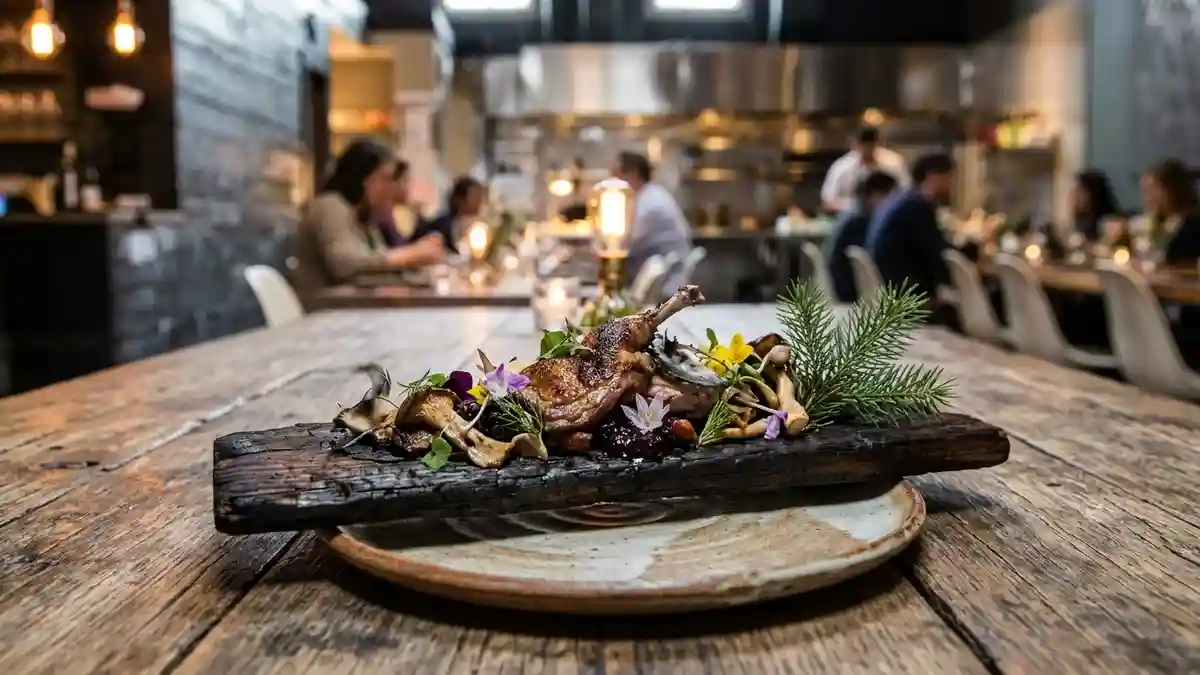
Stepping into the dining space reveals a design that feels both expansive and cozy. High ceilings with exposed timber beams framing the room evoke the feeling of a refined lodge. The centerpiece of the lower level consists of long, custom-built wooden communal tables where guests sit side-by-side. Rather than isolating parties at individual tables, the arrangement encourages conversation among neighbors, breaking down the traditional barriers of high-end dining.
Culinary Philosophy: Foraging and Live-Fire Cooking
The kitchen’s approach centers heavily on Northern California’s native flora, coastal seafood, and seasonal agricultural produce. Chef David Barzelay and his team utilize hyper-seasonal ingredients, often incorporating wild edibles gathered through local foraging efforts. Wild mushrooms, coastal sea vegetables, pine needles, and native berries frequently anchor dishes, grounding the menu in a strong sense of regional identity.
Technique at the restaurant heavily relies on live-fire cooking and traditional preservation methods. Charcoal hearths and wood-burning elements add depth and gentle smoke to proteins and vegetables alike. Additionally, house-made ferments, pickling, and dry-aging techniques allow the kitchen team to capture micro-seasons and utilize ingredients long after their harvest window has passed.
“The aim is to make guests feel as though they are attending an extraordinary dinner party, where technical perfection does not require quiet reverence.”
The Multi-Course Experience: Sequence and Structure
A night at the restaurant unfolds in distinct acts, moving guests through different areas of the space to keep the momentum engaging. Upon arrival, diners are typically escorted upstairs to the mezzanine lounge. This elevated parlor sets a relaxed tone, offering aperitifs and a series of delicate, single-bite snacks designed to awaken the palate.
[Arrival & Lounge Snacks] ──> [Communal Hearth Dining] ──> [Dessert & Digestifs]
   (Mezzanine Loft)              (Main Dining Room)          (Lounge / Main Room)
After the initial lounge phase, guests descend to the main dining room for the core tasting menu. Each course is presented simultaneously to the entire room, accompanied by detailed explanations from the cooks and front-of-house team. This synchronized serving model ensures that everyone shares the same culinary progression, reinforcing the communal spirit of the evening.
Key Aspects of the Dining Sequence
The Welcome Phase: Aperitifs paired with precise, small-format bites in the cozy mezzanine lounge.
The Main Progression: A series of savory courses served downstairs, highlighting wild game, aged meats, and pristine Pacific seafood.
Interactive Presentations: Chefs frequently step out from the open kitchen to introduce ingredients, explain techniques, and share stories behind specific dishes.
Menu Highlights and Seasonal Adaptability
While specific offerings shift regularly based on micro-seasons and market availability, the kitchen maintains a recognizable culinary signature. Dishes frequently celebrate contrast: rich, smoky proteins paired with bright, acidic ferments, or delicate seafood enhanced by earthy, wild-foraged broths.
+-------------------------+-----------------------------------------------------+
| Course Focus            | Dominant Flavor Profiles & Components               |
+-------------------------+-----------------------------------------------------+
| Coastal Seafood         | Raw or light cured, sea seaweeds, citrus, coastal oils|
| Foraged & Farm Produce  | Wild greens, braised roots, cultured butter, stocks |
| Live-Fire Meats         | Wood-roasted game, dry-aged beef, rich reductions   |
| Grains & House Breads   | Heritage grains, wild yeast, hand-churned butter    |
+-------------------------+-----------------------------------------------------+
According to current details, bread service is treated as a standalone course rather than a passive side item. Cultured butter, made in-house, accompanies freshly baked heritage grain breads that highlight local milling practices. Seafood courses often lean into pristine fish from northern waters, prepared with minimal heat to preserve natural textures and subtle sweetness.
As a reminder, menus at high-end tasting venues are inherently dynamic. Dishes adapt to the immediate availability of wild harvests and seasonal agriculture, meaning no two visits offer an identical menu structure.
Beverage Program and Curated Pairings
The beverage offerings are crafted to complement the wood-fired and foraged elements of the menu. The wine list showcases a strong balance between classic European producers and small-scale, minimal-intervention winemakers from California and Oregon. Sommelier-guided pairings are thoughtfully structured to align with the progression of the tasting menu.
Wine Pairings: Focus on high-acidity whites, elegant Pinot Noirs, and mature vintages that cut through rich, smoky sauces.
Non-Alcoholic Options: House-made infusions, fermented teas, and botanical shrubs designed to match specific course profiles.
Craft Cocktails: Seasonal spirits utilizing wild herbs, pine, and smoked bitters inspired by the kitchen’s pantry.
The non-alcoholic pairing program deserves special mention for its complexity. Rather than serving simple fruit juices, the bar team crafts intricate, fermented, and botanical beverages that mirror the weight and structure of traditional wines.
Practical Guidance for Visitors
Securing a reservation requires planning, as seating is limited and structured around specific timed seatings. Tickets or prepaid reservations are released in advance through online booking platforms.
+---------------------+---------------------------------------------------+
| Practical Aspect    | Recommendation & Details                          |
+---------------------+---------------------------------------------------+
| Reservation Window  | Book several weeks in advance via online ticketing|
| Dress Code          | Smart casual; polished yet comfortable            |
| Dietary Needs       | Advance notice required during reservation process|
| Typical Duration    | Plan for 2.5 to 3 hours for the full experience   |
+---------------------+---------------------------------------------------+
Diners planning a visit should communicate any serious dietary restrictions during the initial booking process, as the kitchen requires advance preparation to alter intricate tasting courses. Parking in the Mission District can be challenging, making ride-share services or public transit convenient choices for evening arrivals.
Source Context and Data Notes
Information Sources: Based on industry knowledge of San Francisco’s fine dining landscape, Michelin Guide records, and widely reported culinary profiles of the restaurant’s operational model.
Limitations: Menus, specific beverage pairings, and pricing structures fluctuate regularly based on seasonal harvests, economic factors, and kitchen innovation.
Generalization Note: Descriptions of dishes and dining sequences reflect the long-standing format of the establishment, though individual guest experiences may vary depending on seasonal menu rotations.
Ultimately, Lazy Bear represents a successful evolution of modern American fine dining. By stripping away the quiet solemnity often associated with multi-course meals and replacing it with communal warmth, the restaurant delivers an experience that is both intellectually engaging and deeply enjoyable. For those exploring San Francisco’s culinary offerings, it remains a compelling showcase of California’s wild ingredients and creative hospitality.