Sustainable Gastronomy: The Rise of Green Star Restaurants in Britain
The conversation surrounding fine dining across the United Kingdom has shifted decisively from simple luxury to environmental stewardship. Food enthusiasts no longer evaluate a restaurant purely by the technical precision of its sauces or the pedigree of its cellar; increasingly, the provenance of the ingredients and the ecological footprint of the kitchen carry equal weight.
Britain’s culinary scene has embraced this movement with remarkable vigor. Central to this transformation are Green Star restaurants Britain has seen celebrated by the Michelin Guide since the eco-focused award was introduced. Designed to highlight establishments at the forefront of sustainable gastronomy, the Green Star honors kitchens that combine high-level culinary creativity with strict environmental accountability, zero-waste practices, and ethical sourcing.
In 2026, sustainable dining in the UK is no longer a niche subculture or a marketing afterthought. From remote country estates in Cumbria to converted barns in Devon and urban dining rooms in London, British chefs are proving that circular culinary practices elevate flavor rather than compromise it.
The Evolution of Eco-Conscious Dining in the UK
The roots of British sustainable cuisine run deep into regional agricultural traditions, but the contemporary movement represents a radical modernization of those roots. Historically, UK fine dining relied heavily on imported French delicacies and global air-freighted produce. Today, the country’s most visionary chefs operate with a self-imposed geographic restraint, building menus entirely around what can be grown, raised, or foraged within a small radius of their kitchens.
This philosophical pivot requires far more agility than conventional menu planning. Chefs must work directly with smallholders, regenerative farmers, and local fishermen, altering their offerings daily based on crop yields, weather conditions, and seasonal availability. Rather than forcing nature to suit a static menu, these kitchens adapt their cooking to the natural rhythm of the land.
The Michelin Green Star has provided a clear framework for evaluating these efforts. To earn and retain this recognition, restaurants must demonstrate meaningful commitments across multiple operational areas, including direct producer relationships, organic land management, energy efficiency, structural waste reduction, and fair labor practices.
       +-------------------------------------------------------+
       |           MICHELIN GREEN STAR CRITERIA                |
       +-------------------------------------------------------+
       |  1. Local & Regenerative Ingredient Sourcing          |
       |  2. On-Site Agriculture & Biodynamic Foraging         |
       |  3. Zero-Waste & Circular Kitchen Operations          |
       |  4. Low-Carbon Energy & Water Management Systems       |
       |  5. Ethical Community & Producer Engagement           |
       +-------------------------------------------------------+
Regional Terroir and On-Site Agriculture
A defining characteristic of many leading eco-conscious dining destinations across Britain is the integration of on-site farming and foraging. Rather than purchasing produce from wholesale suppliers, several notable country house venues operate extensive kitchen gardens, orchards, and livestock pastures directly on their grounds.
In regions such as Cumbria, the Lake District, and the Scottish Borders, restaurants utilize micro-climates to grow heirloom crop varieties that lack the shelf stability required for commercial distribution. These garden-to-table operations allow chefs to harvest vegetables, herbs, and edible flowers minutes before service, capturing volatile aromatic compounds and delicate textures that deteriorate rapidly after picking.
| Region | Soil & Agricultural Focus | Typical Foraged & Grown Ingredients | Culinary Application |
| Cumbria & Lake District | Damp, mineral-rich upland soils | Sea buckthorn, wood sorrel, hogweed, heirloom brassicas | Fermentation, game pairings, herbal infusions |
| Devon & Cornwall | Maritime soil, mild coastal climate | Sea kale, rock samphire, wild herbs, heritage orchard apples | Raw seafood accents, natural ciders, preserve glazes |
| Cotswolds & Heart of England | Rich limestone brash, rolling pasture | Heritage grains, wild mushrooms, estate-raised lamb | Artisanal sourdough, wood-fired roasting, broths |
| Greater London & South East | Urban allotments, managed suburban woodland | Urban honey, wild garlic, elderflower, cultivated micro-greens | Precision plating, savory stocks, botanical cocktails |
In coastal regions like Devon, Cornwall, and the Scottish Highlands, the focus broadens to marine conservation. Kitchens collaborate directly with small-scale line-fishermen and divers, sourcing low-impact species, hand-dived scallops, and sustainable seaweeds while strictly avoiding overfished stocks.
Culinary Philosophy and Zero-Waste Innovation
The technical craft within top-tier green kitchens hinges on circular culinary logic. Achieving a zero-waste kitchen demands sophisticated preservation techniques, deep anatomical understanding of whole animals, and creative utilization of plant trimmings that traditional kitchens discard.
Root-to-stem and nose-to-tail cooking are fundamental to this ethos. Vegetable skins, herb stems, and onion peels are transformed through slow dehydration, fermentation, or long simmered stocks to yield intense garums, powders, and broths. Animal carcasses are butchered entirely in-house, with secondary cuts featured prominently alongside primary loins, while bones and fats are rendered into rich glazes and seasoned cooking oils.
Fermentation plays a crucial structural role in maintaining flavor complexity during the lean winter months in Britain. Chefs employ ancient techniques—including koji culturing, lacto-fermentation, and long-term vinegar brewing—to preserve summer harvests. Based on available culinary research, these processes build complex, savory umami notes into plant-focused menus without relying on energy-intensive imported seasonings.
Essential Menu Highlights and Seasonal Dishes
Menus at Britain’s environmentally focused fine dining establishments are dynamic, shifting frequently to reflect exact micro-seasons. The following structured selection illustrates the style of dishes typical of these kitchen philosophies:
Key Menu Highlights
Estate-Grown Heritage Root Vegetables: Baked in birch-salt crusts, finished with cultured butter produced from local grass-fed dairy and paired with a broth made from roasted vegetable trimmings.
Hand-Dived Native Seafood: Raw or gently poached local shellfish served with sea vegetables, fermented gooseberry juice, and oil infused with locally foraged pine needles.
Whole-Animal Pasture-Raised Game or Lamb: Slow-cooked secondary cuts paired with braised winter greens, wild garlic capers, and a reduction cooked over orchard wood embers.
Preserved Botanical Desserts: Meadowsweet-infused creams set with natural fruit pectin, accompanied by preserved wild berries, wood sorrel granite, and crisp heritage apple wafers.
While specific preparation styles vary by region and chef vision, the overarching unifying factor remains an uncompromising respect for natural flavor profiles and ingredient integrity.
Atmosphere, Design, and Sustainable Hospitality
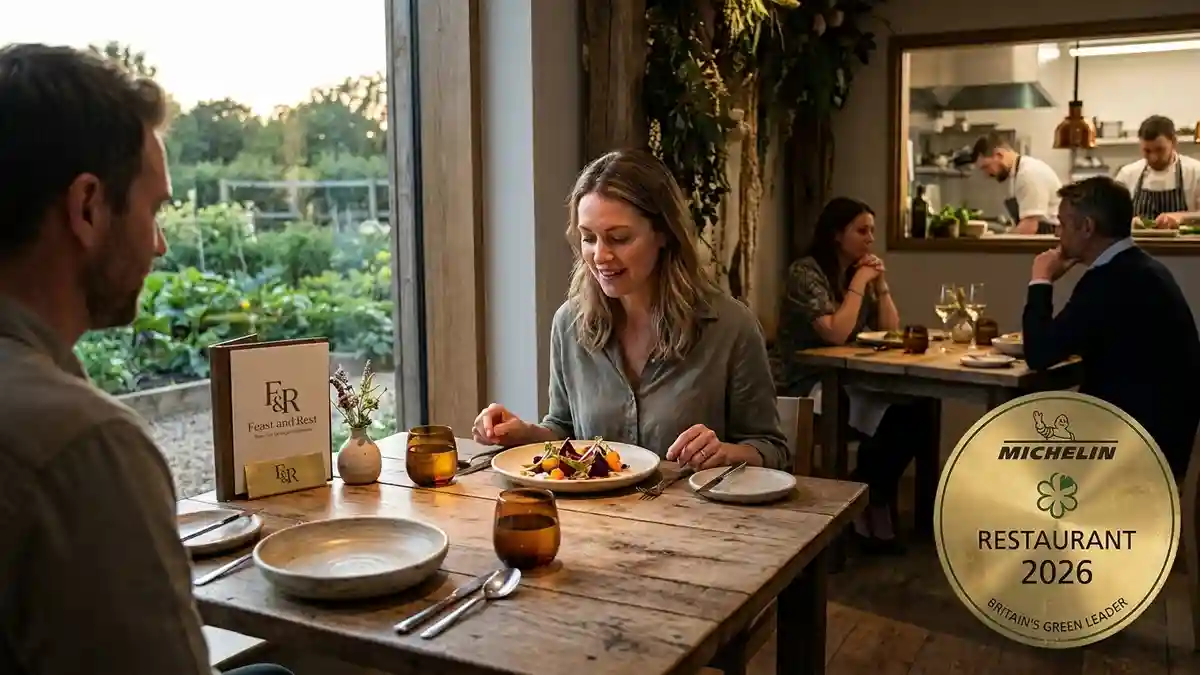
The commitment to environmental care extends far beyond the plate and into the physical dining space. Green Star establishments prioritize sustainable design choices that reflect their surroundings while minimizing ecological impact.
Dining rooms frequently feature furniture crafted from fallen local timber, lime-plaster walls, hand-thrown ceramic tableware from neighborhood potteries, and natural linen textiles washed with eco-friendly solutions. Lighting design emphasizes warm, energy-efficient LED fixtures complemented by natural daylight, creating an atmosphere that feels grounded and serene rather than opulent or showy.
Service styles have similarly evolved. Front-of-house teams operate with deep, articulate knowledge of ingredient origins, farm relationships, and kitchen techniques. Rather than reciting formal, overly rehearsed descriptions, staff share genuine stories about the producers, foragers, and agricultural practices behind each course, fostering an informative and approachable environment for guests.
       +-------------------------------------------------------+
       |           SUSTAINABLE DINING ROOM ELEMENTS             |
       +-------------------------------------------------------+
       |  * Furniture sourced from wind-blown regional timber  |
       |  * Artisanal ceramics crafted by local potters         |
       |  * Plant-dyed, organic natural linen textiles         |
       |  * Low-voltage ambient lighting systems               |
       |  * Direct, story-led guest interaction with staff      |
       +-------------------------------------------------------+
Low-Intervention Drinks Programs and Beverage Pairings
An authentic green dining philosophy requires seamless alignment between the kitchen and the cellar. Beverage directors working within green-certified establishments curate drink programs with the same environmental rigor applied to the food.
Wine lists focus heavily on biodynamic, organic, and low-intervention producers from across Europe, alongside an expanding representation of native English sparkling and still wines from vineyards in Kent, Sussex, and Hampshire. These winemakers avoid synthetic fertilizers and systemic pesticides, prioritizing soil health and spontaneous yeast fermentations.
Beyond traditional wine, non-alcoholic pairing programs have emerged as a major area of innovation. Beverage teams craft complex infusions, kombuchas, water kefirs, and cold-extracted botanical juices using garden herbs, fruit husks, and foraged pine, offering non-drinking guests an elevated experience designed to complement specific dish profiles.
Practical Advice for Planning a Visit
Experiencing high-end sustainable dining across Britain requires thoughtful advance planning, particularly given the small seating capacities and high demand at these lauded venues.
Practical Information
Reservations: Bookings typically open one to three months in advance. Securing a table often requires early planning, especially for weekend dinner services and rural destination venues.
Dining Timing: Plan for a relaxed experience. Multi-course tasting menus focused on local provenance generally span 2.5 to 4 hours. Lunch services often offer a slightly condensed option for travelers on tight schedules.
Dietary Adaptations: Most eco-conscious kitchens accommodate dietary needs with advance notice, though their heavy reliance on seasonal produce means menus are best enjoyed with open curiosity.
Dress Code: The modern tone across these venues is refined yet relaxed. Smart-casual attire is universally accepted, reflecting a shift away from rigid formal dress codes toward comfort and genuine hospitality.
Seasonality: Consider visiting during shoulder seasons (early spring or late autumn) to observe how kitchens adapt to changing harvests and transitional forage yields.
Visiting these establishments offers more than just an exceptional meal—it provides insight into the future of British agriculture, land stewardship, and modern culinary art.
— Closing Reflection —
The continued growth of eco-focused gastronomy across Britain signals a lasting shift in dining values. By placing environmental responsibility on equal footing with technical skill, these restaurants demonstrate that true culinary luxury is deeply rooted in respect for the land, the season, and the community.
— Source Context and Data Notes —
Sources & Methodology: Insights are derived from synthesized culinary industry observations, public sustainability frameworks from international restaurant guides, regional agricultural profiles across the UK, and standard practices within contemporary fine dining.
Operational Limitations: Menu offerings, producer networks, and specific ingredient availability change continuously based on weather, seasonal shifts, and agricultural yield variances.
Generalization Note: Descriptions reflect representative dining practices, kitchen methodologies, and architectural styles common to Green Star establishments in Britain rather than a single specific venue.