The autumn harvest season transforms the Autonomous Province of Bolzano – South Tyrol into one of Europe’s most compelling culinary travel destinations. Located in northern Italy where the Southern Limestone Alps meet the Mediterranean climate zone, South Tyrol autumn travel combines centuries-old Alpine food culture with world-class fine dining. During this period, historic valley communities celebrate Törggelen, an ancient post-harvest culinary ritual centered on young wine (Suser), roasted sweet chestnuts (Kestn), and mountain cured meats. Parallel to these agrarian traditions, the region holds one of Italy’s highest densities of Michelin-starred establishments per capita. For travelers planning a Dolomites fall itinerary, South Tyrol offers an exceptional case study in seasonal dining, where alpine gastronomy, regional food protection, and sustainable vineyard management converge across breathtaking fall foliage destinations.
According to the official tourism organization IDM Südtirol, South Tyrol encompasses over 18,000 hectares of orchards and 5,500 hectares of high-altitude vineyards. The region’s dual cultural heritage—blending German, Italian, and Ladin linguistic traditions—shapes every aspect of its seasonal gastronomy escapes. From historic wine estates along the South Tyrolean Wine Road (Südtiroler Weinstraße) to remote farmsteads (Buschenschänken), the autumn harvest festivals across Europe find a distinct expression here, balanced between rigorous farm-to-table preservation and contemporary culinary innovation.
+-----------------------------------------------------------------------------------+
|                            SOUTH TYROL CULINARY PROFILE                           |
+--------------------------+--------------------------------------------------------+
| Geographic Location      | Trentino-Alto Adige / Südtirol, Northern Italy         |
| Primary Culinary Heritage| Alpine-Mediterranean (German, Italian, Ladin influences)|
| Key Autumn Harvests      | Vernatsch & Lagrein grapes, Chestnuts, Apples, Speck   |
| Michelin Guide Standing  | 21 Starred Restaurants (26 Stars total in 2024/2025)   |
| Primary Autumn Festival  | Törggelen (Late September through Late November)       |
+--------------------------+--------------------------------------------------------+
Why Autumn Gastronomy Defines South Tyrol Tourism
The seasonal shift between September and November represents the most critical period in the South Tyrolean agrarian calendar. As temperatures cool across the Isarco (Eisacktal) and Adige (Etschtal) river valleys, agricultural workers begin the dual harvesting of wine grapes and sweet chestnuts. This period provides culinary travelers with a rare opportunity to experience traditional alpine gastronomy at its source.
South Tyrol’s geographical configuration creates a unique microclimate. Protecting mountain walls block harsh northern weather systems, while Mediterranean air masses flow northward from Lake Garda up through the Adige Valley. This microclimate allows low-altitude valley floors to cultivate heat-loving varieties like Lagrein alongside alpine-slope grapes such as Pinot Nero and Gewürztraminer.
The cultural stability of the region relies heavily on agricultural preservation laws, including the Erbhof system, which prevents historic farm properties from being subdivided across generations. Consequently, multi-generational family farms maintain small-scale production, supplying both local Stuben (rustic dining rooms) and high-end restaurants with zero-kilometer produce.
“The culinary identity of South Tyrol is rooted in geographical necessity. For centuries, isolation forced self-reliance, giving rise to unique preservation methods for meats and dairy. Today, that heritage is our greatest gastronomic asset.” — Dr. Heinrich Oberrauch, South Tyrolean Cultural Heritage Historian
The Tradition of Törggelen: Origins and Cultural Significance
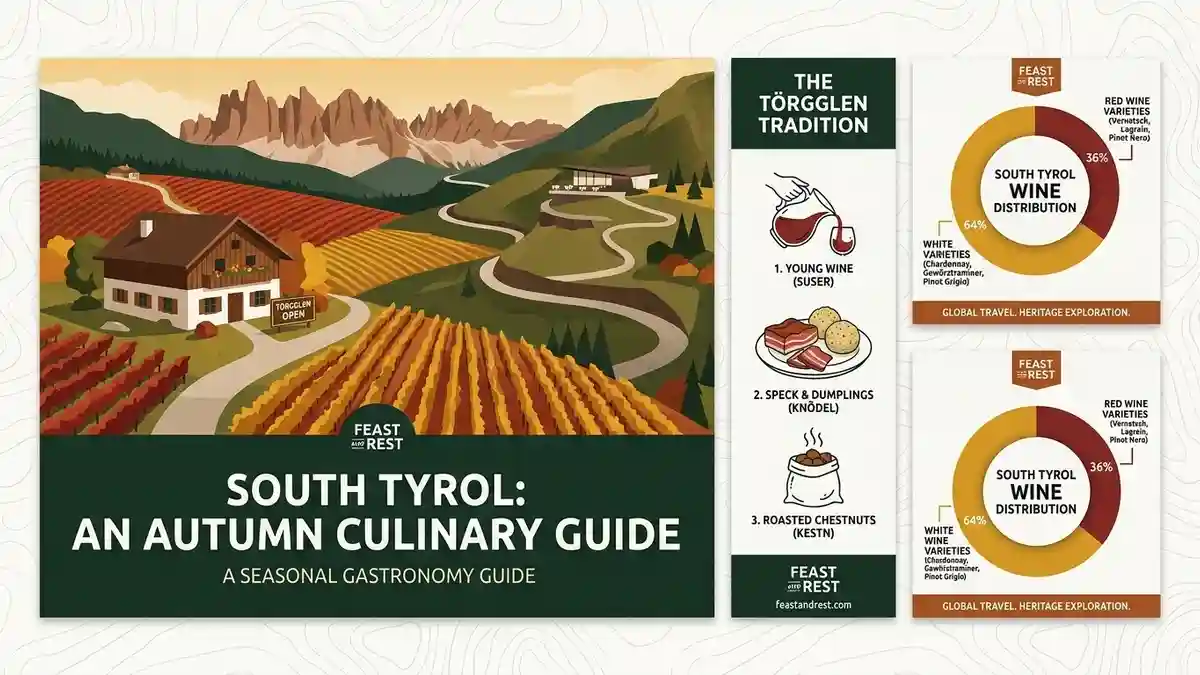
The practice of Törggelen serves as the social centerpiece of autumn wine tasting in South Tyrol. The term originates from the Latin torquere (to twist), referring to the Torggl—the traditional wooden screw press used in historic winemaking cellars. Historically, press owners and grape growers invited neighbors and seasonal workers into their press houses to sample the newly pressed grape juice (Suser) and early fermented wines alongside a hearty meal.
Today, authentic Törggelen takes place in certified farm inns known as Buschenschänken. By regional regulations, a true Buschenschank must be located on an active farm and serve wines produced entirely on-site. The traditional menu served during Törggelen follows a strict seasonal structure:
Barley Soup (Gerstsuppe): A thick mountain soup made with pearl barley, root vegetables, and smoked pork shank.
Surfleisch and House-Cured Meats: Salt-cured and boiled pork served alongside home-cured Speck (PDO cured ham), sauerkraut, and caraway-spiced dumplings (Knödel).
Schlutzkrapfen: Moon-shaped rye pasta pockets filled with spinach and ricotta, finished with browned butter and parmesan.
Kestn and Krapfen: Roasted sweet chestnuts served in canvas sacks alongside sweet fried pastries filled with plum jam or poppy seeds.
+------------------------------------------------------------------------------------+
|                         TÖRGGELEN vs. STANDARD FINE DINING                         |
+---------------------+-------------------------------+------------------------------+
| Feature             | Traditional Buschenschank     | Michelin Fine Dining         |
+---------------------+-------------------------------+------------------------------+
| Primary Venue       | Historic Farmhouses / Cellars | Boutique Hotels & Resorts    |
| Core Beverage       | Young Wine (Suser) / Vernatsch| Indigenous & Global Pairings |
| Food Sourcing       | 100% On-farm or Ultra-local   | Regional with Modern Fusion  |
| Operating Season    | October to late November      | Year-round (Seasonal breaks) |
| Dining Style        | Family-style, communal tables | Multi-course tasting menus   |
+---------------------+-------------------------------+------------------------------+
Michelin Fine Dining and Modern Alpine Innovation
Parallel to rustic farm traditions, South Tyrol has developed into one of Europe’s premier fine dining destinations. The province holds 21 Michelin-starred establishments, earning a total of 26 stars in recent evaluations. This concentration of accolades reflects a deliberate movement among local chefs to elevate humble mountain ingredients into avant-garde gastronomy.
Leading figures in modern South Tyrolean cuisine prioritize hyper-seasonal foraging, native botanicals, and historical preservation techniques. Chefs across the Dolomites rely heavily on mountain pine needles, fermented berries, sea buckthorn, and heirloom grain varieties once on the verge of extinction.
Atelier Moessmer Norbert Niederkofler (Brunico): Awarded three Michelin stars, Chef Niederkofler pioneered the “Cook the Mountain” philosophy, enforcing a strict rule that uses exclusively mountain ingredients, excluding greenhouse products, citrus, and olive oil.
Terra (Sarentino): Situated at 1,570 meters above sea level, Chef Heinrich Schneider utilizes wild herbs, mountain mosses, and alpine spruce shoots gathered directly from surrounding pine forests.
Castel fine dining (Tirolo): Overlooking the Adige Valley, Chef Gerhard Wieser crafts sophisticated dishes that bridge Alpine robustness with Mediterranean lightness.
+------------------------------------------------------------------------------------+
|                                KEY MICHELIN LOCATIONS                              |
+------------------------------+--------------------+--------------------------------+
| Restaurant                   | Location           | Michelin Rating                |
+------------------------------+--------------------+--------------------------------+
| Atelier Moessmer             | Brunico / Bruneck  | 3 Stars (and Green Star)       |
| Terra                        | Sarentino / Sarntal| 2 Stars                        |
| Castel fine dining           | Tirolo / Dorf Tirol| 2 Stars                        |
| Gourmet Stube Einhorn        | Campo di Trens     | 2 Stars                        |
| Luisl Stube                  | Lagundo / Algund   | 1 Star                         |
+------------------------------+--------------------+--------------------------------+
Viticulture and Autochthonous Wine Varietals
Vineyard cultivation in South Tyrol dates back over 2,500 years to the pre-Roman Raetian civilization. Today, the province features a diverse viticultural landscape where altitude varies from 200 meters to over 1,000 meters above sea level. This topography forces manual labor; over 70% of South Tyrolean vineyards are planted on steep slopes requiring hand harvesting.
                  +----------------------------------------------+
                  |    SOUTH TYROL VITICULTURAL DISTRIBUTION     |
                  +----------------------------------------------+
                  | White Wine Varieties (64%):                  |
                  |  [ Pinot Grigio | Gewürztraminer | Chardonnay]|
                  +----------------------------------------------+
                  | Red Wine Varieties (36%):                    |
                  |  [ Vernatsch (Schiava) | Lagrein | Pinot Nero]|
                  +----------------------------------------------+
Two native grape varieties form the foundation of seasonal dining in South Tyrol:
Vernatsch (Schiava): A light- to medium-bodied red wine characterized by low tannin levels, bright acidity, and aromas of red berries and almonds. It serves as the traditional pairing for Speck and early-course harvest meals during Törggelen.
Lagrein: A dark, full-bodied indigenous red grape producing deeply colored wines with notes of dark plum, cocoa, and dried herbs. It complements wild game dishes, braised meats, and aged mountain cheeses.
Among white varietals, Gewürztraminer traces its heritage to the village of Tramin (Termeno) in southern South Tyrol. Characterized by intense lychee, rose petal, and spice aromas, it remains a cornerstone of high-altitude white winemaking along the Wine Road.
“Our terraced vineyards represent a centuries-old agreement between human labor and alpine nature. High altitude preserves crisp acidity in our whites, while warm valley updrafts give red varieties like Lagrein their structured depth.” — Elena Walch, Managing Director at Domaine Elena Walch
Sustainable Tourism Practices and Local Preservation
As visitor numbers increase during the fall foliage season, South Tyrol has implemented strict tourism management frameworks to protect local ecosystems and agrarian heritage. The regional government, alongside IDM Südtirol, emphasizes high-value, low-impact tourism models designed to prevent over-tourism in fragile mountain valleys.
Central to this effort is the expansion of public transportation networks. The South Tyrol Guest Pass provides visitors with unlimited access to regional trains, local buses, and several high-altitude cable cars. This initiative significantly reduces private vehicular traffic along narrow alpine passes, protecting air quality in UNESCO World Heritage zones.
+------------------------------------------------------------------------------------+
|                         SUSTAINABILITY INITIATIVES OVERVIEW                        |
+----------------------------+-------------------------------------------------------+
| Initiative                 | Focus & Implementation Scope                          |
+----------------------------+-------------------------------------------------------+
| South Tyrol Guest Pass     | Integrated public transit access included with lodging|
| Red Rooster (Roter Hahn)   | Certification for authentic, small-scale farm stays   |
| Sustainable Tourism Seal   | Multi-tiered eco-certification for local businesses   |
| Alpine Pasture Mobility    | Shuttle services restricting private cars to high passes|
+----------------------------+-------------------------------------------------------+
Furthermore, the Roter Hahn (Red Rooster) association enforces quality standards for farm-based accommodation and gastronomy. To maintain certification, host farms must generate a substantial portion of their operational income directly from agriculture, ensuring that tourism supports rather than replaces working mountain farms.
Practical Planning for a Dolomites Fall Itinerary
Planning a trip to experience autumn gastronomy in South Tyrol requires attention to seasonal schedules, regional transit, and booking windows.
Seasonal Timing and Weather Patterns
The autumn harvest season generally runs from late September through mid-November. October offers peak fall foliage across larch forests and vineyards, paired with pleasant daytime temperatures averaging 12°C to 18°C in the valleys. By mid-November, high-altitude mountain passes may experience early snowfall, transitioning the region toward the winter ski season.
+------------------------------------------------------------------------------------+
|                             AUTUMN TRAVEL TIMELINE                                 |
+------------------+----------------------------------+------------------------------+
| Period           | Gastronomic Focus                | Regional Activity            |
+------------------+----------------------------------+------------------------------+
| Late September   | Grape harvest begin, Apple fest  | Vineyard hiking, Wine tasting|
| Mid-Late October | Peak Törggelen season, Chestnut  | Foliage photography, Farms   |
| Early November   | Late harvest, Game meat menus    | Fine dining tasting menus    |
+------------------+----------------------------------+------------------------------+
Transportation and Accessibility
By Air: The primary gateway airport is Bolzano (BZO), offering regional flights. Major international hubs include Innsbruck Airport (INN, 120 km north), Verona Villafranca Airport (VRN, 150 km south), and Venice Marco Polo (VCE, 200 km southeast).
By Rail: Excellent high-speed rail connections link Bolzano/Bozen with Trenitalia networks from Rome, Florence, and Milan, as well as ÖBB EuroCity service from Munich and Innsbruck.
Dining Reservations and Etiquette
Buschenschänken: Advance reservations are mandatory for Törggelen meals, particularly on Friday evenings and weekends during October. Diners should arrive on foot via designated chestnut trail networks (Kestnweg) to appreciate the historic context of the meal.
Michelin Establishments: High-end restaurants in Brunico, Sarentino, and Tirolo frequently require booking two to four months in advance for peak autumn dates.
Stay inspired with Feast and Rest!
Source and Data Limitations
Data and historical details referenced in this article are derived from official publications by IDM Südtirol (Innovation Development Marketing), the South Tyrol Provincial Bureau of Statistics (ASTAT), the official MICHELIN Guide Inspectorate reports for Italy, and the Roter Hahn Quality Association. Statistical metrics regarding Michelin star counts correspond to verified ratings for Trentino-Alto Adige. Specific weather patterns and harvest timelines represent multi-year regional averages and may vary due to localized alpine climate shifts. Unverified claims regarding individual private vineyard outputs or unofficial dining rankings were excluded to maintain factual integrity.