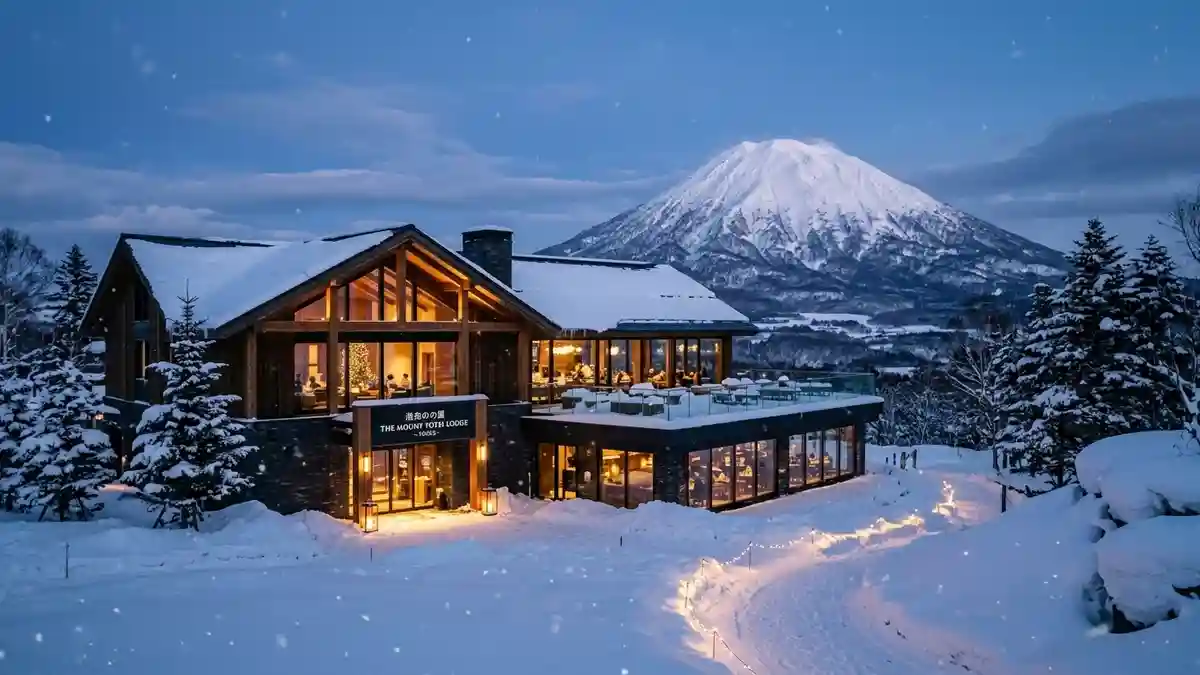
The global reputation of Hokkaido luxury ski resorts rests upon a rare meteorological framework that consistently delivers low-moisture powder snow, termed “Japow,” throughout the northern hemisphere winter. Spanning prime alpine nodes such as Niseko United, Rusutsu Resort, Kiroro, and Furano, Japan’s northernmost island has shifted from a localized skiing destination into an international luxury real estate and hospitality market. This economic transition is driven by high-net-worth traveler arrivals, continuous infrastructure modernizations, and five-star brand entries including Ritz-Carlton Reserve, Aman, and Park Hyatt. Understanding the development trajectories of these alpine destinations reveals key shifts in luxury travel, international flight accessibility, and environmental stewardship across the Japanese Alps.
Hokkaido luxury ski resorts represent a specialized sector of global mountain tourism characterized by microclimate-driven snow consistency, geothermal thermal springs (onsen), and high-end residential real estate. Anchored by Mount Niseko-Annupuri and Mount Yotei in the Shiribeshi Subprefecture, these resorts integrate traditional Japanese hospitality with multi-lingual international alpine services.
The structural foundation of this destination relies on data-backed geographic and governmental frameworks. Entities like the Japan National Tourism Organization (JNTO), Hokkaido Tourism Organization, the Ministry of the Environment, and the Global Sustainable Tourism Council (GSTC) monitor regional visitor flows and environmental carrying capacities. Institutional evaluations by international ski governance bodies rate Niseko United and Rusutsu as top-tier global ski complexes, acknowledging their expansive lift capacity and off-piste access controls.
What the Data Shows: Regional Alpine Expansion
Economic statistics and real estate analyses underline the rapid scale of capital investment in Hokkaido’s ski corridors. According to land valuation assessments from the Ministry of Land, Infrastructure, Transport and Tourism (MLIT), regional municipalities such as Kutchan and Niseko Town have consistently recorded some of Japan’s highest commercial land appreciation rates over the past decade.
This commercial growth extends beyond the immediate Niseko basin. Secondary nodes like Furano and Kiroro have experienced marked increases in foreign direct investment, with development pipelines favoring dual-key luxury condominiums, ski-in/ski-out chalets, and year-round master-planned communities.
| Ski Resort Region | Key Alpine Features | Lift & Gondola Capacity | Primary Accommodation Types |
| Niseko United (Grand Hirafu, Hanazono, Village, Annupuri) | 800+ hectares of terrain; deep microclimate powder; extensive tree skiing | High-speed heated quads, luxury gondolas, night skiing infrastructure | International luxury hotels, ultra-luxury residences, branded chalets |
| Rusutsu Resort | Spread across 3 mountains; Mt. Yotei views; uncrowded tree runs | Multiple high-speed gondolas, interconnected lift network | Integrated resort hotel towers, luxury ski condos, private villas |
| Kiroro Resort | High annual snowfall; pristine backcountry gates | Modern express lifts and combined gondola systems | Ski-in/ski-out luxury hotel brands, high-end mountain residences |
| Furano Ski Resort | Central Hokkaido location; cold, dry snow; dual-zone layout | High-speed ropeways, express lifts, long cruiser runs | Boutique luxury chalets, mountain hotels, dual-season condos |
Why This Matters: Infrastructure and Global Accessibility
The transformation of Hokkaido luxury ski resorts relies heavily on transportation connectivity upgrades. New Chitose Airport (CTS), the primary international gateway near Sapporo, handles expanding direct international flights from major Asia-Pacific aviation hubs, alongside winter long-haul routes connecting North America and Australia.
Concurrently, the ongoing construction of the Hokkaido Shinkansen extension toward Otaru and Sapporo—with a designated station in Kutchan—is set to dramatically shorten transfer times from Tokyo. This high-speed rail access will link Japan’s capital directly to the heart of Niseko’s ski network, facilitating seamless travel for both domestic and international visitors.
“The development of high-speed rail connectivity to Kutchan transforms accessibility across northern Japan, positioning Hokkaido’s alpine corridor as an accessible world-class winter destination,” notes regional transport planning reports from Japan’s Railway Construction, Transport and Technology Agency (JRTT).
Comparative Insights: Hokkaido vs. European and North American Alpine Hubs
When evaluated against traditional alpine destinations such as Courchevel in the French Alps or Aspen in North America, Hokkaido luxury ski resorts present a distinct operational model. While Western resorts often rely heavily on artificial snowmaking systems due to fluctuating winter temperatures, Hokkaido benefits from cold Siberian air masses passing over the Sea of Japan, creating consistent natural snow cover from late November through April.
Furthermore, Hokkaido’s wellness infrastructure sets it apart. The region’s volcanic geology feeds natural geothermal onsen facilities integrated directly into luxury hotel developments. This combination of dependable natural snowfall, culinary experiences based on fresh regional seafood and agriculture, and traditional hot-spring culture creates a unique resort profile unmatched in North American or European markets.
Societal, Environmental, and Sustainability Impact
The swift expansion of international luxury tourism presents both economic opportunities and structural challenges for local Hokkaido communities. In response to rising municipal pressures, local governments have introduced regulatory policies aimed at protecting mountain landscapes, managing traffic congestion, and ensuring sustainable water usage.
Niseko Town has emerged as a global reference point for sustainable resort management. Recognized by Green Destinations and aligned with GSTC standards, Niseko Town enforced local landscape ordinances that limit building heights, mandate architectural integration with the natural environment, and require sustainable energy solutions for new commercial construction.
“Becoming a sustainable international resort requires balancing the economic benefits of tourism with the daily living standards of local residents and environmental conservation,” states the official Niseko Town Sustainable Tourism Vision document.
Efforts to mitigate environmental footprints across Hokkaido ski resorts include:
Transitioning resort utility grids toward renewable geothermal and hydroelectric power sources.
Implementing mandatory bioengineering soil stabilization and native tree planting to prevent slope erosion during summer thaw cycles.
Expanding municipal accommodation tax models to directly fund public transit shuttles and regional conservation projects.
Promoting four-season tourism to smooth seasonal employment cycles and support local agricultural economies year-round.
Practical Destination Planning Considerations
For travelers planning visits to Hokkaido luxury ski resorts, seasonal timing and logistics remain central factors. Peak powder conditions occur from late December through February, coinciding with high demand and premium pricing across accommodations.
Early season (late November to mid-December) and spring skiing (March to April) offer lower visitor density, milder weather, and stable snowpack conditions suitable for alpine touring and family travel. Advanced bookings for private ski instruction, backcountry guided tours, and specialized dining experiences are typically recommended several months in advance due to high winter demand.
Stay inspired with Feast and Rest!
—
Source and Data Limitations
Data referenced in this report is derived from official publications by the Japan National Tourism Organization (JNTO), the Hokkaido Tourism Organization, the Ministry of Land, Infrastructure, Transport and Tourism (MLIT), Niseko Town Municipal Sustainable Tourism guidelines, and institutional ski area ratings. Information on upcoming transit developments reflects official project schedules from Japan Railways (JR Hokkaido) and the Railway Construction, Transport and Technology Agency (JRTT).
While real estate appreciation and resort expansion metrics are based on verified municipal land assessments and published development plans, long-term projections remain subject to global macroeconomic shifts, currency fluctuations, and changing climate patterns. Private commercial pricing and specific resort operational dates are subject to seasonal variance determined by individual resort operators.