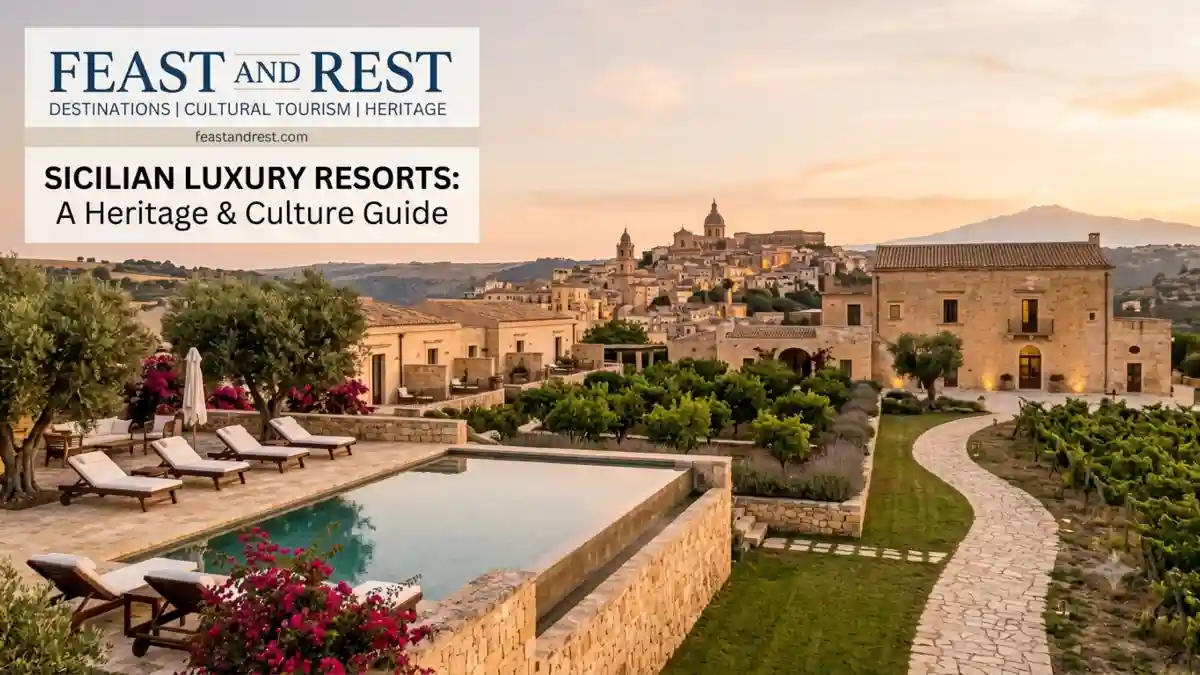
Sicilian Luxury Resorts: Culture and Heritage Guide
Sicilian luxury resorts represent a high-end sector of Mediterranean hospitality that combines historic architecture, regional gastronomy, and nature conservation. Modern luxury properties in Sicily operate in restored 18th-century palazzos, historic coastal estates, and secluded agricultural hamlets.
This sector serves travelers seeking authentic cultural immersion rather than standard luxury accommodations. The market balances historic preservation with sustainable regional economic development.
┌────────────────────────────────────────────────────────────────────────┐
│                        SICILY HOSPITALITY AT A GLANCE                  │
├───────────────────────────┬────────────────────────────────────────────┤
│ Annual Overnight Stays    │ 22.4 Million+ (Regional Tourism Data)      │
│ Foreign Visitor Component │ ~50% (Led by US, UK, Germany, France)     │
│ Key Heritage Destinations │ Taormina, Val di Noto, Palermo, Sciacca    │
│ Primary Focus Areas       │ Historic adaptive reuse, eco-stewardship   │
└───────────────────────────┴────────────────────────────────────────────┘
The expansion of Sicilian luxury resorts is shifting the island’s economic landscape. Global hotel groups and independent hoteliers are restoring historical properties under strict heritage guidelines.
This investment helps spread tourism throughout the year and preserves regional traditions. Travelers visiting Sicilian luxury resorts can explore ancient Greek ruins, Baroque architecture, and volcanic vineyards, all supported by modern, eco-friendly infrastructure.
                   ┌──────────────────────────────────┐
                   │  HISTORIC & NATURAL HERITAGE     │
                   │ (UNESCO Sites, Etna, Coastline)  │
                   └────────────────┬─────────────────┘
                                    │
                                    ▼
                   ┌──────────────────────────────────┐
                   │  ADAPTIVE REUSE & RESTORATION    │
                   │  (Palazzos, Monasteries, Estates)│
                   └────────────────┬─────────────────┘
                                    │
                                    ▼
                   ┌──────────────────────────────────┐
                   │ SUSTAINABLE HOSPITALITY MODEL    │
                   │ (Extended Seasons & Local Jobs) │
                   └──────────────────────────────────┘
What the Data Shows: Regional Growth and Seasonal Shifts
Official data from the Sicilian Regional Tourism Board highlights a major transformation in traveler demographics and arrival patterns. Regional reports confirm over 22.4 million annual overnight stays, driven by an international visitor influx that grew by more than 24% year-over-year. Visitors from the United States, the United Kingdom, Germany, and France are leading this foreign growth.
                     TOURIST ARRIVALS BY ORIGIN
  ┌──────────────────────────────────────────────────────────────┐
  │ Domestic (Italy)     ████████████████████ (50%)              │
  │ Foreign (EU & UK)    ███████████████ (33%)                   │
  │ Foreign (Non-EU/US)  ███████ (17%)                           │
  └──────────────────────────────────────────────────────────────┘
The data shows a clear shift toward off-peak travel. High-end travel in shoulder months (March to May and September to November) has increased significantly.
This trend helps reduce summer crowding along coastal hotspots. It also creates year-round employment in local communities. Expanded international flights into Palermo and Catania airports have made inland valleys and historic estates far more accessible to global travelers.
Architectural Heritage in Sicilian Luxury Resorts
Many top-tier properties across Sicily are models of adaptive reuse. Hoteliers partner with local architectural historians to convert aristocratic residences and former monasteries into boutique hotels.
For example, the transformation of the 18th-century Palazzo Castelluccio in Noto into a 31-room luxury property highlights how historic preservation principles are applied to private developments.
“The Palazzo Castelluccio is a perfect fit for us, with an inspiring history and enchanting aesthetic that tells the story of its location. Each room will blend inherited charm and contemporary luxury to evoke the same timeless grandeur that fills the rest of the Palazzo.”
— Olga Polizzi, Deputy Chairman and Director of Design at Rocco Forte Hotels
Restorations like these use traditional materials such as local limestone, terracotta, and lime-based plasters. This preserves the building’s authentic atmosphere while meeting modern energy-efficiency and sustainability standards.
┌─────────────────────────────────────────────────────────────────────────────┐
│                 KEY ARCHITECTURAL HIGHLIGHTS & SITES                        │
├────────────────────────┬────────────────────────────────────────────────────┤
│ Val di Noto            │ Sicilian Baroque palazzos restored with limestone  │
│ Palermo & Taormina     │ Grand belle-époque hotels with coastal views       │
│ Sciacca & Rural Interior│ Agriturismo estates, olive groves, and vineyards   │
└────────────────────────┴────────────────────────────────────────────────────┘
Key Regions and Geographic Distinctions
Sicily’s luxury accommodations are spread across distinct geographic regions, each offering unique cultural and natural experiences.
| Geographic Region | Cultural & Natural Heritage Features | Resort Focus & Atmosphere |
| Taormina & East Coast | Ancient Greek Theatre, views of Mount Etna, Ionian coastline | Grand historic hotels, cliffside sea access, luxury dining |
| Val di Noto (Southeast) | UNESCO Baroque towns (Noto, Modica, Ragusa), local limestone architecture | Restored urban palazzos, boutique countryside retreats |
| Palermo & North Coast | Arab-Norman architecture, historic markets, Tyrrhenian coast | Belle-époque seafront hotels, urban heritage properties |
| Sciacca & Southwest | Proximity to Valley of the Temples (Agrigento), olive groves | Sprawling coastal wellness resorts, golf estates, eco-lodges |
Practical Destination Planning for High-End Travelers
Planning a trip to Sicilian luxury resorts requires an understanding of seasonal weather patterns, regional transportation, and cultural events.
      JAN-MAR            APR-JUN            JUL-AUG            SEP-NOV
 ┌──────────────────┬──────────────────┬──────────────────┬──────────────────┐
 │ Off-Peak         │ Spring Peak      │ Summer Peak      │ Autumn Harvest   │
 │ Lower rates,     │ Ideal weather,   │ High temperatures│ Grape harvest,   │
 │ cultural tours   │ wildflower blooms│ coastal focus    │ mild temperatures│
 └──────────────────┴──────────────────┴──────────────────┴──────────────────┘
Seasonal Dynamics: Peak summer (July and August) brings warm weather and high demand for coastal properties. Spring (April to June) and autumn (September to November) offer mild temperatures ideal for touring archaeological sites, wine tasting, and exploring towns.
Transportation & Accessibility: Major international gateways include Catania–Fontanarossa Airport (CTA) for the east coast and Val di Noto, and Palermo Airport (PMO) for the north and west regions. Private transfers or rental vehicles are recommended for visiting rural estates.
Cultural Itineraries: Popular activities include private tours of UNESCO sites like the Valley of the Temples in Agrigento, guided hikes on Mount Etna, and visits to regional vineyards.
Why This Matters: Local Communities and Sustainability
The expansion of high-end travel presents both opportunities and responsibilities for local communities. Sustainable tourism practices ensure that economic benefits support local residents while preserving regional culture.
                 LOCAL COMMUNITY IMPACT MATRIX
 ┌──────────────────────────────────────────────────────────────┐
 │  ECONOMIC BENEFIT: Year-round jobs & localized spending     │
 │  CULTURAL PRESERVATION: Restoration of historic sites        │
 │  RESOURCE PROTECTION: Water conservation & waste management  │
 └──────────────────────────────────────────────────────────────┘
“Consistently with national and European planning tools, we want to support the competitiveness of tourism businesses, their development and the integrated and sustainable use of cultural and natural resources with the specific aim of reversing the seasonality trend.”
— Elvira Amata, Regional Councillor for Tourism in Sicily
Many luxury properties source produce directly from local farmers, employ nearby artisans, and support community heritage projects. Waste reduction and water management systems are increasingly standard, helping protect the island’s delicate ecosystems.
Strategic Outlook for High-End Hospitality
The future of luxury travel in Sicily relies on balancing growth with authentic cultural preservation. As international travelers increasingly seek meaningful experiences, resorts that highlight local heritage, regional architecture, and sustainable operations will lead the market.
By continuing to restore historic properties and support local communities, Sicily’s high-end travel sector offers a sustainable model for heritage-focused hospitality across the Mediterranean.
Stay inspired with Feast and Rest!
Source and Data Limitations
This report relies on official tourism metrics from the Azienda Autonoma Soggiorno e Turismo (Sicilian Regional Tourism Board), ENIT – Agenzia Nazionale del Turismo, and publicly disclosed corporate developments from hospitality groups including Rocco Forte Hotels. Travel arrival statistics cover regional reporting periods through 2025–2026. Financial estimations reflect broader regional high-end tourism studies published by Unioncamere and Italian national tourism research institutions. Unverified claims regarding future property developments or private investment totals without public filings have been excluded.