Architectural Significance and Design Traditions
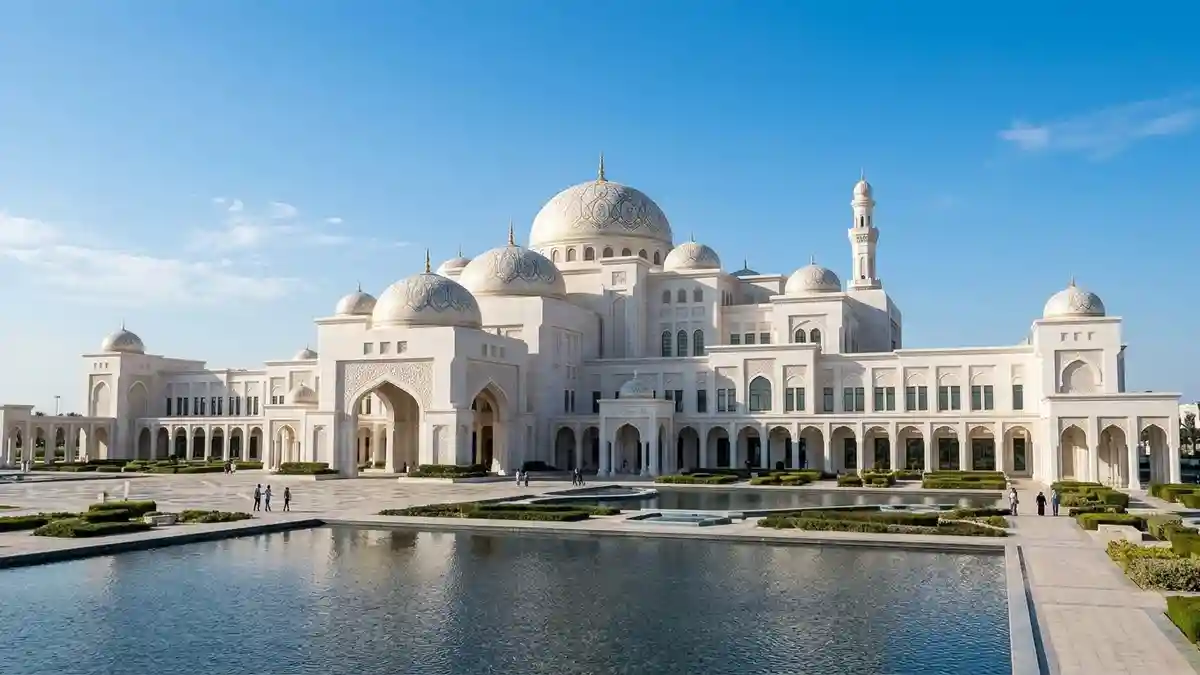
Qasr Al Watan stands as a contemporary tribute to traditional Arabian and Mughal architectural engineering. The exterior facade features extensive use of white granite and limestone, symbolizing purity and endurance, while engineered geometric patterns define its structural layout. The primary structural components emphasize vaulted archways, sprawling courtyards, and symmetry inspired by classic regional artistry. According to architectural heritage reviews, the design purposefully integrates Islamic geometric motifs with modern engineering standards to reflect the nation’s historical roots and future ambitions.
The crown jewel of the complex is its central rotunda, crowned by one of the largest domes of its kind globally. Measuring approximately 37 meters in diameter, the dome’s interior is meticulously detailed with geometric plasterwork and gold-leaf accents. Architectural historians note that the precise alignment of light within the Great Hall highlights intricate carvings that celebrate regional craftsmanship. This fusion of classical aesthetics and modern structural integrity establishes a benchmark for contemporary civic architecture in the Gulf region.
Cultural Exhibitions and the House of Knowledge
Beyond its visual grandeur, Qasr Al Watan functions as an active repository of knowledge through permanent cultural exhibitions. The House of Knowledge exhibition displays a rare collection of historical artifacts, manuscripts, and cultural texts that trace the influence of the Arab world on science, astronomy, arts, and literature. These collections include rare translations of historical medical treatises, navigational instruments, and early recordings documenting the socio-economic evolution of the Arabian Peninsula.
Complementing the manuscript collection, the Presidential Gifts gallery exhibits diplomatic tokens presented to the UAE leadership by international heads of state. This curated assembly provides visitors with insights into international diplomacy, cross-cultural exchanges, and traditional artisanal techniques from across the globe. Each displayed artifact undergoes rigorous curatorial assessment to ensure contextual accuracy, offering transparency into bilateral relations and state protocols.
Governance Insight and Institutional Transparency
A core mission of Qasr Al Watan is to demystify the mechanics of state governance for the general public. Visitors gain access to rooms traditionally reserved for high-level political meetings, including the Supreme Council chamber and official banquet halls set for state occasions. These spaces are intentionally curated to educate citizens and international visitors on how federal laws are formulated, debated, and enacted within the UAE political framework.
Educational plaques and multimedia displays detail the functions of the Federal National Council and the executive bodies governing the nation. By opening these administrative spaces to public scrutiny, the institution promotes civic education and administrative transparency. Observers note that this strategy aligns with broader global trends in cultural tourism, where governance heritage is increasingly utilized to foster cross-cultural dialogue and institutional understanding.
Preservation, Sustainability, and Societal Impact
The operation of Qasr Al Watan underscores a deliberate commitment to sustainable tourism and the preservation of regional heritage. Facility management employs energy-efficient lighting systems and climate-control mechanisms designed to protect fragile historical manuscripts while minimizing environmental footprints. Furthermore, educational outreach programs collaborate with regional universities to train local historians, curators, and conservation specialists, ensuring that heritage management adheres to international standards set by organizations like UNESCO.
The influx of cultural tourists generates vital economic support for local artisans, guides, and hospitality sectors within Abu Dhabi. Tourism boards emphasize that visitor revenues directly subsidize ongoing conservation projects and public educational initiatives. By balancing high-volume international visitation with rigorous asset protection, the institution maintains a sustainable model for heritage tourism that respects local communities and preserves intangible cultural heritage.
Practical Planning and Visitor Information
For travelers planning a visit, understanding operational patterns ensures a seamless experience. Qasr Al Watan is located in the Al Ras Al Akhdar district of Abu Dhabi and is accessible via major thoroughfares and public transit networks. Standard operating hours typically run daily from morning through the early evening, though schedules are subject to adjustment during official state events or diplomatic visits.
| Planning Category | Operational Details & Visitor Guidelines |
| Typical Operating Hours | Daily from 10:00 AM to 5:00/6:30 PM (Subject to official protocols) |
| Recommended Duration | 2 to 3 hours for comprehensive exhibition and garden exploration |
| Access & Ticketing | General admission tickets available online and on-site; security screening mandatory |
| Accessibility | Fully wheelchair accessible with ramps, elevators, and dedicated assistance services |
Visitors are advised to check official channels prior to arrival, as evening closures may occur to accommodate foreign delegations. Modest dress codes reflecting local cultural norms are required for all guests entering the palace grounds.
Stay inspired with Feast and Rest!
Source and Data Limitations: This article draws upon official tourism portal data from the Department of Culture and Tourism – Abu Dhabi, architectural documentation of Qasr Al Watan, and institutional reports regarding heritage preservation in the United Arab Emirates. Primary data points include structural specifications of the central dome, operational schedules, and the contents of the House of Knowledge exhibition. Limitations include potential unannounced schedule shifts resulting from active governmental use of the palace, which supersedes public access. No unverified speculation or subjective promotional testimonials were utilized in the preparation of this report.