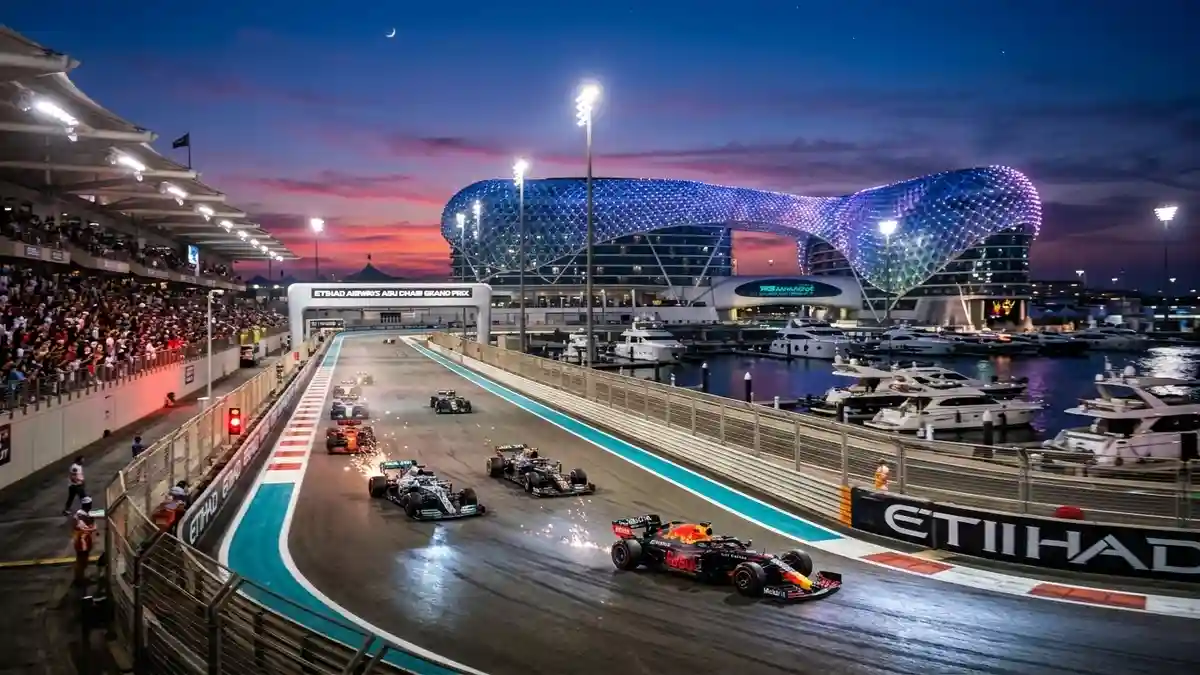
The Abu Dhabi Grand Prix travel guide encompasses comprehensive planning essentials, cultural heritage integration, and economic analyses for visitors attending the annual Formula 1 season finale at the Yas Marina Circuit. This international sporting fixture serves as a major driver of cultural tourism, merging high-performance motorsport with regional leisure offerings on Yas Island. For global travelers, understanding seasonal pricing dynamics, venue logistics, and local customs ensures a balanced itinerary that combines elite athletic entertainment with exploration of the United Arab Emirates’ broader heritage.
What Is the Abu Dhabi Grand Prix?
The Abu Dhabi Grand Prix is a premier Formula 1 motor racing event held annually at the Yas Marina Circuit, typically serving as the concluding race of the global F1 calendar. Established in 2009, the event pioneered a signature twilight-to-night race format that transitions under floodlights. Beyond motorsport, the event functions as a large-scale cultural and economic catalyst, drawing international spectators who engage with local hospitality, entertainment platforms, and regional heritage landmarks.
Historical Context and Evolution of the Event
Since its inaugural race in 2009, the Yas Marina Circuit has developed into one of the most technologically advanced and visually distinct venues in motorsport. Developed by the Department of Culture and Tourism – Abu Dhabi (DCT Abu Dhabi) alongside event organizers Ethara, the project transformed Yas Island from an undeveloped landmass into a multi-purpose leisure hub. Over more than a decade, the event has hosted numerous championship-deciding races, cementing the emirate’s status on the international sports tourism stage.
What the Data Shows: Visitor Demographics and Economic Impact
Analytical reports from destination management platforms like The Data Appeal Company and predictive intelligence firms such as PredictHQ indicate that the event regularly attracts approximately 170,000 to 190,000 attendees over race weekend. Approximately 65% of spectators originate from outside the UAE, with European source markets—specifically the United Kingdom, Italy, and Germany—accounting for a substantial share of international arrivals. Economic output remains significant; official figures note that the event generates upwards of AED 1.16 billion ($317 million) in direct economic value, driven heavily by hospitality, dining, and transport sectors.
Seasonal Patterns and Accommodation Logistics
Planning a trip around the event requires careful navigation of peak pricing models and high occupancy rates across Yas Island and central Abu Dhabi. Data indicates that local accommodation rates can experience substantial surges during race week compared to non-event periods.
| Travel Metric | Typical Race-Week Condition | Practical Planning Note |
| Average Daily Rates | Elevated (surging up to 85–170% above baseline) | Book lodging 6 to 9 months in advance to secure preferred inventory. |
| Primary Visitor Origins | High representation from Western Europe (UK, Italy, Germany) | Align flight bookings early with major carrier schedules. |
| Preferred Corridors | Yas Island, Saadiyat Island, Al Maryah Island | Balance proximity to the circuit against budget constraints in downtown districts. |
| Local Weather | Daytime highs near 30°C (86°F), night lows near 20°C (68°F) | Pack light layers for evening temperature drops after sunset. |
Integrating Cultural Tourism Beyond the Circuit
While motorsport serves as the primary draw, cultural institutions across the emirate offer complementary exploration opportunities that enrich the visitor experience. Travelers frequently pair race-day attendance with visits to the Louvre Abu Dhabi on Saadiyat Island, the architectural landmark Sheikh Zayed Grand Mosque, and regional heritage sites overseen by DCT Abu Dhabi. This balanced itinerary allows tourists to engage with Islamic art, historical exhibitions, and traditional Emirati heritage outside active session hours.
Societal and Sustainability Impact on Local Communities
In alignment with UNESCO frameworks and international standards, DCT Abu Dhabi enforces rigorous Culture and Heritage Sustainability Guidelines across local tourism operations. These guidelines prioritize energy conservation, sustainable procurement, and the protection of cultural heritage assets. Event organizers and regional stakeholders increasingly incorporate eco-friendly practices—such as waste reduction initiatives and local sourcing—to mitigate the environmental footprint of large-scale influxes while safeguarding community values and historical integrity.
Stay inspired with Feast and Rest! — Source and Data Limitations: This destination guide is synthesized from official tourism reports, data intelligence metrics, and cultural policy frameworks published by the Department of Culture and Tourism – Abu Dhabi (DCT Abu Dhabi), The Data Appeal Company, PredictHQ, and event organizer Ethara. Statistical references primarily reflect verified findings from recent event cycles (2023–2024 reporting periods) alongside projected schedules for the 2026 racing calendar. While attendance figures, economic valuations, and hotel pricing trends are backed by empirical datasets, specific pricing fluctuations and transport timetables remain subject to operational adjustments by local authorities. Unverified anecdotal claims or speculative travel forecasts have been systematically excluded to maintain strict editorial neutrality.