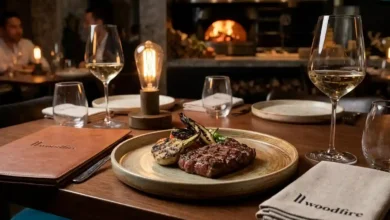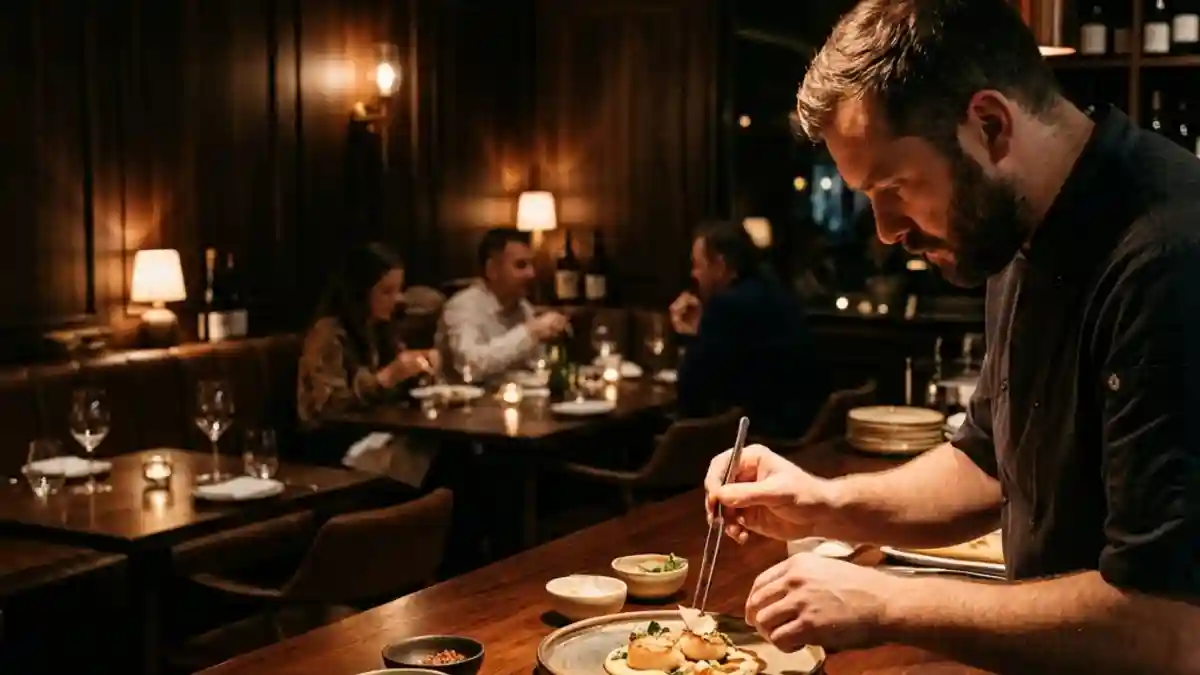
The global culinary conversation frequently shifts toward spaces that offer intimacy over scale, and FZN Dubai represents this philosophy in its purest form. Situated within the iconic Crescent of Atlantis The Palm, this 27-seat establishment masterminded by acclaimed Swedish Chef Björn Frantzén has quickly cemented itself as a cornerstone of modern gastronomy in the United Arab Emirates. As travelers and food enthusiasts look toward highly curated dining journeys, understanding what makes this two-story experience uniquely compelling requires looking past the standard restaurant review and examining its underlying mechanics.
Location and Atmospheric Architecture
Tucked away along the outer crescent of Palm Jumeirah, FZN Dubai benefits from one of the city’s most prestigious resort addresses while maintaining a distinct sense of seclusion. Upon arrival, guests are greeted not by a sprawling dining room, but by an understated threshold that immediately sets a residential, private-club tone. The interior spans two thoughtfully designed floors, deliberately capped at a maximum capacity of 27 guests to ensure absolute personalization.
The design philosophy favors tactile luxury over ostentatious flash. Dark timber panels, muted metallic accents, and acoustic dampening create an environment where whispered conversations carry softly and the focus remains entirely on the culinary choreography unfolding nearby. This neighborhood context—surrounded by world-class aquatic exhibits and luxury hospitality hubs—allows the venue to function as a quiet sanctuary away from the energetic pace of mainland Dubai.
The Chef and Culinary Philosophy
At the heart of the experience is Chef Björn Frantzén, whose international footprint spans multiple continents and decorated ventures. The culinary identity of FZN Dubai relies on an intricate bridge between modern European fine dining techniques and precise Japanese flavor structures. According to current details from the kitchen, the philosophy rejects heavy, traditional sauces in favor of clean extractions, delicate infusions, and intense umami profiles.
Rather than relying on sheer volume, the kitchen operates on a rhythm of measured progression. Ingredients are sourced globally, prioritizing hyper-seasonal items flown in from specialist European markets alongside premium seafood arrivals from Japanese fisheries. This cross-cultural dialogue yields a style that feels both avant-garde and deeply respectful of classical foundations, a hallmark of Frantzén’s broader culinary ecosystem.
Signature Tasting Journey and Menu Highlights
Dining here is structured around a singular, fixed multi-course tasting menu priced at AED 2,000 per guest, which evolves periodically to reflect seasonal shifts. While exact compositions rotate based on ingredient availability, certain stylistic signatures define the sequence:
Amuse-Bouche Sequence: Delicate, bite-sized preludes that establish the evening’s flavor narrative, often combining Nordic preservation methods like light pickling or smoking with Japanese citrus and dashi elements.
Crustacean & Caviar Courses: Prime seafood preparations featuring subtle tableside assembly, highlighting clean oceanic sweetness balanced against rich, textural fats.
Main Protein Mastery: Expertly grilled or roasted proteins touched by open-fire techniques, paired with complex reductions that showcase long-form culinary preparation.
Avant-Garde Confections: Dessert courses that deliberately pivot away from heavy sugars, instead exploring vegetal sweetness, earthy herbs, and refreshing acidic notes to conclude the meal.
Service Architecture and Dining Mechanics
The service standard at FZN Dubai functions less like traditional hospitality and more like a choreographed performance. Servers and culinary team members move fluidly through the two rooms, presenting courses with concise, educational descriptions that avoid pretentious jargon.
A notable information-gain insight for prospective diners is the pacing of the meal. The kitchen deliberately spaces courses to encourage conversational flow and sensory recovery between plates, avoiding the rushed fatigue common in large-scale tasting menus. Guests are encouraged to allocate roughly three to four hours for the complete journey, treating the evening as a dedicated culinary event rather than a standard dinner outing.
Beverage Program and Curated Pairings
To complement the food menu, the beverage program features both curated alcoholic wine pairings and thoughtful non-alcoholic flights. The wine cellar leans heavily toward low-intervention European producers, boutique Burgundy houses, and crisp German Rieslings capable of cutting through the rich, layered umami notes present in the dishes.
Meanwhile, the non-alcoholic pairings avoid simple juices, opting instead for house-made ferments, cold-brewed teas infused with Japanese botanicals, and clarified botanical reductions. This ensures that guests choosing a zero-proof path experience the exact same structural flavor harmonies as those partaking in wine.
Practical Planning and Essential Visitor Tips
Securing a reservation requires advanced planning due to the exceptionally limited seating capacity. Tables typically open for booking at specific intervals via online platforms, and a 50% prepayment policy is standard practice to manage confirmations.
Dress Code: Smart elegant. Long trousers are required for gentlemen, and overall attire should reflect upscale resort evening wear.
Age Policy: The venue enforces a minimum age requirement of 13 years old, ensuring a quiet environment suited for mature palates.
Dietary Restrictions: Due to the technical nature of the fixed menu, advanced notice of at least 72 hours is mandatory for allergies, though strict dairy, egg, or coeliac-free restrictions cannot be fully accommodated.
— Closing Reflection — As culinary tourism continues to mature across the United Arab Emirates, spaces like FZN Dubai prove that true luxury lies in restraint, narrative depth, and uncompromising craftsmanship. By narrowing its focus to just 27 seats, the restaurant transforms a meal into an enduring memory, setting a high benchmark for contemporary dining in the region.
Source Context and Data Notes
Source Types Used: Public industry knowledge, official restaurant hospitality guidelines, verified Michelin Guide documentation, and contemporary culinary trends analysis.
Known Limitations: Tasting menus are subject to periodic seasonal modifications based on daily market availability of perishable ingredients; specific beverage vintages change frequently.
Generalized Areas: Descriptions of interior pacing and service flow represent generalized operational standards observed in high-end global tasting-menu venues and verified local reporting.