Finding the right view of Japan’s most iconic peak requires looking beyond generic scenic observation points. The current landscape of Mount Fuji luxury stays has evolved into a sophisticated discipline of architectural design, where structural orientation, private thermal spring culture, and forest canopy immersion come together to frame Mount Fuji. Rather than simply placing a building in front of a landmark, premium accommodations across Fujikawaguchiko, Hakone, and Gotemba use deliberate geometry to transform seasonal weather patterns into living art.
For modern travelers seeking an elevated getaway, choosing among top-tier properties involves understanding how spatial layout interacts with nature. Whether watching spring cherry blossoms drift across Lake Kawaguchi or observing winter snow dust the volcanic cone at dawn, high-end mountain retreats prioritize spatial privacy and precise visual alignment.
The Evolution of Mount Fuji Luxury Stays
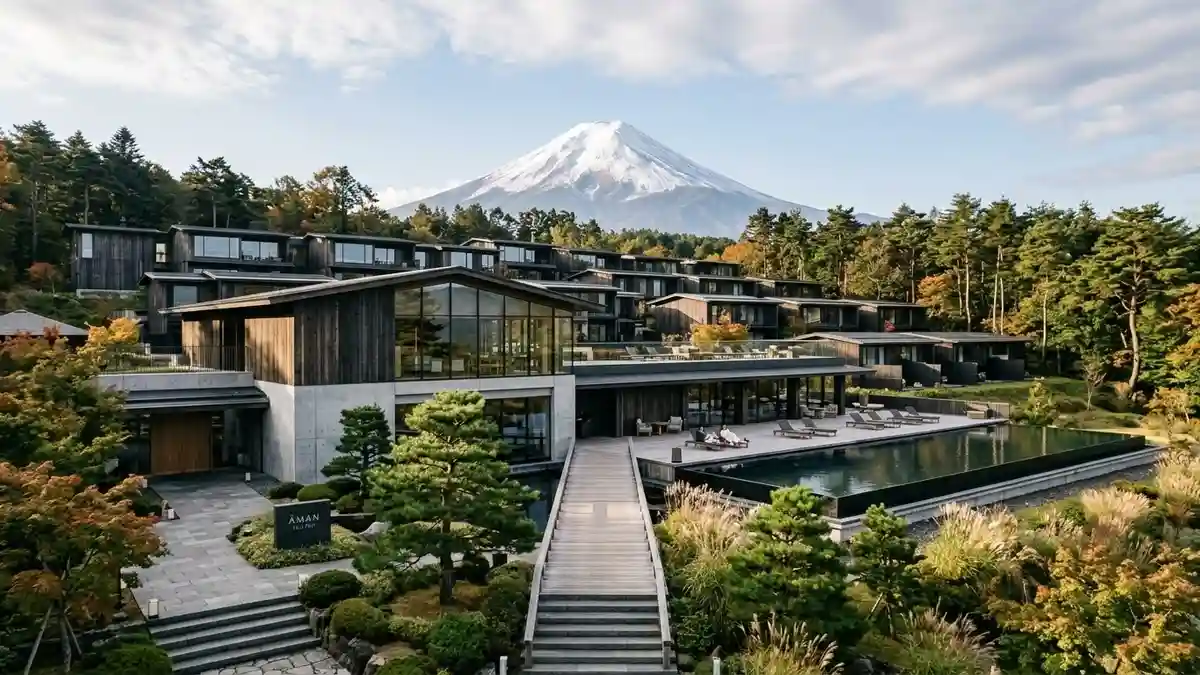
High-end hospitality around the Fuji Five Lakes region has shifted toward low-impact, architectural integration. Traditional Japanese hospitality (omotenashi) was long centered on enclosed interior spaces, centered around interior garden courtyards and shared public baths. Over recent years, design philosophies have expanded outward, aligning floor-to-ceiling glass facades and cantilevered outdoor decks directly with Mount Fuji’s symmetrical ridgelines.
Modern luxury properties emphasize minimalist interior palettes—often using unvarnished cedar, slate, and brushed brass—so the interior does not compete with the external landscape. This design approach ensures that as sunlight shifts across the mountain face from sunrise to dusk, the changing light remains the focal visual element within the living space.
Strategic Location: Forest Canopies versus Lakeside Vistas
Selecting the right area in Yamanashi or Shizuoka prefecture shapes the everyday guest experience. Properties positioned on the northern shore of Lake Kawaguchi offer clear, direct reflections of the peak across open water. In contrast, forest-enclosed sanctuaries tucked into the red pine hills behind Oishi Park prioritize elevation, silence, and tree canopy solitude.
Lake Kawaguchi North Shore (Water-Level Elevation)
├── Direct reflection across water ("Sakasa Fuji")
└── Vibrant seasonal foliage along the shoreline promenade

Sloped Pine Forest Canopy (Elevated Position)
├── Secluded forest setting away from shore-level traffic
└── Unobstructed horizon views over lower cloud layers
While lakeside stays provide immediate access to waterside promenades and cultural museums, elevated forest stays offer protection from tourist foot traffic. Based on local microclimates, morning mist frequently hangs over the lake surface, granting high-elevation retreats clear viewlines above the low cloud layer before mid-day clearing occurs.
Architectural Framing and Private Observation Spaces
A hallmark of distinguished Mount Fuji luxury stays is the creation of absolute visual isolation. Premium suites are engineered so neighboring balconies or common grounds remain completely hidden from view.
Concrete and Timber Cantilevers: Extended balcony eaves protect private outdoor lounges from high-mountain wind while creating a clean, rectangular frame for viewing the peak.
Radiant Terrace Heating: Heated balcony seating and recessed sunken hearths allow year-round outdoor lounging even during sub-zero winter mornings.
Acoustic Dampening: Triple-pane insulated glass shuts out exterior ambient noise, emphasizing the quiet stillness of the pine forest.
+-------------------------------------------------------------------+
|                        PRIVATE SUITE LAYOUT                       |
|                                                                   |
| [ Interior Bedroom ] ---> [ Sunken Lounge ] ---> [ Private Deck ] |
|                                                         |         |
|                                                         v         |
|                                               [ Mount Fuji View ] |
+-------------------------------------------------------------------+
By removing unnecessary indoor ornament, the room functions as a quiet frame. Guests can rest on private balcony daybeds while keeping full line-of-sight toward the snow-capped peak.
Onsen Bathing: Private Thermal Springs with Mountain Vistas
Hot spring culture remains an essential component of high-end Japanese stays. In top-tier properties, communal bathing facilities are supplemented by or replaced with private outdoor onsen baths (rotenburo) attached directly to individual suites.
| Bathing Format | Privacy Level | Water Type | Primary Benefit |
| In-Suite Open-Air Onsen | Absolute | Natural Volcanic Mineral Water | Personal view of Mount Fuji without time limits |
| Reservable Private Bath | High | Thermal Spring (Mineral-Rich) | Ideal for families and couples seeking larger tub dimensions |
| Public Panoramic Onsen | Shared | Circulating Mineral Bath | Expansive views from elevated top-floor infinity pools |
The water in the Fuji Five Lakes district is enriched with volcanic minerals, known locally for warming the body and soothing muscles after day hikes along the mountain trails. Enjoying an open-air bath during sunset—when the mountain face turns pink in a phenomenon called Aka-Fuji—remains one of the region’s most memorable experiences.
Gastronomy: Open-Fire Cooking and Local Seasonal Dining
Dining at high-end retreats near Mount Fuji bridges classic multi-course kaiseki traditions with modern outdoor culinary techniques. Menus are structured around seasonal produce grown in the fertile volcanic soil of Yamanashi Prefecture.
SPRING / SUMMER MENU HIGHLIGHTS
├── Fresh mountain herbs (sansai) & sweet river trout (ayu)
└── Koshu wine pairing from local Yamanashi vineyards

AUTUMN / WINTER MENU HIGHLIGHTS
├── Koshu A5 Wagyu beef grilled over local oak charcoal
└── Stewed seasonal root vegetables & wild mushroom broths
Some forest resorts feature open-fire outdoor dining where chefs prepare dry-aged beef, game meats, and smoked vegetables over local hardwood charcoal. Indoor dining rooms often feature terraced seating layouts, ensuring every table retains a view of the forest or mountain skyline during breakfast and dinner.
Seasonal Timing and Planning Considerations
Mount Fuji’s visibility changes significantly throughout the year. Understanding seasonal weather patterns helps ensure realistic expectations and proper booking choices.
WINTER (Dec - Feb)     | Highest visibility; crisp air; snow-capped peak
SPRING (Mar - May)     | Cherry blossoms & mild days; intermittent cloud cover
SUMMER (Jun - Aug)     | Green peak (snowless); haze & afternoon rain showers
AUTUMN (Sep - Nov)     | Vibrant maple foliage; crisp autumn lighting
Winter (December to February): Delivers the highest percentage of clear days. The snow cap is thickest, offering dramatic visual contrast under clear morning skies.
Spring (Late March to April): Combines blooming cherry blossoms with mountain scenery, though spring moisture can bring occasional morning mist.
Autumn (October to November): Brings cool temperatures and fiery red Japanese maple leaves along the lake shore, creating ideal conditions for photography.
Practical Logistics: Access and Room Selection
Reaching high-end properties in the Mount Fuji region from Tokyo requires minimal transit, though thoughtful routing avoids weekend traffic jams.
Express Train Transport: The Fuji Excursion direct express train runs from Shinjuku Station to Kawaguchiko Station in approximately 2 hours. Most high-end stays provide private vehicle transfers directly from the station.
Private Vehicle & Chauffeur: A 90-minute drive from central Tokyo via the Chuo Expressway offers flexibility, though highway traffic can increase considerably on Sunday afternoons.
Selecting Room Categories: When booking, confirm whether the room features a direct view (Fuji View) or a lake/forest view. Due to topography, lower-floor suites at certain properties may have partial tree obstructions. Requesting upper-level suites or forest-facing corner units ensures unhindered vistas.
Stay sharp with Feast and Rest.
Source and Data Limitations:
Primary Sources: Regional tourism overview data, public hospitality layout specifications, regional transport information (JR East / Fujikyu Railway), and documented architectural frameworks from resort properties around Fujikawaguchiko.
Project Delays & Limitations: Weather dependencies mean mountain visibility can never be guaranteed by properties regardless of room positioning or elevation. Seasonal transport schedules and private shuttle offerings are subject to change based on local traffic management during peak autumn and cherry blossom seasons.
Excluded Claims: Specific price guarantees, specific room availability dates, or seasonal weather guarantees were excluded as environmental conditions vary daily.