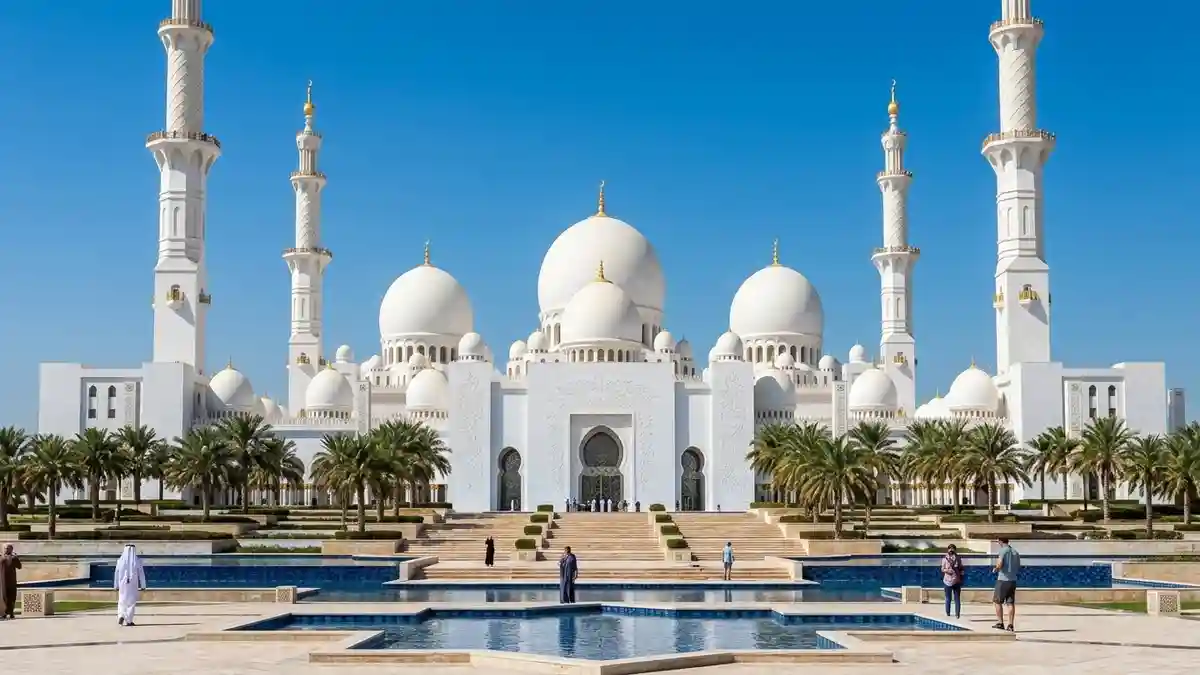
Sheikh Zayed Grand Mosque visits represent a cornerstone of modern cultural tourism, drawing millions of international travelers annually to Abu Dhabi to experience its monumental architecture and educational programming. As one of the world’s leading architectural landmarks, the site bridges religious devotion with cross-cultural dialogue, welcoming nearly seven million guests per year. Destination planning for this iconic heritage site requires an understanding of seasonal scheduling, attire guidelines, and ticketing protocols established by the Sheikh Zayed Grand Mosque Centre (SZGMC).
Defining Sheikh Zayed Grand Mosque Visits
Sheikh Zayed Grand Mosque visits encompass guided cultural tours, architectural explorations, and participation in community outreach programs designed to foster international understanding.
Primary Function: Operates simultaneously as a place of active Islamic worship and a globally accessible cultural institution.
Annual Volume: Attracts approximately 6.8 million annual guests, with roughly 82 percent originating from international source markets.
Core Offerings: Multilingual guided tours, multimedia digital guides, and immersive historical exhibitions such as the Noor and Salaam Museum.
Institutional Framework and Global Trust Signals
The operational integrity and global appeal of the site are maintained through rigorous management by the Sheikh Zayed Grand Mosque Centre, working in tandem with the Department of Culture and Tourism – Abu Dhabi. According to data published by the Emirates News Agency (WAM), the destination consistently ranks among the top global cultural attractions. International travel platforms, including Tripadvisor, routinely position the landmark within the global top ten, validating its status as a benchmark for heritage management. Official bodies such as the United Nations Educational, Scientific and Cultural Organization (UNESCO) framework principles on sustainable heritage tourism inform many of the centre’s conservation and crowd-management strategies. Named experts and tourism analysts note that the institution’s commitment to transparent visitor analytics establishes a high standard for contemporary religious tourism destinations globally.
What the Data Shows: Visitor Demographics and Trends
Recent tourism reports highlight a steady upward trajectory in international attendance, reinforcing the economic and cultural impact of heritage travel in the United Arab Emirates. International visitors comprise the overwhelming majority of foot traffic, led by arrivals from Asia, Europe, and North America.
| Visitor Metric | Statistical Overview | Primary Source / Context |
| Total Annual Volume | ~6.85 million guests | Sheikh Zayed Grand Mosque Centre (SZGMC) |
| International Share | 82 percent of total entries | Global tourism analytics |
| Top Source Markets | India, China, Russia, United States | Regional tourism boards |
| Average Duration | 2 to 4 hours per visit | Enhanced visitor programming data |
Data indicates that the introduction of extended touring hours, such as the Saraa Experience for transit travelers, has lengthened average visitor engagement times from two hours to four hours. This shift reflects a broader trend toward immersive cultural consumption rather than brief sightseeing stops.
Practical Planning and Access Guidelines
Organizing Sheikh Zayed Grand Mosque visits requires adherence to specific protocols that ensure respect for a functioning place of worship. Advance online registration via the official SZGMC portal is strongly encouraged for all individual travelers to secure preferred entry time slots.
Dress Code: Modest attire covering arms and legs is mandatory for all visitors; women are required to wear a headscarf prior to entering prayer halls.
Access Passes: Digital entry passes can be obtained directly through the official website without financial cost.
Guided Resources: The “El-Delleel” multimedia guide offers virtual tours in 14 languages, including specialized sign language options for the hearing impaired.
Societal, Cultural, and Sustainability Impact
The massive influx of travelers necessitates rigorous sustainability practices to protect the physical integrity of the marble courtyards, extensive hand-knotted carpets, and intricate glasswork. The SZGMC integrates environmental initiatives, including energy-efficient lighting systems and eco-friendly electric transit vehicles for internal mobility, minimizing the carbon footprint of large-scale tourism operations. Furthermore, community outreach programs during Ramadan—such as the distribution of hundreds of thousands of iftar meals—demonstrate a commitment to social responsibility. By balancing open heritage access with strict preservation protocols, the institution safeguards local cultural heritage while promoting interfaith dialogue on an international scale.
Expert Perspectives on Heritage Tourism
Industry leaders emphasize that managing a site of this scale demands continuous innovation in visitor flow and educational communication. Dr. Yousif Al Obaidli, Director General of the Sheikh Zayed Grand Mosque Center, noted in an official tourism briefing that the institution remains dedicated to “providing an integrated cultural experience that combines architectural beauty with cultural depth, while factoring in environmental, social and cultural dimensions”. Travel analysts corroborate that integrating advanced sensory exhibitions, such as the 360-degree Diya Experience, successfully disperses crowds away from primary prayer zones, enhancing both visitor satisfaction and structural preservation.
Stay inspired with Feast and Rest!
—
Source and Data Limitations
Primary Sources: Data compiled from official announcements by the Sheikh Zayed Grand Mosque Centre (SZGMC) and the Emirates News Agency (WAM).
Statistical Reference Period: Annual metrics reflect verified figures published for the 2025 operating year and mid-year reports.
Industry Rankings: Global standing references derived from published data by Tripadvisor institutional reports.
Data Limitations: Demographic breakdowns by continent and nationality are based on aggregate centre admissions logs; minor fluctuations in daily individual counts are unverified beyond official quarterly disclosures. Qualitative assessments of visitor satisfaction rely on published institutional summaries rather than independent longitudinal academic surveys.