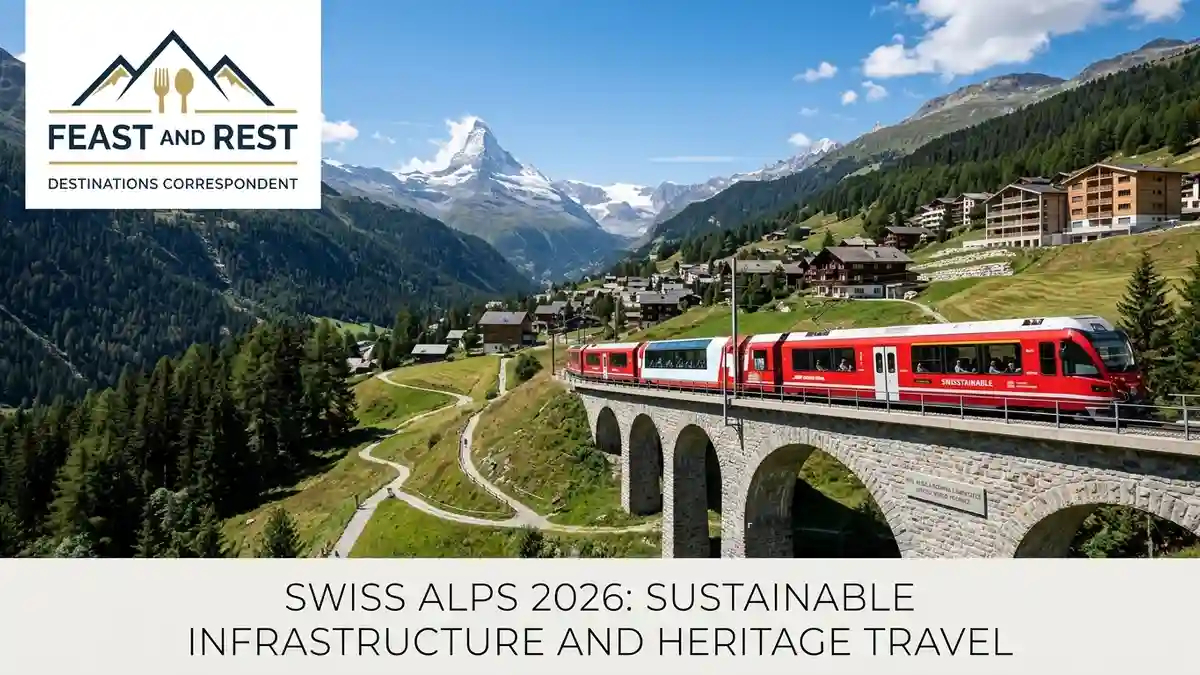
The alpine landscape of central Europe is undergoing a structural shift in how high-altitude destinations manage seasonal capacity, regional connectivity, and environmental protection. Swiss Alps 2026 represents a benchmark year for destination management, defined by upgraded public transit routes, strict environmental standards, and a pivot toward slow-travel heritage corridors. For cultural and nature-focused travelers, understanding these changes is critical for navigating access protocols, booking logistics, and seasonal choices across high-altitude cantons.
Swiss Alps 2026 reflects a multi-layer strategy combining public transport integrations, ecological certifications, and regional heritage conservation. First, national transit systems like the Swiss Federal Railways (SBB) and local mountain rail lines have aligned timetables with zero-emission feeder buses and cable cars, ensuring car-free connectivity to high-alpine villages. Second, the nationwide “Swisstainable” framework—managed by Switzerland Tourism—has scaled its multi-tiered verification system to encompass thousands of hotels, mountain huts, and tour operators committed to audited energy and waste reductions. Third, destinations are shifting focus toward year-round cultural tourism, leveraging UNESCO Biospheres and historic trade paths to reduce summer peak pressure on fragile glacial zones.
Swiss Alps 2026: Key Operational Metrics
• Public Transit Grid Coverage: 29,000+ kilometers of integrated rail, bus, and boat routes
• Car-Free Alpine Resorts: 14 official car-free villages (including Zermatt, Saas-Fee, and Wengen)
• Swisstainable Certified Partners: Over 3,000 participating accommodations and transport operators
• UNESCO World Heritage Sites in Alpine Regions: Swiss Alps Jungfrau-Aletsch, Swiss Tectonic Arena Sardona, Rhaetian Railway
• Peak Summer Visitor Budget Range: CHF 180–CHF 450 per day (mid-range to premium, including regional travel passes)
The region relies heavily on institutions like Switzerland Tourism, the Federal Office for the Environment (FOEN), the International Union for Conservation of Nature (IUCN), the UNESCO World Heritage Centre, and regional bodies like Valais Wallis Promotion and Graubünden Ferien to maintain both visitor flow and ecological integrity.
Why This Matters: Balancing Alpine Tourism and Glacial Protection
Alpine ecosystems are among the most climate-sensitive environments on Earth. Glacial retreat across the Pennine and Bernese Alps has forced mountain communities to re-examine traditional ski-centric economic models. In response, regional tourism boards have shifted resources toward low-impact alpine hiking, cultural heritage trail networks, and educational tourism that highlights geomorphology and climate science.
This strategic pivot protects local ecosystems while preserving the economic stability of high-altitude valleys. By dispersing travelers away from over-pressured hotspots—such as the Jungfraujoch summit—and into lesser-known cultural corridors like the Val d’Hérens or the Safiental, regional authorities prevent habitat degradation and ease overcrowding.
“The goal of modern alpine tourism is not to restrict access, but to re-engineer how visitors move through fragile landscapes using fully integrated, zero-emission infrastructure.”
— Switzerland Tourism Executive Statement on Sustainable Mobility
What the Data Shows: Transit Integration and Environmental Benchmarks
Data from the Organisation for Economic Co-operation and Development (OECD) and Swiss Federal Statistics reveals that public transport utilization among international visitors in Switzerland remains among the highest globally, exceeding 60% for long-distance intra-country journeys. The integration of mountain railways into the general Swiss Travel System network ensures that travelers can reach high-altitude passes without renting personal vehicles.
┌───────────────────────────┬────────────────────────────────┬────────────────────────────────┬───────────────────────────────┐
│ Region                    │ Primary Transit Connection     │ Sustainability Focus           │ Cultural / Natural Highlight  │
├───────────────────────────┼────────────────────────────────┼────────────────────────────────┼───────────────────────────────┤
│ Bernese Oberland          │ Jungfrau Railways & Cableways  │ Solar-powered lift systems     │ Jungfrau-Aletsch Glacier      │
│ Valais (Mattertal)        │ Matterhorn Gotthard Bahn       │ 100% Car-free village zones    │ Gornergrat & Alpine History   │
│ Graubünden                │ Rhaetian Railway (Albula/Bern.)│ Hydro-powered electric rail    │ Romansh language & architecture│
│ Central Switzerland       │ Zentralbahn & Lake Steamers    │ Hybrid watercraft & electric bus│ Historic Gotthard Pass trails │
└───────────────────────────┴────────────────────────────────┴────────────────────────────────┴───────────────────────────────┘
The expansion of the “Swisstainable” program provides transparent operational standards. Participating hotels must demonstrate concrete benchmarks, such as sourcing 80%+ of food ingredients from within a 50-kilometer radius, installing heat recovery systems, and eliminating single-use materials.
Heritage Access and Cultural Preservation
Beyond natural scenery, the Swiss Alps house centuries of distinct living traditions, including isolated linguistic pockets like the Romansh language in the Engadin valley and traditional Walser timber architecture in high Valais villages.
| Heritage Trail / Site | Cultural Focus | Access Point | Recommended Season |
| Via Spluga | Historic muleteer trade route across the Alps | Thusis to Chiavenna | June to October |
| Aletsch Forest Trail | Ancient Swiss pine woods & glacial geology | Riederalp / Bettmeralp | July to September |
| Swiss Tectonic Arena Sardona | UNESCO geological thrust site | Flims / Elm | June to September |
| Appenzell Cultural Loop | Traditional alpine farming & folk art | Appenzell Village | May to October |
Cultural tourism initiatives emphasize authentic interactions with local producers, alpine dairies, and historic preservation societies. These programs direct visitor spending straight into small village economies, helping reverse rural depopulation in high valleys.
Practical Planning Insights for Swiss Alps 2026 Travel
Navigating the Swiss Alps effectively requires strategic timing and advance planning, particularly regarding regional transit passes and accommodation bookings.
Seasonal Nuances: Summer (July–August) offers full trail accessibility, but shoulder months—specifically June and September—provide lower crowd density, stable weather, and operational mountain lifts.
Transit Pass Optimization: Purchasing a regional pass (such as the Berner Oberland Pass or Tell-Pass) alongside a Swiss Travel Pass covers high-altitude funiculars and cableways that are otherwise billed separately.
Luggage Transfer Systems: SBB offers station-to-station and hotel-to-hotel luggage forwarding, allowing hikers to traverse mountain passes without carrying heavy baggage.
Accommodation Models: Eco-certified mountain huts run by the Swiss Alpine Club (SAC) require advance reservations, particularly along major multi-day trekking routes like the Tour du Mont Blanc or Via Alpina.
Societal and Environmental Impact on Mountain Communities
Unchecked tourism growth poses structural risks to mountain communities, including real estate inflation, seasonal employment instability, and high municipal waste burdens during peak months. The Swiss Alps 2026 tourism framework addresses these challenges through strict spatial planning laws (Zweitwohnungsgesetz), which cap second-home construction in mountain municipalities at 20% to safeguard local housing stock.
Simultaneously, electric public transit networks significantly lower noise pollution and greenhouse gas emissions in confined valley troughs. By funding regional park systems—such as the Parc Ela in Graubünden—local authorities ensure that visitor revenues directly support landscape conservation, habitat restoration, and traditional land-management practices like alpine summer farming.
Stay inspired with Feast and Rest!
—
Source and Data Limitations
The analysis presented in this report draws from public data provided by Switzerland Tourism, the Swiss Federal Railways (SBB CFF FFS), the Swiss Federal Office for the Environment (FOEN), the OECD Tourism Trends and Policies report, and UNESCO World Heritage documentation.
Limitations: Specific long-term climate impacts on high-altitude glacier stability remain subject to ongoing scientific modeling by ETH Zürich and the Swiss Snow and Avalanche Research Institute (SLF). Future transport schedules, cableway maintenance closures, and pass pricing structures are subject to annual adjustments by operator consortiums. Regional economic impacts exclude unverified private resort expenditure data.