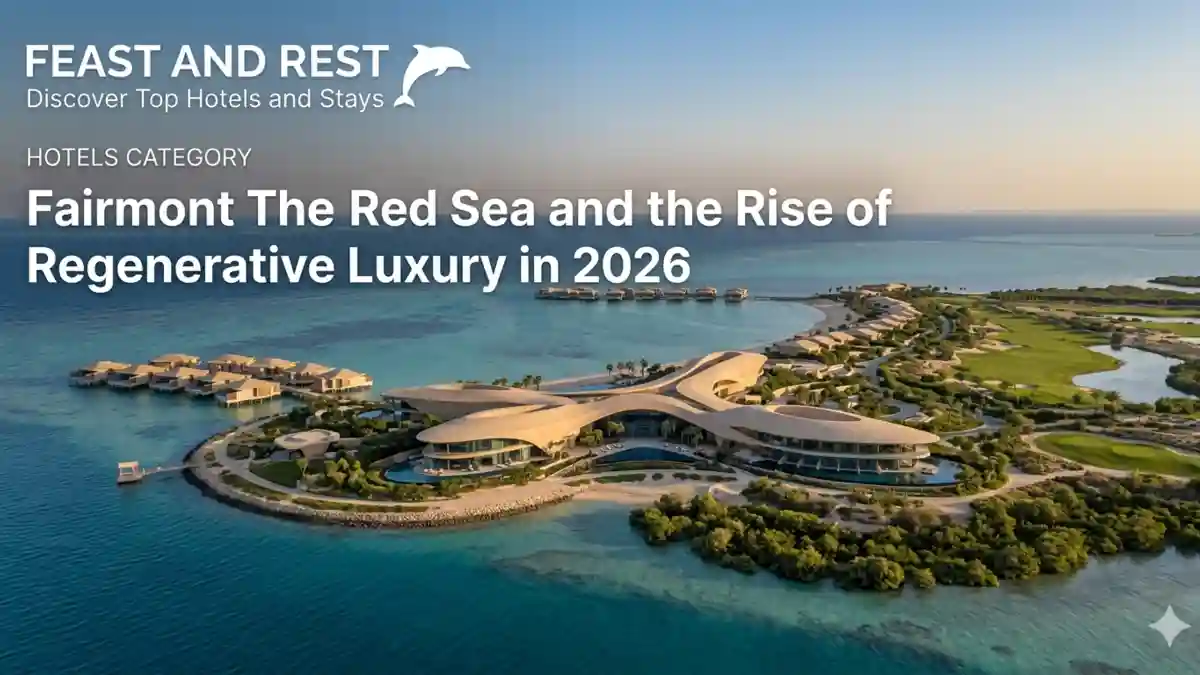
The landscape of high-end travel is shifting from mere sustainability toward active restoration, and Fairmont The Red Sea stands at the forefront of this movement. Located on the dolphin-shaped Shura Island within Saudi Arabia’s ambitious Red Sea project, this property is far more than a typical beach resort. As a cornerstone of the region’s 2026 travel landscape, the hotel combines the brand’s “Grandest of Feelings” philosophy with a commitment to leave the local environment better than it was found. For travelers seeking a mix of elite golf, marine exploration, and wellness, this resort serves as a sophisticated staging ground that respects the delicate balance of its pristine archipelago.
A New Era: Fairmont The Red Sea and the Rise of Regenerative Luxury in 2026
In 2026, the global hospitality industry has largely moved beyond “eco-friendly” buzzwords. The opening of Fairmont The Red Sea marks a significant milestone in what experts call “regenerative luxury.” Unlike traditional sustainable models that aim only to minimize damage, this property operates under a framework designed to improve biodiversity. According to project details, the master plan for the destination aims for a 30% net-positive conservation benefit by 2040.
For the guest, this means luxury is defined by the health of the surroundings. When you look out from your suite, you aren’t just seeing a manicured beach; you are witnessing a protected ecosystem where hawksbill turtles and vibrant coral reefs are actively being rehabilitated. This shift in focus ensures that a stay here contributes directly to the longevity of the Al-Wajh Lagoon.
The Architecture of the Coral Bloom
The visual identity of Fairmont The Red Sea is deeply rooted in its environment. Designed by world-renowned architects, the resort’s silhouette is part of the “Coral Bloom” concept created by Foster + Partners. The buildings are intentionally low-slung to blend into the natural dunes and flora of Shura Island, ensuring the skyline remains undisturbed.
Based on available information, the design uses lightweight materials with low thermal mass to reduce energy consumption. The structures are oriented to capture natural cooling breezes, a practical architectural choice that minimizes the need for heavy air conditioning. This thoughtful integration ensures that the physical footprint of the resort feels like an extension of the island’s natural topography rather than an imposition upon it.
Accommodations Designed for Immersion
The resort features 193 guest rooms and suites, alongside a selection of exclusive Fairmont Residences. Each space is designed to pull the outdoors in, with floor-to-ceiling windows and private terraces that overlook the turquoise waters of the Red Sea or the island’s lush inland landscapes.
Inside, the aesthetic leans toward a refined, neutral palette that mirrors the sand and shells found on the shore. Rather than over-the-top opulence, the luxury here is found in the craftsmanship and the seamless transition between the living areas and the environment. Travelers can expect:
Spacious Suites: High ceilings and open-plan layouts that maximize natural light.
Branded Residences: For those seeking long-term stays, the 31 beach villas offer a more private, residential-style experience with dedicated services.
Smart Technology: Integrated systems that allow guests to monitor their energy footprint during their stay.
Key Amenities at a Glance
| Amenity | Feature |
| Golf | 18-hole championship course designed by Brian Curley |
| Dining | Six distinct concepts, including a signature overwater restaurant |
| Wellness | Full-service spa with treatments inspired by local minerals |
| Nature | Direct access to the Blue Hole cluster and coral research centers |
| Energy | 100% powered by renewable solar energy |
Culinary Experiences Over the Water
Dining at Fairmont The Red Sea is centered around six distinct culinary concepts, each emphasizing local provenance and sustainable sourcing. The most anticipated of these is the signature overwater restaurant. Positioned directly above the lagoon, it offers a sophisticated menu inspired by the sea, served with panoramic views of the archipelago.
In line with the 2026 focus on food security and local support, the resort reportedly prioritizes ingredients from regional regenerative farms and sustainable fisheries within the Al-Wajh Lagoon. This “sea-to-table” approach doesn’t just provide a fresher meal; it supports the local economy and reduces the carbon footprint associated with long-distance food transport. Whether it is a casual breakfast at the lounge or a multi-course dinner over the waves, the focus remains on quality and environmental integrity.
Wellness and the Power of Restoration
Wellness at this property goes beyond the traditional spa menu. While the resort offers a comprehensive spa with signature treatments, the 2026 trend toward “biological wellness” is central to the experience. Guests can participate in guided yoga sessions at sunrise or engage in wellness programming that incorporates the island’s natural elements.
The facilities are expected to include:
Mineral-based treatments: Utilizing local salt and sea elements known for their restorative properties.
State-of-the-art fitness: A gym that opens onto garden spaces, allowing for outdoor movement.
Mindfulness Trails: Pathing throughout Shura Island designed for quiet reflection amidst the native flora.
For the wellness seeker, the true luxury lies in the silence and the space provided by the island’s low-density development. With only a small percentage of the total land area being built upon, there is a pervasive sense of calm that is increasingly rare in global tourism hubs.
Practical Planning for Your 2026 Stay
Travelers looking to visit Fairmont The Red Sea should plan for a multi-faceted journey. The resort is best suited for those who appreciate the intersection of high-end sport—particularly golf and diving—and environmental conservation.
Getting There:
Guests will likely arrive via the Red Sea International Airport (RSI), which is specifically designed to handle the 2026 influx of travelers with a carbon-neutral footprint. From the airport, Shura Island is accessible via electric vehicle transfers or marine transport.
Best Time to Visit:
While the Red Sea is a year-round destination, the months between October and May offer the most comfortable temperatures for golf and exploring the dormant volcanoes nearby. The summer months, though warmer, provide the clearest waters for diving and snorkeling in the Blue Hole cluster.
What to Expect:
Expect a measured, calm pace of life. This is not a high-volume transit hub; it is a destination designed for lingering. Guests are encouraged to take part in “conservation tourism,” such as visiting the on-site coral nurseries or learning about the SIIG Model of restoration that governs the project.
Why This Stay Matters
Choosing a resort like Fairmont The Red Sea in 2026 is a statement of intent. It suggests that the modern traveler is no longer satisfied with just “seeing” a place; they want to ensure their presence supports its future. By staying at a property that runs entirely on renewable energy and actively works to restore its marine habitat, guests become part of the solution.
The hotel offers a rare opportunity to enjoy world-class amenities—from an 18-hole championship course to overwater dining—without the typical environmental compromise. It is a refined, thoughtful approach to hospitality that sets a new benchmark for the Middle East and the world.
Stay sharp with Feast and Rest.
Source and Data Limitations:
The information regarding Fairmont The Red Sea is based on official project announcements from Red Sea Global (RSG) and Accor Group updates as of early 2026. Data on the SIIG Model and regenerative tourism targets are derived from recent industry reports and environmental baseline studies published by the developer.
Opening Timeline: While currently slated for a 2026 opening, specific months for full guest occupancy can be subject to final commissioning phases.
Amenities: Details regarding the 18-hole golf course and specific restaurant concepts are based on current master plans and may undergo minor adjustments prior to the grand opening.
Exclusions: We have excluded specific nightly pricing as these rates are subject to seasonal fluctuations and dynamic booking structures.
Conflicting Reports: Some early design renders varied slightly from the final “Coral Bloom” structures; this article utilizes the most recent architectural confirmations provided by the developer and Foster + Partners.