Exploring Kyoto Shojin Ryori Restaurants: Tradition and Taste
In 2026, as global fine dining continues to shift toward vegetable-forward tasting menus and low-waste kitchens, Kyoto shojin ryori restaurants have moved from quiet cultural curiosities to essential destinations for international travelers. Rooted in Zen Buddhist monastic traditions introduced to Japan centuries ago, this plant-based cuisine avoids all animal products and pungent aromatics in favor of seasonal mountain vegetables, tofu, and kelp-based broths. In Kyoto—particularly around historic temple complexes in Arashiyama, Higashiyama, and Daitoku-ji—established kitchens and Michelin-recognized dining rooms demonstrate how strict culinary rules yield remarkable depth of flavor. For anyone seeking an authentic taste of traditional Buddhist vegetarian dining in Japan, understanding how these establishments operate transforms a simple lunch into a memorable cultural study.
Neighborhood Context and Architectural Atmosphere
Kyoto’s geography shapes the physical setting of its temple dining rooms. Unlike the bustling izakaya alleys of Pontocho or the modern storefronts near Kawaramachi, most traditional Kyoto shojin ryori restaurants sit on the quiet edges of major Zen precincts. Neighborhoods like Saga-Arashiyama in the west, Nanzen-ji in the eastern foothills, and Murasakino in the north offer immediate proximity to cedar forests, moss gardens, and mountain spring water.
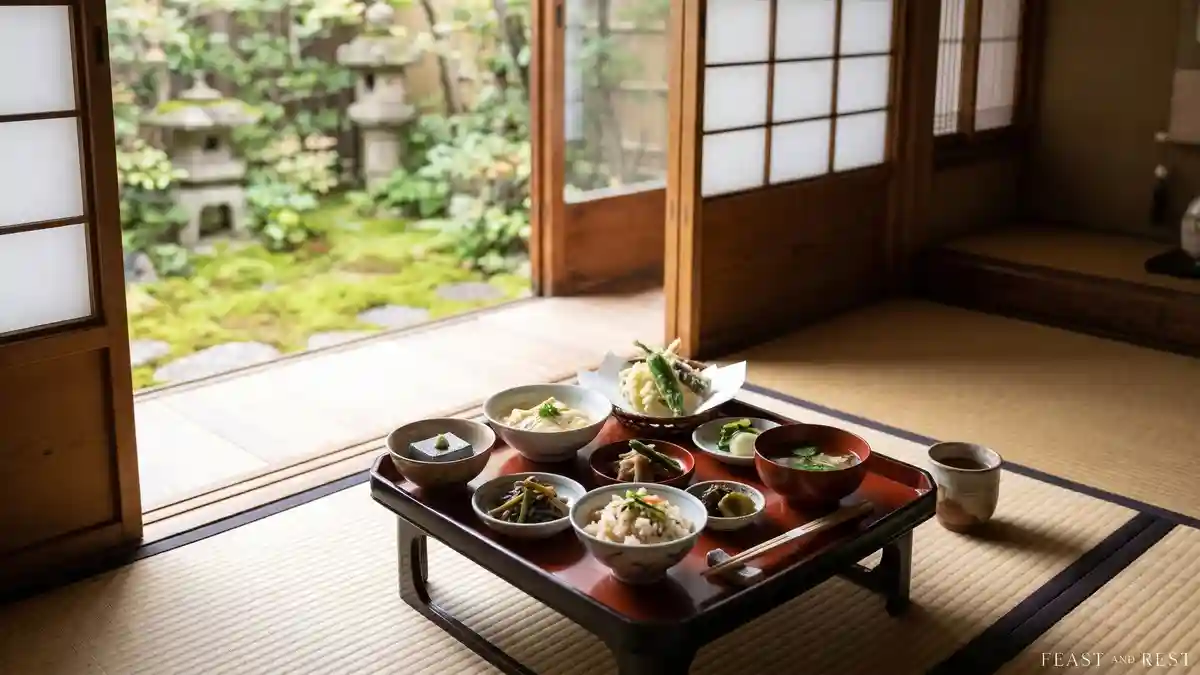
The architecture inside these venues is deliberately understated, often occupying converted sub-temples (tatchu) or Meiji-era wooden townhouses. Guests typically dine on tatami mats in private or semi-private rooms separated by shoji paper screens. Low lacquerware tables (ozen) position diners at eye level with manicured dry-landscape gardens or koi ponds.
This spatial design is not merely decorative. By removing visual clutter and background music, the dining room forces attention onto the sound of wind through bamboo, the warmth of ceramic bowls, and the subtle shifts in natural light across the course of a meal. Compared to formal kaiseki restaurants in Gion, which often emphasize theatrical hospitality and rare luxury proteins, temple eateries maintain a calmer, almost meditative tempo.
Culinary Philosophy: The Five Rules of Zen Cooking
To appreciate Buddhist temple cuisine in Kyoto, it helps to understand its structural framework rather than viewing it simply as “vegan Japanese food.” Shojin ryori is governed by the principle of gomi goshoku goho—the balance of five flavors (sweet, sour, salty, bitter, umami), five colors (green, yellow, red, black, white), and five cooking methods (raw, simmered, grilled, steamed, fried).
Equally important is the exclusion of gokun, the five pungent roots: garlic, onions, scallions, leeks, and chives. Monastic tradition holds that these ingredients overstimulate the senses and disturb mental clarity. Without aromatics or bonito-based dashi, chefs rely heavily on kombu (kelp) and dried shiitake mushrooms steeped in Kyoto’s notably soft groundwater to build savory foundations.
Key philosophical pillars define the kitchen’s approach:
Zero-waste preparation: Vegetable peels, stems, and soaking liquids are routinely repurposed into broths, pickles, or simmered side dishes.
Micro-seasonality: Menus shift not just four times a year, but often every few weeks to reflect brief harvests like spring bamboo shoots (takenoko) or autumn matsutake mushrooms.
Textural contrast: Because meat and fish are absent, chefs engineer satisfaction by pairing silky tofu, chewy wheat gluten, crisp pickled roots, and airy tempura within a single tray.
Notable establishments such as Shigetsu inside Tenryu-ji temple in Arashiyama, Izusen at Daitoku-ji, and Ajiro near Myoshin-ji have preserved these techniques across generations. While each maintains its own house style—some leaning closer to monastic austerity and others adopting refined kaiseki pacing—all treat humble regional produce with rigorous technical discipline.
Signature Dishes and Menu Highlights
Because menus are dictated by daily market availability and temple harvests, specific courses rotate continuously throughout the year. According to current details from established Kyoto kitchens, however, a core repertoire of foundational preparations anchors almost every multi-course meal.
Key Menu Highlights
Goma Dofu (Sesame Tofu): Despite its name, this dish contains no soybeans. Chefs slowly whisk toasted white or black sesame paste with kudzu root starch and water over steady heat until it sets into a dense, elastic custard, usually served chilled with a dab of fresh wasabi and soy-kelp glaze.
Yuba (Tofu Skin): A signature Kyoto specialty made by skimming the delicate protein film that forms on heated soy milk. Fresh nama-yuba is often served raw like sashimi, offering a creamy, sweet finish, while dried sheets are rolled around vegetables and simmered in light broth.
Nama-fu (Fresh Wheat Gluten): Mixed with glutinous rice flour and steamed, nama-fu is shaped into seasonal motifs—such as maple leaves in November or cherry blossoms in April—and lightly pan-seared with sweet white or red miso (fu-dengaku).
Koya-dofu (Freeze-Dried Tofu): Spongy blocks of dehydrated tofu rehydrated in a gently seasoned kombu and soy broth, releasing bursts of savory liquid with each bite.
Shojin Age (Vegetable Tempura): Crisp, delicate fritters featuring wild mountain greens (sansai), lotus root, kabocha squash, or chrysanthemum leaves, fried in clean vegetable oil without egg in the batter.
Kenchin-jiru (Hearty Vegetable Soup): A warming clear or miso-enriched soup loaded with root vegetables, burdock, taro, and crumbled tofu, traditionally served toward the conclusion of the meal alongside steamed rice and house-made tsukemono pickles.
Pacing, Presentation, and the Dining Experience
A meal at a Kyoto shojin ryori restaurant unfolds differently than a standard Western restaurant service. At lunchtime—when most temple-affiliated venues see their highest volume—food is frequently presented all at once on a tiered lacquer tray or served across two or three measured waves. Evening seatings, particularly at Michelin-listed specialist venues, resemble formal kaiseki progressions with eight to ten distinct courses arriving sequentially.
Service is quiet, unhurried, and respectful of the setting. Staff members explain the origin of unfamiliar mountain vegetables or regional tofu styles without hovering at the table. Guests are encouraged to eat at an unhurried pace, alternating bites between small dishes to experience how bitter, sweet, and savory flavors reset the palate.
| Dining Format | Typical Setting | Pacing & Courses | Best Suited For |
| Temple Precinct Dining (e.g., Tenryu-ji, Daitoku-ji) | Tatami halls overlooking temple gardens | Lunch-focused; 5–7 dishes served on lacquer trays | Travelers exploring historic districts; first-time visitors |
| Specialist Fine Dining (e.g., stand-alone town venues) | Intimate private rooms or counter seating | Multi-course tasting progression (8–10 courses) | Culinary enthusiasts; quiet evening dinners; couples |
| Temple Lodging (Shukubo) | Monastic guest quarters (e.g., Myoshin-ji area) | Fixed early dinner and simple morning porridge | Visitors seeking overnight cultural immersion |
Beverage Pairings: Tea, Sake, and Water
Alcohol is technically discouraged within strict monastic rules—known historically as hannya-to (“wisdom water”) when consumed discreetly—yet most public Kyoto shojin ryori restaurants offer thoughtful beverage lists tailored to delicate plant-based flavors. Heavy, oaky wines or aggressively aromatic spirits easily overwhelm kelp broths and steamed tofu, so pairings lean toward clarity and subtle minerality.
Kyoto’s proximity to Uji, Japan’s premier green tea region, makes non-alcoholic pairings particularly rewarding. Meals typically begin with warm roasted hojicha or bancha to settle the stomach, transitioning to crisp, umami-rich sencha or cold-brewed gyokuro alongside richer fried and miso-glazed courses.
For diners preferring alcohol, local junmai sake from Kyoto’s Fushimi district is the natural match. Fushimi sake is brewed with soft, medium-mineral spring water (gokosui), resulting in a smooth, slightly rounded profile that complements soy, sesame, and root vegetables without sharp acidity. Lightly chilled sake works well with yuba sashimi, while gently warmed nurukan sake pairs naturally with simmered winter dishes.
Practical Dining Advice for Visitors
Planning ahead is essential when visiting Kyoto’s temple dining rooms, as operating hours and seating protocols differ significantly from mainstream city restaurants. Based on available information from local hospitality listings, keeping a few logistical details in mind ensures a smooth visit.
Prioritize Lunch Reservations: Many historic temple-affiliated restaurants operate exclusively between 11:00 AM and 2:30 PM, closing well before dusk when temple gates shut. Evening service generally requires advance reservations at independent specialist restaurants.
Clarify Dietary Nuances in Advance: While shojin ryori is inherently vegetarian and almost entirely vegan, occasional dishes may include honey, dairy in modern adaptations, or shared frying oil. Notifying the restaurant at least 48 hours ahead allows the kitchen to guarantee strict plant-based preparation.
Dress for Tatami Seating: Most traditional venues require removing shoes at the entrance. Wear clean, intact socks and choose comfortable trousers or longer skirts that allow you to sit easily on floor cushions (zabuton), though low chairs (zaisu) are increasingly available upon request.
Time Your Visit Around Seasonal Transitions: Late spring (April to May) brings prized bamboo shoots and fresh mountain greens, while November offers autumn foliage views alongside chestnut, persimmon, and mushroom dishes. Winter menus feature warming hotpots (yudofu—simmered tofu in kelp broth) that highlight Kyoto’s cold-weather comfort cooking.
Carry Cash for Temple Grounds: While high-end evening venues accept major credit cards, several daytime dining halls located inside temple precincts operate on a cash-only basis and may also require a separate temple garden admission fee.
Stepping out of a quiet tatami room back into Kyoto’s sunlit cedar paths leaves a distinct impression that lingers well beyond the final sip of roasted green tea. Rather than feeling deprived by the absence of meat, fish, or heavy seasoning, diners often leave with a sharper awareness of how texture, temperature, and seasonal timing carry a meal. In a culinary landscape increasingly crowded with complex techniques and loud flavors, Kyoto’s shojin ryori kitchens offer a grounded reminder that restraint, when practiced with precision, can be deeply satisfying.