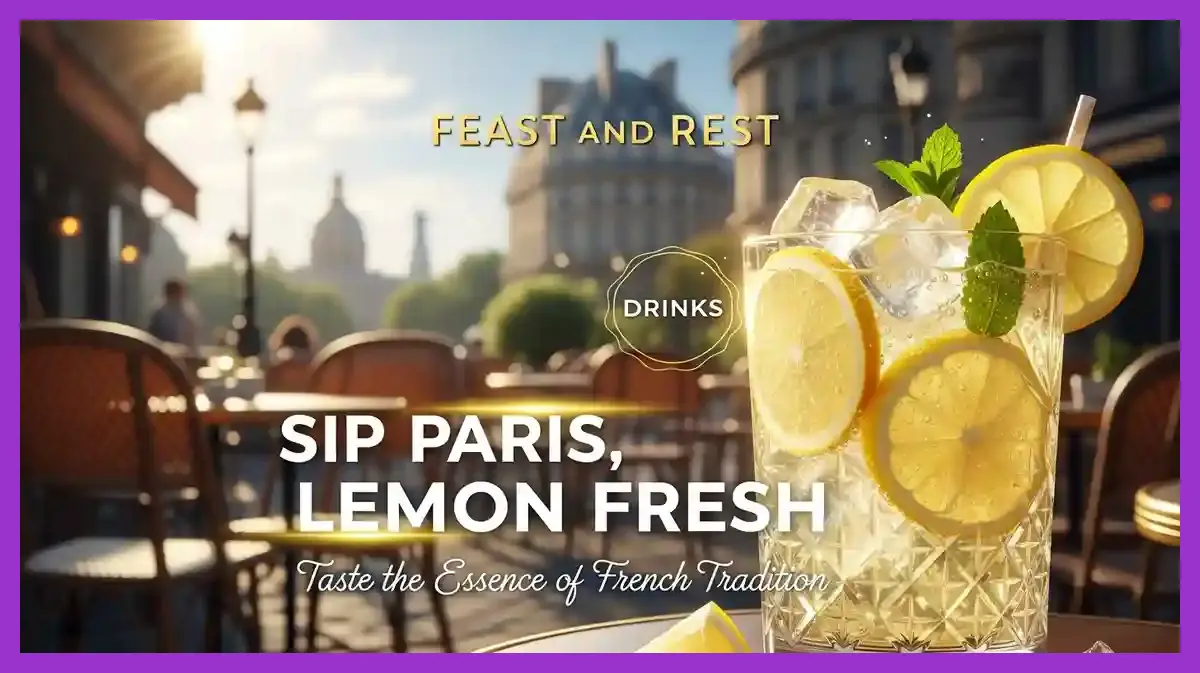
First Sip: Encountering Citron Pressé’s Simple Elegance
Imagine settling into a sun-dappled terrace at a classic French café, where the air carries faint whispers of conversation and the clink of glassware. A server arrives with a slender glass brimming with vibrant yellow lemon juice, accompanied by a small carafe of chilled water and a dish of sugar cubes. This is citron pressé, a beverage that embodies the French art of savoring the uncomplicated. At its core, citron pressé translates to “pressed lemon,” offering a fresh, tangy base that each person adjusts to their preference—tart for those who favor brightness, or subtly sweetened for a gentler refreshment.
Rooted in France’s café culture, citron pressé has long been a staple for locals and visitors alike, providing a non-alcoholic option that aligns with everyday rituals. Its origins trace back to the broader history of lemonade, which appeared in Europe as early as the 17th century when vendors in Paris sold sweetened lemon waters from portable tanks. By the early 20th century, around the 1910s, citron pressé emerged as a distinct café offering, emphasizing fresh-squeezed lemons and the interactive element of self-mixing. This evolution reflects France’s appreciation for seasonal ingredients and mindful consumption, where beverages serve as quiet companions to reflection or light meals.
For travelers exploring culinary tourism, citron pressé represents an accessible entry into local drink traditions. It appeals to home enthusiasts too, who recreate it for gatherings, drawing on its customizable nature to suit varied palates. Whether enjoyed during a leisurely afternoon or as a hydrating pause in a busy day, this beverage highlights how simple elements—lemon, water, and sweetener—can foster a sense of connection to place and heritage. Its cultural role extends beyond refreshment, symbolizing the French value of balance in daily life, where even a modest drink encourages intentionality. As a non-alcoholic recipe, it invites experimentation without complexity, making it ideal for those seeking inspirational, artisanal beverages that enhance food and travel experiences.

In the sections that follow, we’ll uncover its heritage, preparation details, travel connections, and practical tips, offering a comprehensive guide for beverage explorers.
The Heritage of Citron Pressé: Origins, Traditions, and Cultural Role
Citron pressé’s story intertwines with the broader narrative of citrus-based drinks in Europe, particularly in France. Lemonade-like beverages date to medieval times, with records from the 12th century in Arabic regions describing mixtures of lemon juice, spices, and herbs. These ideas traveled to Europe through trade routes, evolving into sweetened lemon waters by the 1600s. In Paris, the Compagnie de Limonadiers formed in 1676, granting exclusive rights to sell such refreshments, often carried in tanks on vendors’ backs. This laid the groundwork for café culture, where beverages became social anchors.
By the early 1900s, citron pressé solidified its place in French brasseries and cafés, likely debuting around the 1910s as a deconstructed form of lemonade. Unlike premixed versions, it emphasized fresh pressing, aligning with France’s culinary emphasis on quality ingredients. This format allowed patrons to control tartness and sweetness, mirroring the nation’s preference for personalized experiences. In cultural terms, it became a symbol of leisurely afternoons, often ordered alongside a coffee or light snack, fostering unhurried conversations.
Regionally, citron pressé thrives in urban centers like Paris, where it’s a menu staple even if not listed—any reputable café can prepare it. In southern France, near citrus-growing areas like the Provence region, fresh lemons from local orchards enhance its authenticity. Traditions vary subtly: in bustling city spots, it’s a quick revitalizer; in rural settings, it might accompany family meals or market visits. Festivals and seasonal events, such as summer gatherings, highlight its role in communal refreshment, where sharing the mixing process adds a ritualistic layer.
Culturally, citron pressé underscores France’s sustainable approach to beverages. Using minimal, natural components reduces waste, and its non-alcoholic nature makes it inclusive for all ages and occasions. It has influenced similar drinks elsewhere, like lime pressé in England or fresh lime soda in South Asia, showing its inspirational reach. For those interested in artisanal beverages, it represents a bridge between history and modernity, where traditional methods meet contemporary wellness trends favoring hydrating, low-sugar options.
This heritage enriches its appeal, positioning citron pressé as more than a drink—it’s a cultural artifact that invites reflection on how local traditions shape everyday pleasures.
Preparing Citron Pressé: Authentic Ingredients, Methods, and Variations
At its essence, citron pressé relies on three core elements: fresh lemon juice, water, and a sweetener. This simplicity allows for easy home recreation while preserving cultural authenticity. Start with high-quality lemons—bright yellow, firm ones yield the best juice, offering a clean, zesty profile without bitterness.
Ingredients (for one serving):
- 2-3 fresh lemons (enough for about 4 ounces of juice)
- Chilled water (still or sparkling, about 2 cups)
- Sweetener (sugar cubes, granulated sugar, or simple syrup to taste—typically 2-4 teaspoons equivalent)
The method emphasizes the deconstructed presentation, a hallmark of French café style.
- Select ripe lemons and roll them gently on a counter to loosen the juices. Cut in half and squeeze using a manual juicer or reamer, straining out seeds and pulp for a smooth result.
- Pour the fresh juice into a tall, slender glass, filling it about two-thirds full to leave room for mixing.
- Present alongside a carafe of chilled water and a small dish of sweetener. Ice cubes can be added directly to the glass or served separately.
- To enjoy, gradually add water to dilute the juice, then stir in sweetener incrementally, tasting as you go to achieve desired balance—tart for invigoration or milder for subtlety.
Variations draw from regional influences and ingredient availability. In some French locales, sparkling water replaces still for a gentle effervescence, enhancing the refreshing quality. Herbal infusions, like a hint of lavender from Provence, can be incorporated by steeping dried flowers in the simple syrup beforehand, adding floral undertones without overpowering the lemon. For citrus alternatives, orange pressé uses fresh orange juice for a sweeter profile, while lime pressé introduces a sharper edge, echoing traditions in warmer climates.
Home adaptations focus on balance: if lemons are particularly sour, a touch more sweetener harmonizes flavors. Substitutions like honey-based syrup offer a natural twist, though traditionalists stick to sugar for neutrality. Sensory notes include the initial bright acidity that softens with dilution, yielding a clean finish that lingers lightly on the palate.
This approach ensures citron pressé remains versatile, suitable for non-alcoholic recipes that adapt to personal or cultural contexts.
Savoring the Journey: Where and How Citron Pressé Enhances Travel
Citron pressé shines in France’s vibrant café scene, where it complements exploratory travels. In Paris, iconic brasseries along the Seine or in neighborhoods like Le Marais offer ideal settings to pause and observe street life while mixing this beverage. It’s a natural fit for culinary tourism, allowing visitors to engage with local drink traditions amid historic architecture and bustling markets.
Beyond the capital, regions like the French Riviera or Provence amplify its appeal. Coastal towns such as Nice feature citron pressé in seaside cafés, where the tangy notes pair with ocean views, evoking a sense of place. In rural areas, it’s often enjoyed at outdoor markets showcasing fresh produce, linking the drink to seasonal citrus harvests. Travel experiences gain depth through these moments—perhaps during a walking tour or after visiting lavender fields, where a lavender-infused variation ties into the landscape.
Seasonally, summer months heighten its relevance as a cooling option, though it’s available year-round for consistent refreshment. For foodie travel, it enhances light fare like salads or pastries, providing a neutral palate cleanser. Accessibility is key: most cafés prepare it on request, making it inclusive for groups with diverse preferences.
Overall, citron pressé enriches journeys by grounding them in authentic, everyday rituals, fostering memorable connections to French culture.
Beverage Notes: Tips for Enjoying and Recreating Pressé
To fully appreciate citron pressé, consider these practical insights drawn from traditional practices.
- Optimal Occasions and Times: Ideal for mid-afternoon breaks or post-meal refreshers, especially in warmer seasons. It suits relaxed rituals, like reading or conversing, and complements light lunches without overwhelming flavors.
- Ingredient Sourcing and Preparation Tips: Choose organic lemons for purer taste; store them at room temperature for easier juicing. For simple syrup, dissolve equal parts sugar and water over low heat, cooling before use—this ensures smooth integration.
- Pairing Ideas: Enhances subtle foods such as fresh salads, seafood, or mild cheeses, where its acidity cuts through richness. Pair with herbal teas for a layered non-alcoholic experience, or enjoy solo for focused refreshment.
- Who It Suits Best: Perfect for those favoring light, customizable beverages or seeking calming interludes. It may appeal less to bold-flavor enthusiasts, who might explore spiced variations as alternatives.
- Cultural and Sustainability Notes: Embraces mindful consumption by using whole fruits and minimal waste. In France, it promotes local sourcing, supporting citrus growers and eco-friendly traditions.
These notes help integrate citron pressé into personal routines, emphasizing its role in thoughtful beverage exploration.
Why Pressé Inspires Enduring Refreshment
Citron pressé stands out for its unassuming elegance, blending fresh citrus with the freedom of personalization. Its heritage in French café culture, combined with straightforward preparation, makes it a timeless choice for enhancing daily moments or travel adventures. Through variations and regional ties, it reveals the depth of local drink traditions, offering non-alcoholic recipes that adapt seamlessly to home or exploratory settings.
This beverage’s inspirational appeal lies in its ability to slow the pace, encouraging savoring over haste. For cultural explorers and home mixers, it serves as a gentle reminder of how artisanal beverages can enrich food experiences and journeys. Consider incorporating citron pressé into your repertoire, allowing its simple ritual to add a layer of authenticity to your own discoveries.