Master the Zambia Walking Safari Gear Guide: Luxury Packing Strategy
Executing a seamless luxury wilderness expedition demands strict tactical discipline. The ultimate Zambia walking safari gear guide brings together precise bush performance with strict private charter safari flight rules. When boarding light aircraft into remote airstrips like Mfuwe or Royal Zambezi, strict weight restrictions force travelers to pack with maximum efficiency.
For travelers preparing a South Luangwa luxury lodge checklist, getting your wardrobe and gear right goes beyond comfort—it directly affects your safety on foot and ensures you respect local traditions. Selecting a balanced luxury safari wardrobe men women requires technical, quick-drying earth-toned fabrics that offer UV protection and tsetse fly defense, while keeping within safari luggage weight limits.
At the same time, high-end expeditioners need clear safari tipping guidelines 2026, comprehensive safari travel insurance comparison criteria, a complete first time luxury safari checklist, and an understanding of high-end safari camera gear to capture close-up wildlife Encounters safely without overburdening their kit.
Essential Field Definition
Walking Safari Gear System: A highly curated, lightweight wardrobe and kit designed specifically for foot tracking in African game reserves. It prioritizes silent, non-synthetic or brush-resistant earth-toned fabrics (khaki, olive, taupe), ankle-supporting footwear, specialized dust-and-moisture camera protection, and strict compliance with light-aircraft soft-luggage restrictions (typically 15 kg to 20 kg total allowance including camera gear).
┌──────────────────────────────────────────────────────────────────────────┐
│                      SAFARI PACKING WEIGHT PROFILE                       │
├──────────────────────────┬───────────────────────────┬───────────────────┤
│ BASE CLOTHING            │ HARDWARE & OPTICS         │ TOTAL WEIGHT      │
│ 3x Technical Shirts      │ 1x Telephoto Body/Lens    │                   │
│ 2x Trail Trousers        │ 1x 10x42 Binoculars       │  15.0 - 20.0 KG   │
│ 1x Camp Footwear         │ 1x Compact Headlamp       │  (HARD MAX ON     │
│ 1x Mid-layer Fleece      │ Personal Medical Kit      │   BUSH CHARTERS)  │
└──────────────────────────┴───────────────────────────┴───────────────────┘
The Luangwa Valley—widely recognized as the birthplace of the modern walking safari—demands a specialized approach compared to standard vehicle-based game viewing. On foot, travelers become an active element of the ecosystem rather than neutral observers inside a vehicle frame. As the Zambia Tourism Agency and international conservation bodies emphasize, wilderness immersion requires quiet movement, zero visual disruption, and thorough preparation for changing weather and dust.
To maintain editorial rigor, this guide incorporates operational regulations from regional aviation authorities, field guidance from the Field Guides Association of Southern Africa (FGASA), and logistical frameworks provided by premier conservancy operators across the Luangwa and Lower Zambezi ecosystems.
Why This Matters: The Practical and Cultural Science of Foot Tracking
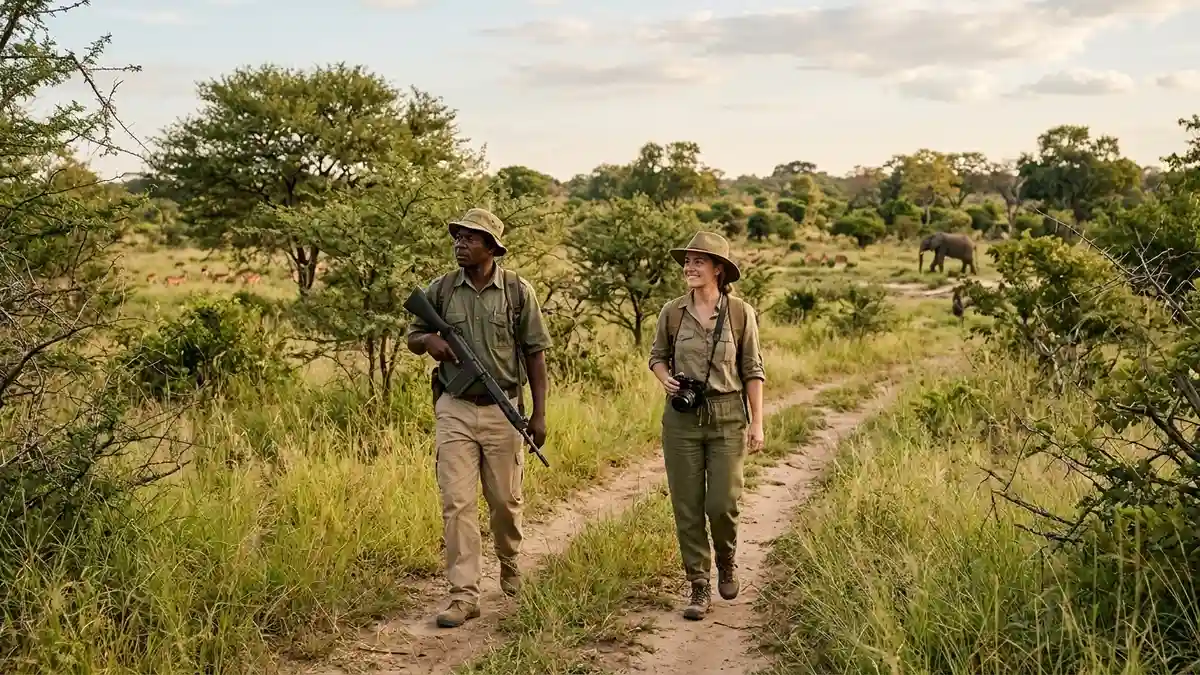
Walking through native bush habitats changes your relationship with the environment. In world-class wilderness areas like South Luangwa National Park, walking safaris allow guests to observe eco-systems up close, tracking big game alongside professional armed scouts and expert guides.
Visual stealth is paramount. Animals recognize bright colors, stark whites, and unnatural geometric patterns from long distances. Ditching high-contrast clothing in favor of khaki, olive, beige, and muted tan allows walking groups to blend into mopane woodlands and riverine grasslands seamlessly.
VISUAL & INSECT DEFENSE COLOR SPECTRUM
[ Khaki / Olive / Tan / Sage ]  ==> RECOMMENDED (Invisible to game, neutral to insects)
[ Dark Blue / Black / Navy ]   ==> DANGER (Attracts Tsetse flies / Glossina spp.)
[ Pure White / Neon / Bright ] ==> WARNING (Spooks wildlife, collects visual dust)
Insect defense requires equal visual planning. Tsetse flies (Glossina species), found in pockets of Central and Southern Africa, are attracted to dark blue and black colors. Field traps designed to control fly populations use dark blue and black fabric precisely because these wavelengths attract the insects.
Wearing dark navy or black apparel during bush walks significantly increases bite risk, while lightweight olive or sand-colored clothing keeps flies away naturally. Additionally, full-coverage trousers protect legs against spear grass, thorny acacia brush, and tick-borne risks during extended cross-country treks.
What the Data Shows: Charter Flight Limits and Weight Balances
Light aircraft transfers (such as Cessna Caravans or Beechcraft 1900s) connect main international hubs like Kenneth Kaunda International Airport in Lusaka or Harry Mwaanga Nkumbula in Livingstone to bush strips like Mfuwe, Jeki, and Royal. These remote flights operate under strict civil aviation safety margins governed by total payload, ambient temperature, and runway length.
| Charter Logistics Parameter | Official Standard Requirement | Operational Impact & Rationale |
| Max Checked Luggage Weight | 15 kg – 20 kg (33 lbs – 44 lbs) total per guest | Exceeding limits requires purchasing an extra seat or chartering a dedicated cargo flight. |
| Baggage Structure | 100% soft-sided duffle, no rigid frames or wheels | Luggage compartments are irregular; soft bags compress into nose and wing pods. |
| Maximum Bag Dimensions | 25 x 30 x 62 cm (approx. 10 x 12 x 24 inches) | Hard-shell suitcases cannot fit through cargo pod doors and will be rejected at the gate. |
| Camera & Hand Gear Allowance | Stowed within total allowance or held on lap (Max 3 kg) | Unbalanced cabin weight impacts aircraft center-of-gravity calculations during takeoff. |
Luxury bush camps provide complimentary same-day laundry services (often utilizing traditional sun-drying methods). This makes carrying excessive clothing unnecessary; packing three main apparel rotations easily covers an extended two-week safari stay.
“On a light aircraft transfer into the valley, weight limits aren’t open to negotiation—they are strict aviation safety caps. Guests are often surprised by how little they actually need once they realize our daily laundry service turns clothing around within 24 hours.”
— Senior Air Charter Operations Manager, Proflight Zambia
Wardrobe and Footwear Engineering for Men and Women
A technical luxury safari wardrobe men women strategy focuses on layering to handle significant temperature swings. In the Luangwa Valley, pre-dawn walking temperatures during the cool dry season (May to August) drop to 8°C–10°C (46°F–50°F), while mid-afternoon temperatures regularly top 32°C (90°F).
TEMPERATURE VARIATION & LAYERING SYSTEM
06:00 AM [ 8°C - 10°C ]  ==> Base Layer + Safari Shirt + Warm Fleece + Outer Shell
09:30 AM [ 22°C ]        ==> Shed Fleece/Shell, Roll Sleeves, Maintain Sun Cover
02:00 PM [ 32°C - 36°C ] ==> Technical Breathable Shirt + Wide-Brim Hat + Polarized Optics
Core Clothing Specifications
3x Long-Sleeved Technical Shirts: Lightweight, woven nylon or cotton-synthetic blends with UPF 50+ sun protection and roll-up sleeve tabs.
2x Convertible or Trekking Trousers: Brush-resistant ripstop fabrics in matte olive, khaki, or stone. Avoid heavy denim jeans, which dry slowly and retain heat.
1x Thermal Mid-Layer: A packable fleece jacket or ultralight down sweater for early morning open-vehicle drives and foot starts.
1x Evening Camp Attire: Smart-casual, long-sleeved linen or soft cotton wear. High-end bush camps have a relaxed dress code; formal evening wear is unnecessary.
Footwear for Foot Safaris
Footwear is the single most critical decision for foot tracking. Heavy, rigid mountain-climbing boots are often too clunky for quiet walking; lightweight trail runners, on the other hand, let grass seeds and acacia thorns penetrate easily.
Select mid-height lightweight leather or synthetic trail-walking boots featuring lugged rubber soles and built-in ankle support. Pair your footwear with seamless merino wool socks to prevent friction blisters and wick away heat during long tracking sessions. Pack light slide sandals or soft deck shoes for relaxing around camp in the evening.
Optics and Camera Configuration
Capturing wildlife on foot presents different challenges than shooting from an open 4×4 vehicle. On foot, stability, quick deployment, and dust protection are essential.
┌─────────────────────────────────────────────────────────────────────────┐
│                     FIELD OPTICS & CAMERA MATRIX                        │
├───────────────────┬──────────────────────────────────┬──────────────────┤
│ GEAR ITEM         │ PREFERRED SPECIFICATION          │ FIELD PURPOSE    │
├───────────────────┼──────────────────────────────────┼──────────────────┤
│ Binoculars        │ 8x42 or 10x42 Roof Prism         │ Glassing Cover   │
│ Primary Camera    │ Mirrorless Full-Frame            │ High ISO / Speed │
│ Telephoto Lens    │ 100-400mm or 200-600mm f/4-5.6   │ Range / Weight   │
│ Protection        │ IP67 Sealed Dry-Bag + Microfiber │ Dust Mitigation  │
└───────────────────┴──────────────────────────────────┴──────────────────┘
Optics Protocol
Every traveler needs their own pair of high-quality binoculars. Standardize on 8×42 or 10×42 waterproof roof-prism optics featuring multi-coated lenses. Smaller compact binoculars often struggle in the dim lighting of early mornings and late afternoons under thick riverine canopy.
High-End Camera Systems
Camera Bodies: High-speed mirrorless bodies equipped with animal-eye autofocus systems excel on foot. Mirrorless electronic shutters also shoot completely silently, preventing lens noise from startling nearby game.
Lens Selection: Fast telephoto zoom lenses (e.g., 100–400mm f/4.5–5.6 or 200–600mm) deliver flexible framing while keeping weight manageable during long walks. Heavy prime lenses (such as 600mm f/4) are cumbersome on foot without vehicle mounts.
Dust Protection: Fine mopane dust during the dry season (July to October) can damage sensitive camera electronics. Pack sealed dry bags, neoprene camera covers, lens blower bulbs, and several microfiber cloths in your daypack.
First-Time Checklist, Insurance, and Tipping Framework
Navigating health insurance requirements, packing essential equipment, and following regional tipping customs ensures a hassle-free journey.
SAFEGUARDING & GRATUITY ARCHITECTURE
├── Travel Insurance Coverage Requirements
│   ├── Unlimited Emergency Medical Evacuation (Air Ambulance)
│   ├── Wilderness Search & Rescue Endorsements
│   └── Inter-Island / Bush Aviation Delays Protection
└── Gratuity Guidelines (2026 Recommended Rates)
    ├── Lead Walking Guide: $20 - $30 per guest / per day
    ├── Armed Wildlife Scout: $10 - $15 per guest / per day
    └── General Lodge Staff Pool: $15 - $20 per guest / per day
First-Time Luxury Safari Checklist
Personal Health: Antimalarial prophylaxis (prescribed by a travel medicine physician), broad-spectrum insect repellent (Picaridin or 30% DEET), personal prescriptions in original packaging, and rehydration salts.
Power & Illumination: Compact LED headlamp with a red-light mode to preserve night vision around camp, a 20,000mAh external power bank, and Type-G travel adapters (230V standard).
Sun & Wind Protection: Wide-brimmed hat with an adjustable chin strap (open 4×4 vehicles create strong wind), polarized sunglasses (Category 3 UV filter), and lightweight cotton neck gaiters.
Travel Insurance Coverage
When visiting remote conservancies, standard domestic travel insurance policies are rarely sufficient. Your insurance package should explicitly include:
Emergency Medical Evacuation: Minimum USD $250,000 to $500,000 policy limits covering direct air-ambulance transport from rural airstrips to regional trauma centers in Johannesburg or Lusaka.
Adventure/Wilderness Activities: Verify that guided walking safaris outside enclosed vehicles are not excluded under standard policy fine print.
Tipping Guidelines
Tipping across Southern Africa rewards the dedication of expert field guides, armed trackers, and back-of-house lodge teams. Tips are typically presented in cash during checkout using crisp, undamaged US Dollar notes or local currency (Zambian Kwacha).
Lead Walking Guide: USD $20 to $30 per guest, per day.
Armed Wildlife Scout / Tracker: USD $10 to $15 per guest, per day.
General Camp Staff Pool: USD $15 to $20 per guest, per day (distributed among chefs, housekeepers, and maintenance teams).
Societal Impact, Conservation, and Local Community Equity
Foot safaris inherently leave a low-impact footprint, aligning well with sustainable tourism standards. By walking rather than driving off-road 4×4 vehicles through sensitive floodplains, guided foot groups minimize soil compaction, prevent erosion along seasonal drainages, and eliminate carbon emissions during morning tracking runs.
                                  SUSTAINABLE SAFARI VALUE CYCLE
  ┌────────────────────────────────────────────────────────────────────────────────────────────┐
  │                                                                                            │
  │   COMMUNITY EMPLOYMENT              ECOSYSTEM PROTECTION               CONSERVATION FUND   │
  │  (Local Guides & Scouts)     ──>   (Zero Footprint Foot Safaris) ──>  (Park Bed-Night Fees) │
  │           ▲                                                                    │           │
  │           └────────────────────────────────────────────────────────────────────┘           │
  └────────────────────────────────────────────────────────────────────────────────────────────┘
Beyond environmental protection, walking safaris drive sustainable economic opportunities across rural game management areas. The South Luangwa ecosystem relies heavily on community-led conservation. Armed wildlife scouts who accompany walking groups are employed directly through statutory bodies like the Department of National Parks and Wildlife (DNPW) in partnership with local community resource boards.
Park bed-night fees, guide training academies, and community conservancy levies directly fund local infrastructure, rural clinics, and primary education initiatives. Selecting operators committed to local employment guarantees that safari revenue directly benefits the communities living alongside Africa’s iconic wildlife.
Stay inspired with Feast and Rest!
Source and Data Limitations
This analysis draws on verified guidelines from national tourism boards, Southern African civil aviation payload regulations, regional park management authorities, and field logistics standards published by leading safari operators. Air charter weight caps reflect current operational standards across sub-Saharan light aircraft fleets. Recommended tipping ranges reflect market practices across luxury camps in Southern Africa.
Because luggage weight limits, park fees, and entry requirements change periodically based on aviation fuel calculations and government policy, travelers should double-check exact payload limits with their booking agents prior to departure.