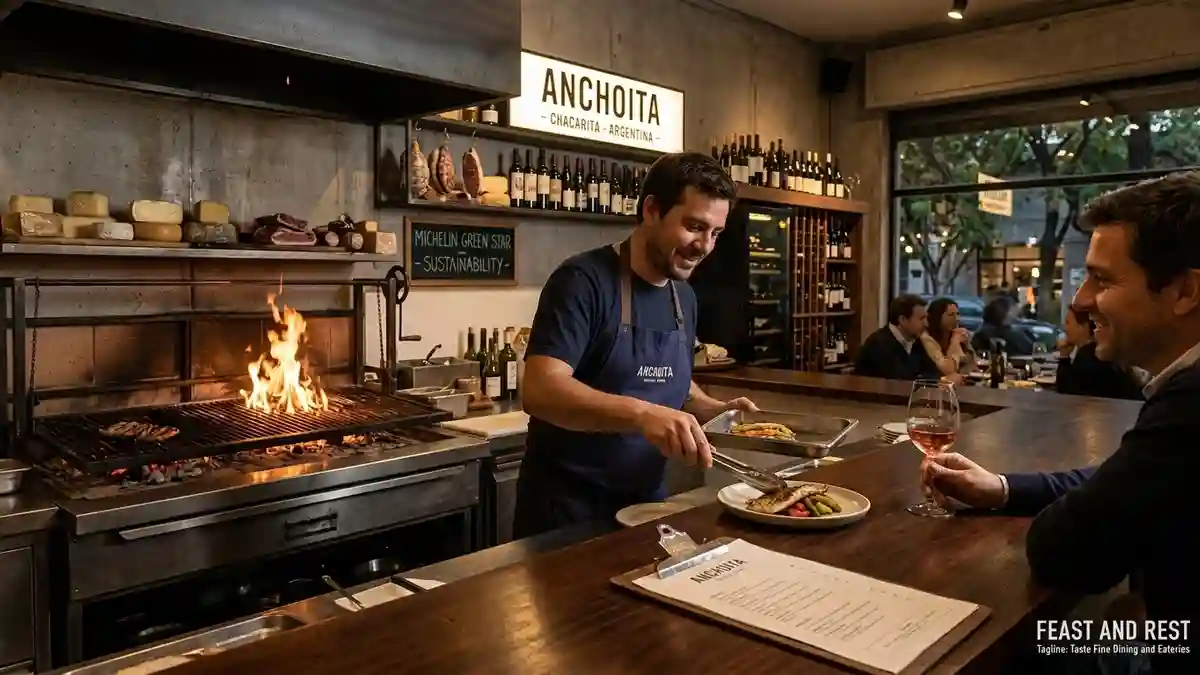
Anchoita Buenos Aires: Redefine Argentine Gastronomy
Buenos Aires has long been celebrated for its classic parrillas and historic corner cafés, but the capital’s culinary narrative continues to evolve rapidly. At the center of this shift is Anchoita Buenos Aires, an innovative restaurant located in the creative neighborhood of Chacarita. Founded by pilot, actor, and chef Enrique Piñeyro, the establishment has captured global attention, earning a coveted Michelin Green Star for its unwavering commitment to sustainability and local sourcing. Rather than relying solely on traditional beef cuts, the kitchen highlights hyper-seasonal Argentine produce, river fish, artisanal cheeses, and cured meats. As global dining trends in 2026 place increasing emphasis on low-intervention cooking and eco-conscious sourcing, this vibrant venue serves as a primary benchmark for contemporary Latin American dining.
+-------------------------------------------------------------------+
|                     AT A GLANCE: ANCHOITA                         |
+----------------------+--------------------------------------------+
| Location             | Chacarita, Buenos Aires, Argentina         |
| Core Philosophy      | Hyper-seasonal, farm-to-table wood firing  |
| Key Recognition      | Michelin Green Star                        |
| Atmosphere           | Industrial-chic, open-kitchen counter      |
| Beverage Focus       | Extensive Argentine small-producer cellar  |
+----------------------+--------------------------------------------+
The Chacarita Neighborhood Context
To understand the restaurant’s identity, one must look at its surrounding district. Chacarita was historically viewed as a quiet, working-class neighborhood bordering the bustling hub of Palermo. Over recent years, it has transformed into the epicenter of the city’s modern culinary experiment.
Emerging Culinary Hub: Tree-lined avenues like Calle Juan B. Justo and Avenida Corrientes are now home to natural wine bars, specialty coffee roasters, and bakeries.
Local Culture: The area maintains its grounded, residential character, allowing restaurants to foster genuine local connections rather than catering strictly to short-term tourist traffic.
Artistic Energy: Converted industrial spaces and former warehouses provide spacious layouts ideal for modern dining concepts.
Chef Philosophy and the Wood-Fired Kitchen
At its core, the kitchen operates around a massive, custom-built wood-fired hearth. Chef Enrique Piñeyro and the culinary team approach Argentine ingredients with minimal intervention, prioritizing precise temperature control, smoke, and timing over intricate chemical transformations.
       [ Custom Wood-Fired Hearth ]
                   |
   +---------------+---------------+
   |                               |
[ Sustainable Sourcing ]   [ Direct Heat & Smoke ]
   |                               |
   v                               v
Zero-Waste Philosophy      Unmasked Local Flavors
The restaurant owns and operates its own regenerative farm, which supplies the kitchen with organic vegetables, heritage grains, and fresh dairy products. This direct agricultural pipeline ensures that dishes reflect the exact harvest conditions of the Pampean region.
Signature Culinary Highlights
While menus shift frequently based on daily farm yields, several core preparation styles define the dining experience:
Charcuterie & Artisanal Cheese: House-cured meats aged on-site paired with rare, small-batch cheeses sourced from independent Argentine dairies.
Freshwater River Fish: Carefully grilled native species—such as surubí or boga—offering a distinct alternative to standard coastal seafood or beef cuts.
Seasonal Vegetable Plates: Whole-roasted vegetables cooked directly over hardwood embers, served with house-made cultured butter or fermented dressings.
Grass-Fed Cuts: Select heritage beef preparations cooked over gentle wood embers to maintain tender textures and subtle smoke aromas.
The Atmosphere and Dining Layout
The space balances industrial raw materials with comfortable, refined seating. High ceilings and concrete elements reflect the building’s original urban architecture, while warm timber accents and ambient lighting soften the atmosphere.
+-----------------------------------------------------------------+
|                       SEATING EXPERIENCE                        |
+-------------------+---------------------------------------------+
| Main Counter      | Panoramic views of live fire and assembly   |
| Standard Tables   | Intimate layout for relaxed group conversations |
| Cellar View       | Proximity to the temperature-controlled wine|
+-------------------+---------------------------------------------+
The centerpiece of the dining room is an expansive wraps-around counter surrounding the central open kitchen. Diners seated at the counter enjoy an unobstructed view of the cooks navigating live flames, plating dishes, and managing the hearth.
Cellar and Beverage Program
The wine selection is among the most extensive in South America, focusing heavily on regional terroir and small-scale viticulture.
Low-Intervention Wines: Natural, biodynamic, and orange wines from experimental winemakers across Mendoza, Salta, and Patagonia.
Classic Vintages: Deep reserves of traditional Argentine Malbecs and Cabernet Francs aged under optimal cellar conditions.
Custom Pairings: Sommelier-guided selections designed to match the smoky profiles of hearth-cooked dishes.
Non-Alcoholic Options: In-house fermented shrubs, kombuchas, and botanical infusions crafted from farm herbs.
Practical Information for Diners
Planning a visit requires early preparation due to exceptionally high local and international demand.
Reservations: Bookings generally open online months in advance and fill within minutes. According to current details, securing a spot requires monitoring booking release windows closely.
Alternative Options: The adjacent bakery and bar concepts under the same culinary group offer walk-in access to selected pastries, small plates, and drinks.
Dress Code: Smart-casual. The atmosphere is warm and welcoming, avoiding rigid formal dress requirements.
Timing: Dinner service typical runs late into the night, adhering to classic Argentine dining hours starting past 8:00 PM.
Modern Relevance and Future Outlook
As the global dining landscape shifts toward authenticity, low-waste operations, and transparent supply chains, Anchoita Buenos Aires stands as an impressive example of how local traditions can be thoughtfully reinterpreted. It bridges the gap between casual comfort and fine dining precision, offering an experience deeply tied to the land and culture of Argentina.
Source Context and Data Notes
Information Sources: Content synthesized from established culinary publications, public industry profiles, regional tourism insights, and general gastronomic trends in South America.
Scope & Limitations: Menu items, daily selections, and operating hours vary seasonally and depend entirely on real-time agricultural yields from partner farms.
Generalization: Specific booking rules, exact seating capacities, and seasonal pricing reflect standard regional practices and are subject to change by management.