The global culinary stage in 2026 continues to lean into depth of flavor paired with clean, refreshing profiles, bringing regional coastal traditions straight to center stage. Among the most compelling modern developments is the rise of mul jil—a movement that draws inspiration from traditional Korean coastal seafood culture, specifically the heritage of cold seafood broths (mulhoe) and the historic, free-diving foraging techniques of the haenyeo (female ocean divers).
As diners move away from heavy, sauce-laden seafood preparations in favor of ingredient-driven clarity, modern chefs in Seoul, New York, and London are rethinking how raw fish and chilled broths interact. By honoring the historical essence of mul jil (literally referring to the physical act of diving and gathering ocean harvest) while adapting its cold-soup delivery for contemporary palates, restaurants are offering a vibrant, ocean-forward dining experience that bridges rustic maritime roots with modern culinary technique.
Ocean Roots: Understanding the Culinary Heritage
To appreciate why this trend is taking hold today, it helps to understand its origins along the windswept coasts of Korea’s Jeju Island and the southeastern shorelines of Pohang and Sokcho. Historically, mul jil referred to the grueling work performed by coastal divers who harvested sea urchin, abalone, sea cucumbers, and wild fish without breathing equipment.
The dishes born from this lifestyle were simple, functional, and intensely satisfying. Fishermen and divers would slice fresh catches directly on the boat or shore, tossing them into a bowl with cold water, fermented chili paste (gochujang), vinegar, and raw vegetables. This simple preparation evolved into mulhoe—a cold, spicy, and tangy raw fish soup designed to hydrate and restore workers after long hours at sea. What started as rustic sustenance has now become a foundational blueprint for high-end seafood dining.
The Modern Adaptation: From Boat Deck to Fine Dining
In contemporary kitchens, the rise of mul jil represents a shift toward subtle acidity, precise knife work, and complex broths. Based on available information, modern chefs are moving away from overly sweet or aggressively spicy broths, opting instead for clarified, cold-infused stocks that allow the natural sweetness of fresh fish to shine.
+---------------------+-----------------------------------+-----------------------------------+
| Feature             | Traditional Coastal Style         | Modern Contemporary Interpretation|
+---------------------+-----------------------------------+-----------------------------------+
| Primary Ingredients | Mixed wild catch, sea cucumber    | Sea bream, red snapper, spot prawn|
| Broth Profile       | Piquant, heavy gochujang & vinegar| Clarified dashi, fermented fruit  |
| Presentation        | Casual family-style metal bowl    | Layered, cold-poured table side   |
| Texture Balance     | Crunchy raw cabbage & radish      | Shaved ice granita, pickled kelp  |
+---------------------+-----------------------------------+-----------------------------------+
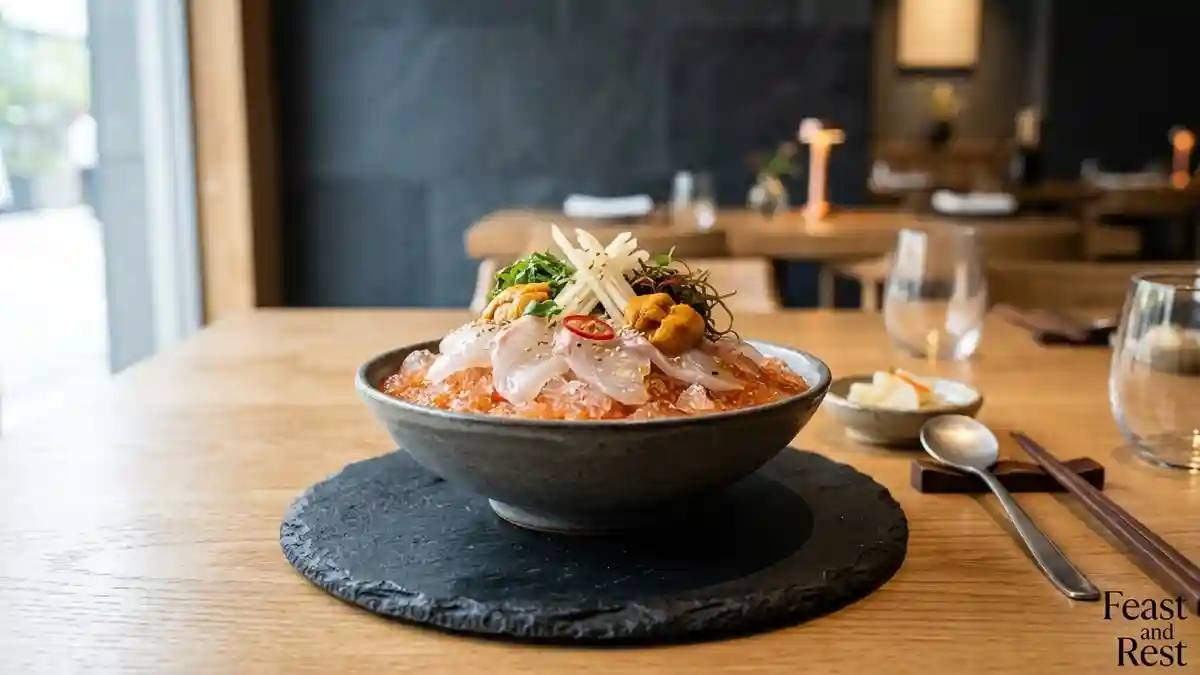
Rather than submerging seafood in a heavy liquid, contemporary establishments often present delicate cuts of sea bream, flounder, or cooked octopus over ice or chilled stone plates. The cold broth—frequently elevated with seasonal fruits like Asian pear, citrus-infused vinegar, or fermented green plum (maesil)—is poured tableside. This preserves the textural integrity of the fish while delivering a sharp, clean finish.
Seasonal Dynamics and Regional Variations
While cold seafood soups were historically consumed during the humid summer months, current dining patterns show year-round appreciation. Thermal contrast has become a key element of modern menu design; guests frequently pair chilled, vinegared raw fish preparations with hot, comforting rice or rich bone broths within the same meal.
Jeju Style: Focuses heavily on raw abalone, sea urchin (uni), and sea cucumber, often using a soybean paste (doenjang) base balanced with mild vinegar for an earthy, savory depth.
Pohang Style: Emphasizes firm-fleshed white fish tossed first in a concentrated chili paste paste, allowing guests to add cold water or ice as they eat to control the broth’s intensity.
Sokcho Style: Known for incorporating sweet cold squid and a brighter, fruit-forward red pepper broth that appeals to those who favor a balance of sweet and sour notes.
According to current details, modern urban restaurants are drawing heavily from these distinct regional identities to craft curated tasting menus, allowing diners to explore how different coastal micro-climates approach cold seafood balance.
Key Menu Highlights
For diners exploring menus inspired by the rise of mul jil, look for preparations that showcase contrast in temperature, crunch, and acidity:
Chilled Flounder and Asian Pear Mulhoe: Thinly sliced wild flounder layered with julienned Asian pear, cucumber, and a slush of frozen kimchee brine and rice vinegar.
Abalone and Sea Urchin Cold Bowl: Tender, steamed local abalone paired with fresh sea urchin, served over a clear kelp and bonito broth with seasonal herbs.
Spicy Cold Squid with Buckwheat Noodles: Quick-blanched squid tossed with fresh greens, served over iced buckwheat noodles to absorb the vibrant red pepper vinaigrette.
Modern Ocean Granita: Raw white fish finished with a shaved ice broth made from fermented green plum, ginger juice, and toasted sesame oil.
Atmosphere and Dining Experience
Restaurants embracing this modern coastal movement tend to design their interiors around minimalist ocean motifs. Natural timber, smooth slate, and neutral stone textures dominate the dining rooms, mirroring the rocky shores where traditional diving takes place.
Service is typically focused on timing and temperature control. Because delicate raw seafood reacts quickly to ambient room heat, chilled dishware and rapid service are essential. The experience feels both clean and focused, encouraging guests to engage with the natural flavors of the seafood without heavy cooking fats or dominating sauces.
Drinks and Pairings
Pairing beverages with cold, acidic, and slightly spicy seafood broths requires balance. High-tannin wines or heavy reds can clash with the delicate sweetness of raw fish and the sharpness of vinegar.
Low-Intervention White Wines: Crisp, mineral-driven whites like Riesling, Grüner Veltliner, or dry Chablis cut through the acidity of vinegared broths while enhancing the clean finish of raw fish.
Traditional Rice Beverages: Lightly sparkling, unfiltered rice wines (makgeolli) offer a creamy texture that tempers spicy chili notes.
Refined Soju: Clean, distilled craft soju served ice-cold provides a neutral palate cleanser between complex bites.
Non-Alcoholic Options: Cold-brewed green teas, sparkling yuzu waters, or toasted barley teas balance the palate without interfering with delicate sea flavors.
Practical Advice for Diners
To fully appreciate restaurants highlighting this culinary style, keep a few practical considerations in mind:
Reservations: Venues specializing in seasonal, raw seafood preparations often work with limited daily catches. Booking 1–2 weeks in advance is recommended for prime dinner hours.
Best Time to Visit: Mid-to-late evening seating allows for a more relaxed pacing, especially if opting for multi-course seafood tasting menus.
Dietary Considerations: Because cold seafood broths rely heavily on shellfish, fish stocks, and occasionally soy derivatives, inform the restaurant in advance regarding any seafood allergies or gluten sensitivities.
Dining Style: These dishes are best enjoyed shared or as part of a structured progression moving from delicate, un-seasoned raw preparations to bolder, colder spicy broths.
As ocean-conscious sourcing and clean, vibrant flavor profiles continue to guide modern food culture, the rise of mul jil offers an exciting bridge between heritage coastal craftsmanship and modern dining sophistication.
— Article Body Ends Above —
Source Context and Data Notes
General Data Sources: Insights compiled from general Korean regional culinary history, contemporary seafood dining trends across major urban dining centers, and standard coastal preparation methods for mulhoe and ocean foraging techniques.
Known Limitations: Specific menu offerings, seasonal dish availability, and pricing vary widely depending on location, seasonal marine catches, and individual restaurant philosophy.
Generalizations: Descriptions of regional styles (Jeju, Pohang, Sokcho) reflect widely recognized historical culinary traditions, though modern interpretation across individual kitchens may blend these styles.