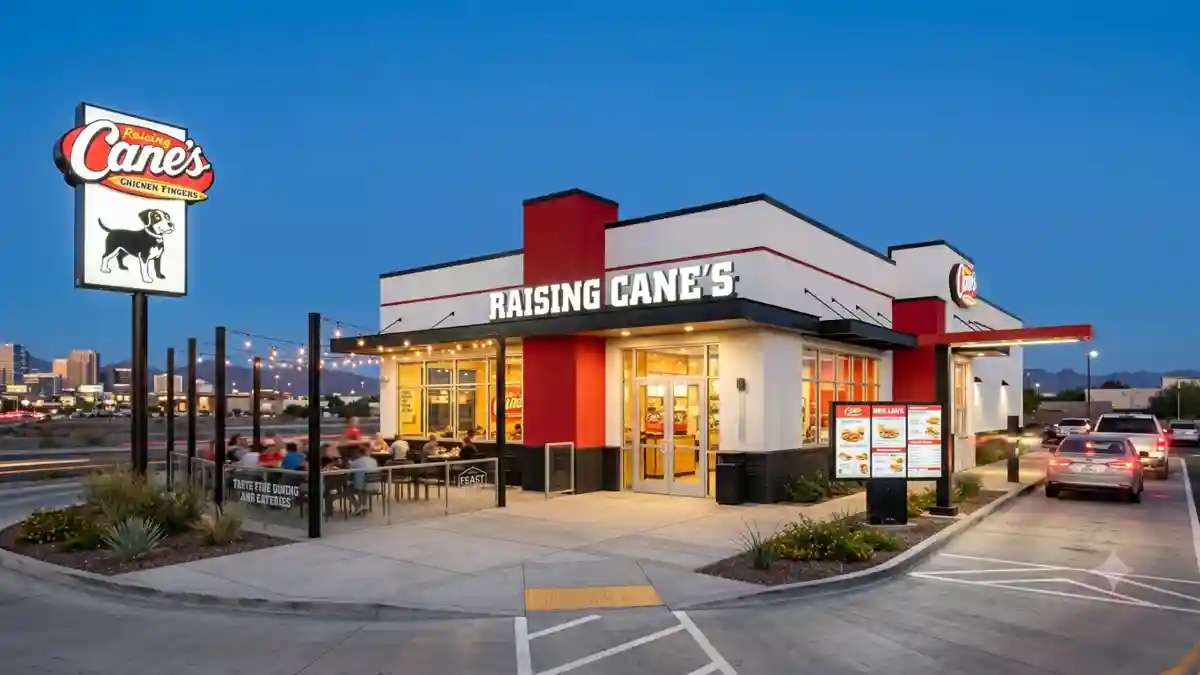
Raising Cane’s: Inside the Fast-Casual Chicken Finger Phenomenon
In an era where fast-casual concepts constantly pivot toward sprawling menus and hyper-customization, Raising Cane’s stands as a striking anomaly. Founded on a seemingly risky business model focused almost exclusively on premium chicken fingers, the brand has grown from a single location near Louisiana State University into a global QSR heavyweight. As quick-service dining trends in 2026 continue to favor operational speed, streamlined supply chains, and high-quality core items, the chain’s hyper-focused approach offers a masterclass in modern dining efficiency.
Understanding the appeal of Raising Cane’s requires looking beyond the drive-thru window. The brand has cultivated a loyal, almost cult-like following by mastering a tight list of staple items rather than stretching its kitchen capabilities thin. By examining its humble origins, laser-focused culinary philosophy, signature flavor profiles, and distinct cultural footprint, one gains a clearer picture of how this regional spot became a major cultural force in fast dining.
From Baton Rouge Dream to National Footprint
The story of Raising Cane’s is rooted in persistence and unconventional strategy. Founder Todd Graves pitched the concept of a restaurant serving exclusively chicken finger meals as a business plan college project, only to receive a failing grade. Undeterred, Graves worked as a boiler technician in oil refineries and a commercial fisherman in Alaska to raise the initial capital himself. In 1996, the first location opened its doors in Baton Rouge, Louisiana, named after Graves’s friendly yellow Labrador Retriever, Raising Cane.
+-----------------------------------------------------------------------+
|                       RAISING CANE'S MILESTONES                       |
+-------------------+---------------------------------------------------+
| 1996              | First location opens in Baton Rouge, LA           |
| Mid-2000s         | Regional expansion across the American South      |
| 2010s             | Nationwide growth into West Coast & Midwest markets|
| 2020s-2026        | Flagship expansion in major metro hubs & overseas |
+-------------------+---------------------------------------------------+
What set the brand apart in its early days remains its core strength today: refusal to diversify for the sake of novelty. While competitor brands routinely introduce limited-time menu items, breakfast sandwiches, or complex side options, Raising Cane’s has largely kept its founding blueprint intact. Based on available information, this dedication to execution over expansion of choice has fueled one of the highest average unit volumes in the entire fast-casual sector.
The Power of the Single-Focus Culinary Model
At the heart of the Raising Cane’s operational model is extreme simplicity. The kitchen focuses almost entirely on one main protein: fresh, never-frozen chicken breast tenders. By limiting menu variables, the operational workflow stays remarkably smooth, reducing ticket times and ensuring product consistency across hundreds of locations nationwide.
“Simplicity isn’t about lack of effort; it is about absolute precision in execution.”
From a culinary perspective, this narrow focus changes the quality equation:
Supply Chain Efficiency: Sourcing a single primary protein allows for stringent quality controls and consistent sizing.
Targeted Fry Prep: Fryers operate at tailored temperatures optimal for marinated chicken tenders, avoiding cross-contamination of flavors.
Freshness Over Frozen: Tenders are marinated in-house and hand-battered throughout the day rather than pre-breaded and flash-frozen at a central facility.
This single-focus philosophy caters directly to contemporary dining preferences. In 2026, consumers increasingly favor restaurants that do one thing exceptionally well over those that offer expansive but mediocre menus.
The Anatomy of the Signature Meal
To understand why customers line up at drive-thrus during peak hours, one must deconstruct the signature combo box. Every element on the plate plays a specific supporting role to the chicken tenders, balancing textures, temperatures, and rich flavor profiles.
The Freshly Battered Chicken Tenders
The tenders are marinated to retain moisture before being dipped in an egg wash and tossed in seasoned flour. The result is a crisp, light exterior coating that shatters easily without feeling heavy or grease-laden, yielding to tender, juicy chicken on the inside.
The Famous Cane’s Sauce
The undisputed centerpiece of the dining experience is the proprietary house sauce. Tangy, slightly peppery, and savory, it serves as the ultimate bridge between the fried chicken tenders and the side items. While the exact recipe remains under lock and key, the flavor profile balances mayo, ketchup, Worcestershire sauce, coarsely ground black pepper, and garlic salt.
Texas Toast and Crinkle-Cut Fries
The supporting sides are far from an afterthought. The Texas toast is made from thick-cut pull-apart bread, brushed generously with garlic butter, and grilled on a flat-top grill—often ordered “Bob” (butter on both sides) by seasoned patrons. The crinkle-cut fries offer a salty, pillowy texture designed to catch extra dip, while the house-made coleslaw provides a cool, crisp acidic contrast to the warm, fried elements.
| Component | Key Culinary Feature | Role in the Meal |
| Chicken Tenders | Marinated, hand-battered, never-frozen | High-protein anchor, crunchy exterior |
| Cane’s Sauce | Tangy, peppery, creamy emulsion | Signature flavor, unifier for all items |
| Texas Toast | Thick-cut, buttered, flat-top grilled | Savory carb, textured comfort element |
| Crinkle-Cut Fries | Lightly salted, deep ridge cuts | Vessel for extra sauce dipping |
| Coleslaw | Chilled, mild cabbage & carrot mix | Palate cleanser, cool acidic contrast |
Atmospheric Energy and Local Community Integration
Stepping into a Raising Cane’s location offers a distinctly energetic environment. Rather than opting for standardized corporate decor, each restaurant features custom graphics, local sports memorabilia, and university artifacts unique to its immediate neighborhood. This localized interior design gives each store a neighborhood-hangout atmosphere, connecting the national brand directly to local sports teams and regional culture.
The acoustic profile of the dining room is deliberately upbeat, often playing high-energy rock and pop music. Employees—referred to internally as the “Crew”—maintain a lively, welcoming tone with vocal greetings upon entry. This vibrant environment appeals directly to college students, families, and late-night diners seeking a casual, high-tempo meal.
Furthermore, the brand maintains a strong physical presence through community involvement. Active participation in local fundraisers, pet welfare programs, and youth sports sponsorships reinforces a community-first identity that resonates strongly with neighborhood patrons.
Decoding the Minimalist Menu Architecture
Navigating the menu at Raising Cane’s takes seconds, making it one of the most streamlined ordering processes in the fast-casual ecosystem. The menu consists almost entirely of four primary meal combinations that vary primarily by tender count and side configurations.
Key Menu Highlights
The Box Combo: The standard hallmark order featuring 4 chicken tenders, crinkle-cut fries, Cane’s sauce, Texas toast, coleslaw, and a regular drink.
The Caniac Combo: Designed for larger appetites, packing 6 tenders, fries, two dipping sauces, toast, slaw, and a large drink.
The 3-Piece Combo: A lighter lunch option offering 3 tenders along with fries, sauce, toast, and a drink.
The Sandwich Combo: Three chicken tenders served tucked inside a toasted sesame seed bun with extra Cane’s sauce and lettuce, paired with fries and a drink.
Tailgate Trays: Bulk orders of 25, 50, 75, or 100 tenders paired with large tubs of signature sauce, catering to game days and group gatherings.
Practical Information & Dining Advice
For those planning a visit to Raising Cane’s, keeping a few practical operational details in mind helps maximize the experience:
Ordering Hacks: Regulars frequently customize their meals at no extra charge. Popular requests include ordering Texas toast “Bob” (buttered on both sides), swapping coleslaw for extra toast or fries, or asking for extra crispy tenders.
Peak Hours: Drive-thru lanes experience heavy traffic during peak lunch (12:00 PM – 1:30 PM) and late-night weekend shifts. Mobile ordering via their app offers a quick alternative for counter pick-up.
Atmosphere & Seating: Most locations offer indoor booth seating alongside outdoor patio dining, though drive-thru traffic makes up a large portion of daily business.
Dietary Notes: Due to the single-protein focus and shared frying equipment, vegetarian and gluten-free entree options are extremely limited. The focus remains explicitly on traditional fried chicken preparations.
The Evergreen Legacy of a Focused Concept
The lasting success of Raising Cane’s proves that restaurant concepts do not need broad menus to build global brand affinity. By perfecting a single primary dish, fostering a warm community-oriented culture, and keeping service speed front and center, the chain has built an enduring niche in the modern dining landscape.
As consumer demand shifts toward consistency, quality, and simplicity, Raising Cane’s stands out as a clear benchmark for fast-casual operations. It remains a testament to the power of doing one thing, doing it well, and staying true to a simple culinary vision.
Source Context and Data Notes
Source Types: Editorial synthesis based on publicly available QSR industry coverage, historical corporate background, and widely documented operational practices.
Limitations: Menu offerings and pricing remain subject to geographic variation and local franchise management decisions.
Generalizations: Store layouts, peak operating hours, and specific community initiatives may vary depending on urban versus suburban drive-thru locations.