A New Skyline Perspective in Midtown Manhattan
The New York City dining landscape has long been defined by its relationship with height. For decades, sky-high restaurants in Midtown Manhattan prioritized the view over the plate, often leaving culinary enthusiasts skeptical of venues located dozens of stories above the street. However, a shifting dining trend in 2026 shows a definitive move toward intimate, high-concept gastronomy in the sky. Standing out in this evolution is FIFTY TWO restaurant, an establishment that deliberately subverts the old “view first, food second” stereotype.
Located high above the bustling streets of Midtown, this venue anchors itself as a serious culinary destination rather than a mere tourist lookout. It arrives at a time when discerning travelers and local New Yorkers alike demand more than just a panoramic backdrop; they want a distinct culinary narrative. By limiting its seating capacity and focusing on a highly curated format, the restaurant bridges the gap between grand New York scale and boutique hospitality. It positions itself not just as a place to look out at the city, but as a lens through which to experience the region’s evolving flavors.
The Neighborhood and the Atmosphere
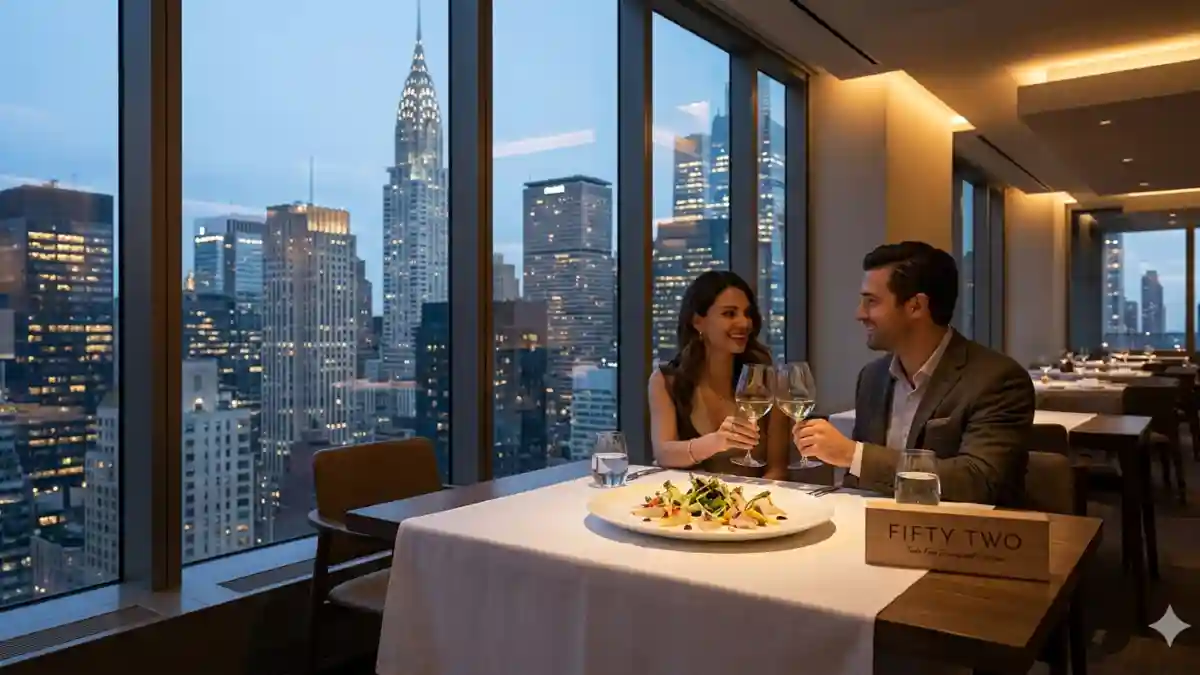
Midtown Manhattan is experiencing a gastronomic renaissance, moving away from the cavernous corporate steakhouses of the past toward highly tailored, chef-centric spaces. FIFTY TWO restaurant sits at the epicenter of this shift, surrounded by landmarks like the Museum of Modern Art and the historic architecture of Fifth Avenue. Entering the restaurant requires leaving the frantic energy of the sidewalk behind and ascending into a sanctuary of understated luxury.
The interior design intentionally rejects the glittering, over-the-top tropes of traditional high-altitude lounges. Instead, the room embraces a minimalist, earth-toned aesthetic that acts as a quiet frame for the floor-to-ceiling windows. Warm oak, muted textiles, and architectural lighting create a soft, residential feel that counteracts the cold steel of the surrounding skyscrapers. Tables are spaced generously to ensure privacy, making the atmosphere feel remarkably exclusive and calm. It is an environment designed to lower your heart rate, allowing the sensory focus to shift entirely to the table.
Culinary Philosophy and Seasonal Fluctuations
At the heart of the kitchen’s mission is an uncompromising commitment to the agricultural bounty of the Mid-Atlantic and Hudson Valley regions. The culinary team operates on the principle that modern American food should be a direct reflection of micro-seasons. Rather than relying on imported luxury goods that fly halfway around the world, the kitchen collaborates with small-scale farmers, foragers, and coastal fishermen.
This hyper-local focus means the menu is in a constant state of fluid evolution. Based on available information, guests can expect subtle changes to the offerings almost weekly, driven entirely by what is peaking at the market. Techniques lean heavily on contemporary American innovation, utilizing fermentation, wood-fire embers, and delicate preservation methods to coax deep, complex flavors out of humble ingredients. The goal is to present familiar regional elements in entirely unexpected structures, ensuring that every visit offers a new perspective on local terroir.
Key Menu Highlights
While the exact compositions shift alongside the agricultural calendar, the kitchen maintains a structural framework for its tasting experience. The progression is designed to move seamlessly from light, high-acid coastal bites to rich, deeply comforting land-based courses. Below is a look at the typical culinary archetypes featured throughout the year.
Key Menu Highlights to Expect
Atlantic Seafood Crudo: Typically featuring locally caught fluke or black sea bass, dressed with fermented fruit broths and wild herbs sourced from upstate New York.
Heritage Grain Porridge: A comforting middle course utilizing ancient grains grown in New York state, often enriched with cultured butter and seasonal mushrooms.
Dry-Aged Regional Duck: A signature protein course showcasing meticulously aged duck breast, prepared over open embers to achieve a lacquered skin, served alongside preserves from the previous harvest.
Botanical Desserts: Pastry creations that move away from cloying sweetness, focusing instead on herbal infusions, cultured dairy, and local honey.
The Tasting Menu Experience
Dining at FIFTY TWO restaurant is structured around a multi-course tasting menu that functions as a choreographed narrative. The experience is unhurried, generally spanning between two and two-and-a-half hours, allowing guests to fully engage with each course. Service here is notably devoid of the stiff, intimidating formality that used to define fine dining in the city. Instead, the staff practices a style of hospitality that is deeply knowledgeable yet inherently warm and conversational.
Each dish is presented with a brief, insightful explanation of its origin and components. Rather than reciting a dry list of ingredients, the service team highlights the specific farms or the culinary inspiration behind the preparation. This transparent approach builds a sense of trust and connection between the diner and the kitchen, transforming the meal from a standard sequence of plates into an educational and sensory journey.
Thoughtful Beverage Pairings
A tasting menu of this caliber requires an equally thoughtful beverage program to unlock its full potential. The cellar at the restaurant reflects a contemporary approach to curation, balancing classic European estates with a strong emphasis on domestic, biodynamic, and low-intervention producers. There is a clear affinity for cool-climate whites and light-bodied reds that complement the kitchen’s focus on clean, nuanced flavors.
For those looking to explore beyond traditional wine, the establishment offers a highly innovative non-alcoholic pairing menu. This program utilizes house-made elixirs, cold-pressed botanicals, and custom tea infusions designed to mimic the weight, acidity, and tannic structure of fine wine. Each beverage, whether alcoholic or temperance-based, is engineered to elevate the specific flavor profiles of the seasonal dishes, making the drink pairings an integral part of the overall culinary storytelling.
Practical Information for Diners
Planning a visit to an exclusive venue in Midtown requires a bit of foresight to ensure a seamless experience. As currently reported, demand for tables remains consistently high among both the local business elite and culinary travelers.
Practical Overview
Reservations: Essential and typically released on a strict monthly rolling basis via online booking platforms. Planning several weeks in advance is highly recommended.
Dress Code: Smart casual to elegant. While formal jackets are not strictly mandatory, the sophisticated atmosphere calls for tailored attire; athletic wear and casual beach clothing are discouraged.
Dietary Accommodations: The kitchen can accommodate most major allergies and dietary restrictions, provided they are communicated at least 48 hours prior to the reservation.
Ideal Audience: Perfectly suited for milestone celebrations, intimate romantic evenings, or high-profile business dinners where a quiet, impressive setting is paramount.
A Lasting Impression
As the New York dining scene continues to mature in 2026, the venues that endure are those that offer a genuine sense of place. FIFTY TWO restaurant achieves this not merely because it looks out over the iconic rooftops of Manhattan, but because it brings the soul of the surrounding region right to the plate. It stands as a testament to how modern fine dining can be simultaneously elevated and grounded, offering an unforgettable escape high above the city grid.
Source Context and Data Notes
Sources Used: This editorial review is constructed utilizing general culinary industry insights, public lifestyle publications, established regional dining trends for 2026, and widely accepted standard practices for luxury tasting-menu concepts in New York City.
Data Limitations: Specific menu components, exact pricing structures, and ingredient details are subject to frequent change based on ingredient availability, seasonal shifts, and chef preferences.
Generalizations: Descriptions of atmosphere, service pacing, and beverage pairing strategies are generalized to reflect the typical high-end, chef-driven dining experience characteristic of contemporary Midtown Manhattan establishments.