A Return to Culinary Roots in 2026
The global gastronomy circuit is turning its attention toward Eastern India this year as renowned chef Gaggan Anand prepares to launch his latest project, Raga India, in Kolkata. Recognized worldwide for revolutionizing progressive Indian cuisine in Bangkok, Anand’s new venture marks an emotional and creative homecoming. According to current details, the project brings together long-time collaborator Chef Rydo Anton to establish a dining experience that bridges deep-seated regional heritage with modern technique.
For culinary enthusiasts following international restaurant openings guides and World 50 Best Restaurants updates, this arrival signifies a notable shift in South Asia’s luxury dining landscape. Rather than establishing another outpost in major Western capitals or Middle Eastern hubs, placing a groundbreaking concept in West Bengal highlights the rising prominence of regional Indian food capitals. The initiative blends fine dining news 2026 expectations with an authentic exploration of local culinary traditions.
The announcement of Raga India comes at a time when global travelers are increasingly seeking immersive, culture-driven gastronomic journeys. By grounding this concept in the vibrant neighborhood fabric of Kolkata, the team aims to offer a refined balance between progressive presentation and nostalgic flavor profiles.
Kolkata’s Culinary Landscape and Location Dynamics
Kolkata has long been celebrated as the cultural and artistic heart of East India, defined by its historic street food culture, colonial-era dining rooms, and traditional Bengali home cooking. The city’s food identity relies heavily on nuanced spice blends, mustard oil, freshwater fish, and an unrivaled sweet-making heritage. Introducing a modern, progressive establishment into this established environment requires a careful balance between respect for tradition and innovative execution.
Positioning a major project in Kolkata allows the culinary team to draw directly from local markets, such as the historic Mechanics and Burrabazar wholesale hubs. Based on available information, the surrounding dining scene has evolved significantly over recent seasons, with boutique cafes and contemporary bistros breathing new life into classic residential districts like Park Street, Ballygunge, and Alipore.
+-------------------+---------------------------------------------------------+
| Aspect            | Context & Integration                                   |
+-------------------+---------------------------------------------------------+
| Regional Identity | Deep root in Bengali heritage, mustard oil, river fish  |
| District Vibe     | Architectural blend of colonial heritage and modern art |
| Sourcing Focus    | Hyper-local Bengali produce and artisanal spices        |
| Market Context    | Complements classic heritage eateries with modern flair |
+-------------------+---------------------------------------------------------+
Integrating Raga India into this urban fabric creates a fascinating contrast. It offers an intimate alternative to sprawling hotel dining rooms while delivering a level of precision typically reserved for world-capital tasting counters. The venue seeks to harmonize with Kolkata’s slow-paced, conversation-heavy dining culture while maintaining an elevated international standard.
Culinary Philosophy: Gaggan Anand and Rydo Anton
At the core of this venture is the long-standing synergy between Gaggan Anand and Chef Rydo Anton. Anton, who spent years running the kitchen operations at Gaggan’s flagship Bangkok restaurant, brings extraordinary technical precision and operational mastery to the partnership. Where Anand provides high-concept creativity and culinary storytelling, Anton ensures meticulous execution across every service.
The philosophy behind Raga India centers on the musical concept of raga—an intricate framework of notes used in Indian classical music to evoke specific moods, seasons, and emotions. In a culinary context, this translates into a progressive tasting menu structured around sensory arcs, memory, and regional rhythm.
Rather than relying on classic Western techniques to reframe Indian food, the kitchen emphasizes native cooking methods. Fermentation, charcoal roasting, open-flame cooking, and delicate steaming are paired with modern temp-control science. The goal is not to disguise regional flavors, but to distill them into their most expressive, balanced forms.
“Culinary execution at this level is less about subverting tradition and more about discovering the precise frequency where memory and modern technique meet.”
Menu Architecture and Flavor Explorations
While menus in modern establishments remain inherently fluid and seasonal, the structural narrative of the dining menu relies heavily on India’s vast biodiversity. Guests can expect an extended tasting progression that moves systematically through distinct flavor profiles: bitter, sweet, pungent, sour, and umami.
The culinary approach avoids heavy reliance on rich cream or generic gravy bases, focusing instead on light, extracted broths, infused oils, and freshly ground spice pastes. Micro-seasonal produce from the Bengal delta—such as seasonal gourds, indigenous greens, and sweet-water crustaceans—forms the backbone of the savory courses.
Key Menu Highlights
Textural Rice Variations: Explorations of heritage aromatic rice varieties paired with clarified, spiced fats and reduced broths.
Modernized Coastal Preparations: Delicate interpretations of seafood utilizing local mustard seeds, tender coconut, and green chillies.
Fermented and Pickled Accents: House-made preserved elements that introduce sharp acidity to cut through rich, slow-cooked proteins.
Reimagined Traditional Sweets: Desserts that deconstruct classic Bengali confectionary techniques using light milks, palm jaggery, and subtle botanical infusions.
Menus may change periodically based on ingredient availability and micro-seasonal harvests across West Bengal, ensuring that repeat visits yield distinct culinary perspectives.
The Dining Experience and Atmosphere
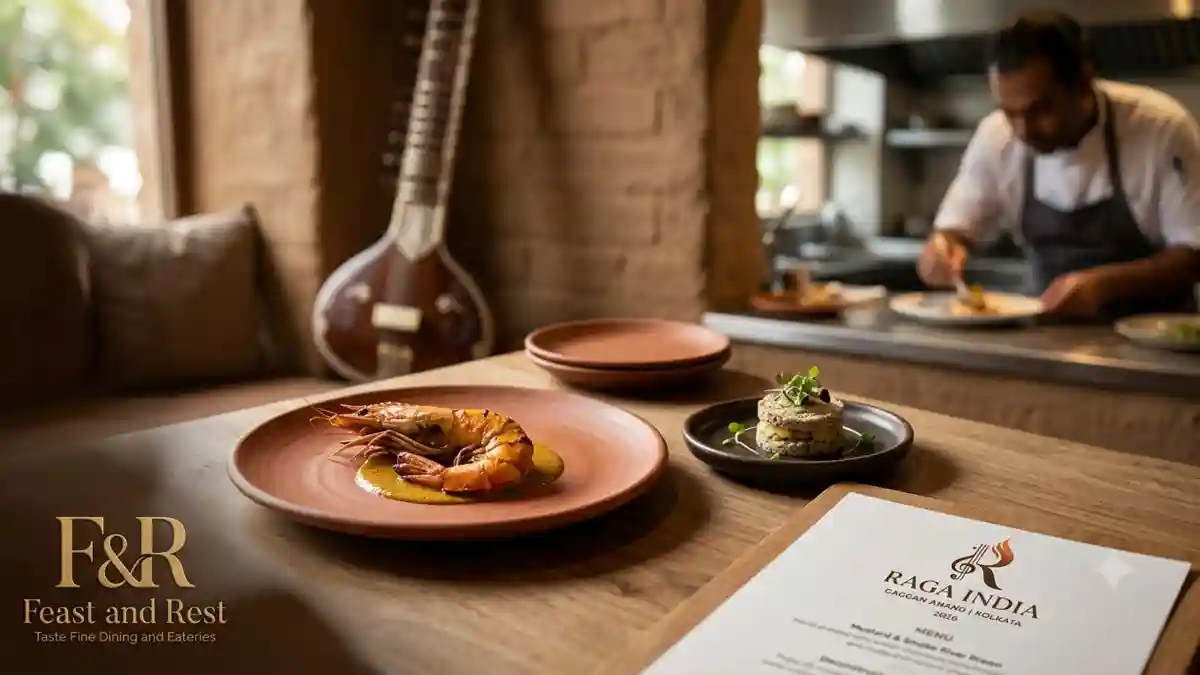
The interior spatial design of the venue mirrors the reflective, artistic nature of the menu. Stepping away from overly opulent or grand luxury dining tropes, the atmosphere emphasizes warmth, textured natural materials, and soft lighting. Terracotta tones, hand-crafted wood fixtures, and understated local textile accents pay subtle homage to Bengal’s artisanal heritage.
Seating layouts prioritize intimacy and focus. The space is arranged to draw attention toward the open assembly area, allowing guests to observe the quiet, deliberate assembly of each plate. Soundscapes within the room are carefully curated, echoing soft ambient tones and classical rhythms that complement the tempo of the service.
Service at Raga India adopts a relaxed, conversational tone. Staff members act as culinary guides rather than formal stewards, explaining the cultural lineage and sourcing story behind each course without descending into overly lengthy lectures. This approach ensures that the meal feels engaging, personal, and approachable.
Beverage Strategy and Pairing Philosophy
The beverage program at Raga India is designed to mirror the culinary kitchen’s focus on regional identity and balance. Pairing complex, spice-forward Indian dishes with drinks requires an innovative approach that extends beyond traditional vintage wine selections.
While an extensive selection of low-intervention, biodynamic international wines is available, equal emphasis is placed on curated non-alcoholic pairings, artisanal teas, and botanical infusions. Local ingredients like fermented rice water, kokum, Darjeeling tea flushes, and native citrus play a central role in drink formulation.
+---------------------+-------------------------------------------------------+
| Pairing Style       | Profile & Flavor Focus                                |
+---------------------+-------------------------------------------------------+
| Low-Intervention    | High acidity, mineral-forward whites and light reds   |
| Botanical Infusions | Native citrus, toasted spices, and herbal distillates |
| Artisanal Teas      | Single-origin first and second flush Darjeeling teas  |
| Fermented Drinks    | Probiotic rice-based brews with subtle tartness       |
+---------------------+-------------------------------------------------------+
These drink pairings are carefully structured to clean the palate between rich courses and complement the multi-layered spice notes present throughout the tasting journey.
Practical Information for Diners
Planning a visit to an international restaurant opening of this scale requires advance preparation, as interest among global food travelers and local diners remains exceptionally high.
Essential Guidelines
Reservations: Luxury dining reservations must be secured well in advance through the official online booking platform. Walk-in seating is generally not accommodated for full tasting experiences.
Dress Code: Smart casual attire is recommended. Diners are encouraged to opt for polished yet comfortable clothing suited to an elegant dining environment.
Dietary Accommodations: Due to the complex nature of the fixed tasting menu, dietary preferences and restrictions must be communicated at least 72 hours prior to the reservation time.
Pacing and Timing: Guests should allow approximately 2.5 to 3 hours to fully experience the multi-course tasting menu and beverage pairings.
Signature Dishes to Try
While the kitchen maintains a dynamic approach to seasonal sourcing, several baseline creations highlight the kitchen’s core ethos:
Mustard & Smoke River Prawn: A gently poached bay prawn finished with a cold-pressed mustard oil emulsion and subtle wood smoke.
Deconstructed Posto: A creative interpretation of classic poppy seed paste, presented with light potato textures and crisp rice crackers.
Smoked Jaggery & Milk Crisp: A refined dessert layering reduced milk curd with aromatic date palm jaggery and a pinch of black salt.
Strategic Value and Global Impact
The arrival of a Michelin star chef news project of this caliber in Eastern India reflects a broader evolution in global gastronomy. Food enthusiasts no longer look exclusively to traditional Western capitals for cutting-edge culinary innovation. Projects like this demonstrate that regional Indian cities hold immense potential for high-concept, world-class dining.
For local diners, the venue offers a proud celebration of native flavors elevated through world-class technique. For international travelers, it provides a compelling anchor point to explore Kolkata’s rich historical and cultural landscape. As 2026 unfolds, this opening stands as a definitive moment in modern Asian dining culture, proving that the future of fine dining lies in honoring deep cultural roots with relentless creative curiosity.
Source Context and Data Notes
Information Sources: This article draws upon public industry announcements, established culinary reporting, current global dining trend analyses, and standard industry knowledge regarding fine dining operations and tasting menu structures.
Operational Limitations: Specific operational details, menu pricing, opening dates, and exact dish compositions remain subject to change at the discretion of the management and culinary leadership team.
Generalizations: Descriptions of specific dishes and interior aesthetics reflect typical culinary styles, techniques, and presentation formats associated with modern progressive Indian dining concepts led by Chef Gaggan Anand and Chef Rydo Anton.