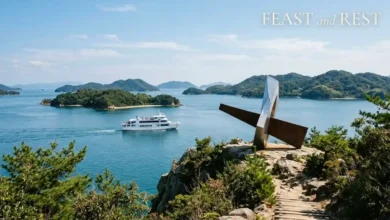
Naoshima is a small, transformative island located in Japan’s Seto Inland Sea, renowned globally as a pioneering destination where contemporary art, subterranean architecture, and rural heritage intersect. Historically an industrial copper-smelting post, Naoshima was reimagined in the late 1980s through a long-term collaboration between the Benesse Corporation and visionary architect Tadao Ando. Today, it serves as the centerpiece of the Benesse Art Site Naoshima, drawing international cultural travelers, architects, and researchers.
NAOSHIMA AT A GLANCE
------------------------------------------------------------------
Location              Seto Inland Sea (Kagawa Prefecture, Japan)
Land Area             Approximately 8 square kilometers
Primary Hubs          Miyanoura, Honmura, and Museum Area
Key Infrastructure    Benesse Art Site Naoshima, Chichu Art Museum
Primary Access Ports  Takamatsu Port (Shikoku) & Uno Port (Honshu)
Naoshima is a island located in Japan’s Seto Inland Sea that integrates modern art installations into a rural landscape. It is celebrated for its site-specific architecture, abandoned village restoration projects, and sustainable cultural tourism framework.
Understanding Naoshima requires evaluating its historic industrial decline, its architecture-driven revitalizations, and its practical access requirements. Navigating Naoshima involves navigating a delicate balance between high-end international art curation and the quiet rhythm of a traditional Japanese fishing community.
Entity and Trust Signals in Cultural Tourism
The structural framework of Naoshima operates under the stewardship of the Benesse Art Site Naoshima, an initiative spearheaded by Benesse Holdings and the Fukutake Foundation. Cultural oversight and regional promotion are supported by the Japan National Tourism Organization (JNTO) alongside the Kagawa Prefectural Government.
Architectural foundations rely heavily on Pritzker Prize laureate Tadao Ando, whose minimalist concrete structures form the bedrock of the island’s museum landscape. Major permanent installations showcase works by iconic global figures including Claude Monet, James Turrell, Walter De Maria, Hiroshi Sugimoto, and the late Yayoi Kusama.
Why Naoshima Matters to Global Travel
Naoshima offers a globally recognized model for rural revitalization through creative placemaking. During the late 20th century, depopulation and industrial decay threatened communities across the Seto Inland Sea. The decision to establish world-class cultural institutions directly on the island reversed economic contraction without relying on invasive commercial resort developments.
The destination demonstrates how contemporary art can coexist with fragile coastal ecosystems and heritage communities. The Art House Project in the village of Honmura illustrates this philosophy, transforming vacant traditional wooden homes into permanent, site-specific art installations.
Key Milestones in Naoshima's Transformation
- 1989: Opening of Naoshima International Camping Ground.
- 1992: Inauguration of Benesse House Museum, designed by Tadao Ando.
- 1998: Launch of the Art House Project in the Honmura district.
- 2004: Opening of Chichu Art Museum, built mostly underground.
- 2010: Launch of the triennial Setouchi Triennale festival.
Architectural Masterpieces of Naoshima
Architecture serves as the primary bridge between the natural environment and contemporary art on Naoshima. Tadao Ando’s design language—characterized by smooth poured concrete, geometric cutouts, and natural light integration—dominates the island’s landscape.
Chichu Art Museum
Built primarily underground to preserve the natural coastal profile of the Seto Inland Sea, the Chichu Art Museum is a masterpiece of subterranean architecture. The facility relies almost entirely on natural light, altering the viewing experience of Claude Monet’s Water Lilies series based on the time of day and season.
Benesse House Museum
Operating as both a modern art museum and an exclusive hotel, this structure was the first major architectural project completed on the island. Its galleries display indoor paintings and sculptures while extending outdoors with permanent installations scattered along the adjacent shoreline.
Lee Ufan Museum
A collaboration between Tadao Ando and artist Lee Ufan, this space features quiet concrete structures set within a natural valley, housing minimalist stone and iron sculptures that prompt reflection on space, matter, and human perception.
| Facility | Primary Architect | Key Artists Featured | Access Requirements |
| Chichu Art Museum | Tadao Ando | Claude Monet, James Turrell, Walter De Maria | Online advance booking required |
| Benesse House Museum | Tadao Ando | Hiroshi Sugimoto, Bruce Nauman, Yukinori Yanagi | Entry ticket on-site/online |
| Art House Project | Various Architects | James Turrell, Tatsuo Miyajima, Hiroshi Sugimoto | Multi-site passport or single ticket |
| Valley Gallery | Tadao Ando | Yayoi Kusama, Tsuyoshi Ozawa | Included with Benesse House entry |
What the Data Shows: Visitor Trends and Logistics
Data from the Benesse Art Site Naoshima and regional transit authorities highlight a steady increase in international visitors seeking quiet cultural experiences over dense urban destinations. Managing entry capacity is essential to preserving both the environment and the intended contemplative viewing experience.
BY THE NUMBERS: TRAVEL LOGISTICS
------------------------------------------------------------------
Ferry Time (Uno Port):      20 minutes (Passenger / Car Ferry)
Ferry Time (Takamatsu):     50 minutes (Ferry) / 30 mins (Speedboat)
Island Local Bus Fare:      100 yen per ride (Adult flat rate)
Chichu Entry Fee:           2,800 yen (Timed online ticket required)
Island Population:          Approx. 3,000 residents
To limit overcrowding, major venues like the Chichu Art Museum implement strict timed-entry reservation systems. Travelers who attempt visits without advance bookings frequently face full capacity, especially during peak travel months and the Setouchi Triennale festival years.
Seasonal Planning and Accessibility Framework
Naoshima experiences a temperate maritime climate, making it a year-round travel destination. However, seasonal patterns dictate crowding levels, museum operating hours, and transportation ease.
SEASONAL VISITOR OVERVIEW
------------------------------------------------------------------
Spring (March–May)      Moderate temperatures; peak travel period.
Summer (June–August)    Warm & humid; extended daylight; high demand.
Autumn (Sept–Nov)       Mild weather; clear skies; ideal outdoor viewing.
Winter (Dec–Feb)        Cooler; lower crowd density; shorter museum hours.
Access Ports and Ferries
Access to Naoshima requires a ferry journey across the Seto Inland Sea. The two primary gateways are Uno Port in Okayama Prefecture (Honshu) and Takamatsu Port in Kagawa Prefecture (Shikoku). Ferries dock at either Miyanoura Port on the west coast or Honmura Port on the east coast.
On-Island Transit Options
Navigating Naoshima is primarily done using local town buses, electric rental bicycles, or on foot. The town bus offers an affordable flat-rate fare across major hubs, though electric bicycles remain the preferred option for visitors managing the island’s hilly terrain.
Societal and Sustainability Impact
The integration of world-class arts institutions into a small rural township presents distinct economic opportunities alongside community management responsibilities. Strategic planning has minimized negative impacts while enhancing long-term cultural value.
Heritage Preservation: Traditional wooden architecture in villages like Honmura has been restored rather than demolished, protecting local architectural lineage.
Economic Diversification: The shift from heavy industry toward eco-friendly cultural tourism has created sustainable employment opportunities for younger generations.
Over-Tourism Mitigation: Strict capacity controls, mandatory online reservations, and limited vehicular access help prevent infrastructure strain.
Community Engagement: Senior residents regularly participate as local docents, storytellers, and shop owners, keeping the island’s community tied directly to its tourism economy.
As noted in regional cultural planning frameworks, “The goal of Benesse Art Site Naoshima is not to turn the island into a theme park, but to create a space where modern art and local elders exist in mutual enrichment.”
Comparative Insights: Seto Inland Sea Art Network
Naoshima functions as part of a larger interconnected network of art islands scattered across the Seto Inland Sea. Understanding the distinct character of each island allows travelers to construct balanced, well-paced itineraries.
SETO INLAND SEA ART ISLAND NETWORK
------------------------------------------------------------------
Naoshima    Focus: Architecture, large museums, high art density.
Teshima     Focus: Teshima Art Museum, organic agricultural integration.
Inujima     Focus: Industrial heritage preservation, copper refinery art.
While Naoshima features structured museum facilities designed by Tadao Ando, neighboring Teshima emphasizes organic forms integrated directly into agricultural terraced fields. Inujima, conversely, repurposes the dramatic ruins of a 19th-century copper smelter into an eco-conscious art space. Visiting multiple islands highlights how different design principles address rural restoration.
Strategic Recommendations for Travelers
Planning a visit to Naoshima requires careful advance preparation, particularly regarding museum ticketing, ferry alignment, and accommodation bookings.
Secure Advance Tickets: Reserve time slots for the Chichu Art Museum and the Art House Project online weeks in advance.
Monitor Museum Closures: Most museums on Naoshima close on Mondays. If Monday is a national holiday, venues generally operate on Monday and close on Tuesday instead.
Rent Electric Bicycles: Secure rental e-bikes early at Miyanoura Port to navigate the island’s steep slopes efficiently.
Pack Light: Store large luggage at major mainland train stations (Takamatsu or Uno) before boarding the ferry, as on-island buses have limited luggage space.
By approaching Naoshima with an appreciation for both its contemporary art installations and its traditional village culture, travelers contribute to a sustainable model of global cultural travel.
Stay inspired with Feast and Rest!
—
Source and Data Limitations
Data referenced in this report originates from official publications by the Benesse Art Site Naoshima, the Naoshima Town Tourism Association, the Japan National Tourism Organization (JNTO), and the Kagawa Prefectural Government. Transport schedules and ticketing metrics reflect standard operational frameworks maintained across non-festival periods.
Specific annual visitor count fluctuations for non-triennale years remain subject to internal reporting updates by private stakeholders. Unverified commercial claims regarding private lodgings, non-official guide services, and temporary art pop-ups have been intentionally excluded to ensure data integrity and factual accuracy.