Michelin Guide Santorini 2026: Elevating Greek Fine Dining
Greece has steadily evolved into one of Europe’s most compelling culinary destinations. While the country’s rich taverna culture remains a bedrock of its hospitality, the recognition of local establishments in the Michelin Guide Santorini 2026 highlights a sophisticated leap forward. From the dramatic volcanic caldera of the Cyclades to the culturally rich avenues of the north, high-end Greek gastronomy blends ancient culinary traditions with modern techniques. For discerning food enthusiasts planning a journey, mastering Thessaloniki fine dining reservations alongside Cycladean bookings is now essential for securing the best restaurants in Greece.
This Aegean food guide explores the shifting landscape of Mediterranean dining, offering insights into luxury travel Santorini dining alongside practical strategies on how to book Michelin restaurants Greece. Whether enjoying volcanic-soil wines perched high above the Aegean sea or sampling contemporary Macedonian seafood interpretations, elevated Greek cuisine delivers a deeply sense-of-place experience.
The Evolution of Aegean High Gastronomy
The Greek culinary identity has long been celebrated for its simplicity, relying on exceptional olive oil, ripe sun-drenched produce, and fresh seafood. However, a modern wave of Greek chefs, many trained in international fine dining kitchens, are reimagining these foundational elements. Rather than masking traditional flavors, contemporary Aegean dining seeks to concentrate and elevate them through modern preparation methods like fermentation, gentle dehydration, and precise sous-vide techniques.
The unique microclimate of the Cycladic islands plays a crucial role in this culinary narrative. In Santorini, the mineral-rich, water-deprived volcanic ash soil produces small-yield, intensely flavorful ingredients. Local cherry tomatoes possess a thick skin and concentrated sweetness, while wild capers and white eggplants offer distinct flavor profiles found nowhere else in the Mediterranean. Highlighting these hyper-local products within a fine dining framework allows restaurants to deliver an authentic taste of the land while adhering to international culinary standards.
Santorini: Volcanic Terroir Meets Modern Culinary Artistry
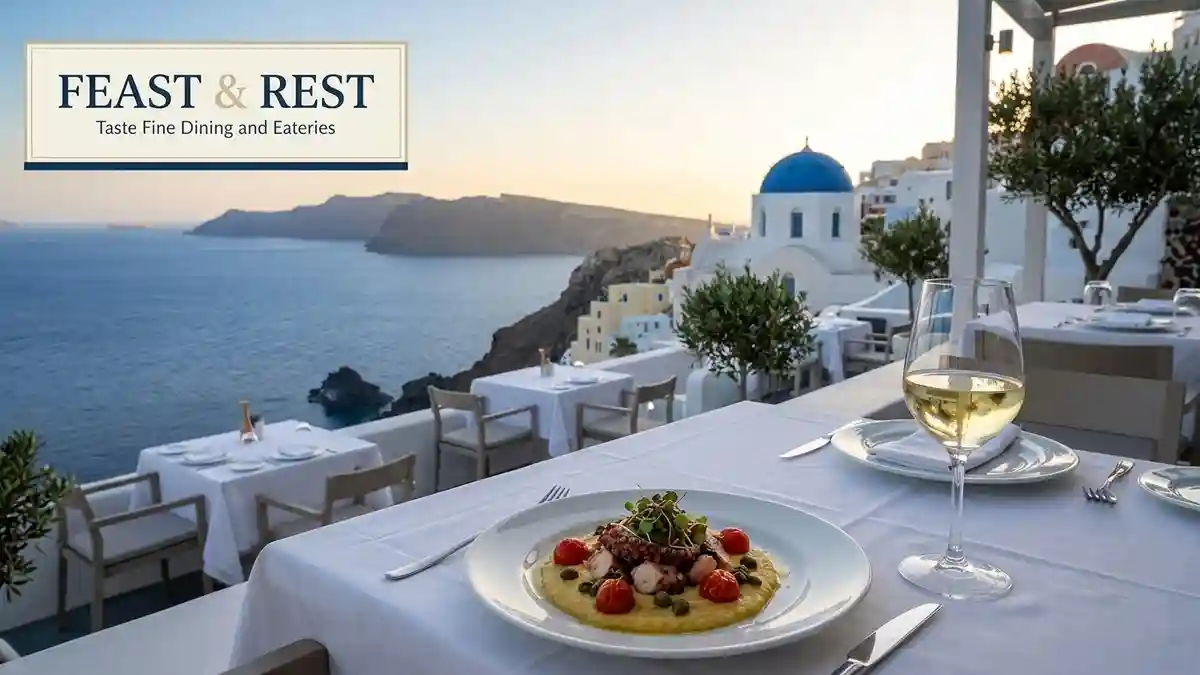
Perched along the cliffside villages of Oia, Imerovigli, and Fira, Santorini’s dining scene is inextricably linked with its dramatic geography. Fine dining on the island is defined by intimate tasting menus served against the backdrop of the flooded caldera. Restaurants here often emphasize an atmosphere of refined tranquility, where the physical setting enhances the sensory aspect of the meal.
+------------------+----------------------------------+------------------------------------+
| Dining Region    | Key Culinary Focus               | Signature Atmosphere               |
+------------------+----------------------------------+------------------------------------+
| Oia              | Contemporary Aegean Seafood      | Panoramic Caldera Sunset Views     |
| Imerovigli       | Modernist Volcanic Terroir       | Intimate, High-Altitude Cliffside  |
| Fira             | Progressive Greek Fusion         | Vibrant Urban-Cycladic Energy      |
| Megalochori      | Heritage & Estate Farm-to-Table  | Historic Village & Vineyards       |
+------------------+----------------------------------+------------------------------------+
The island’s modern kitchens draw heavily on native grape varieties as well, integrating wine production directly into the dining narrative. Iconic varieties such as Assyrtiko, known for its searing acidity and pronounced salinity, provide the natural acidity required to complement rich seafood dishes. Dining along the caldera is rarely just about the food on the plate; it represents a holistic integration of indigenous agriculture, architecture, and contemporary design.
Thessaloniki: Northern Greece’s Culinary Capital
While Santorini represents the pinnacle of luxury resort dining, Thessaloniki provides the deep, historical soul of Greek gastronomy. Situated in Northern Greece, the port city reflects centuries of multicultural influences, blending Byzantine, Ottoman, and Sephardic Jewish culinary heritage. This rich history makes securing Thessaloniki fine dining reservations a priority for serious food travelers seeking depth and contrast to the southern islands.
The northern approach to modern dining tends to be slightly more hearty and spice-forward than its Cycladic counterpart. Chefs in Thessaloniki frequently work with game, slow-braised meats, cured fish, and intricate pastries, refined through a contemporary lens. The city’s dining scene is concentrated around historic districts like Ladadika and the waterfront promenade, where restored warehouses now house forward-thinking bistros and elegant tasting rooms.
Key Highlights of Contemporary Greek Menus
To navigate high-end Greek menus effectively, it helps to understand how classic Mediterranean staples are transformed within modern tasting formats.
Key Menu Highlights
Deconstructed Aegean Salad: Compressed heirloom tomatoes, caper-leaf oil, sheep’s milk feta emulsion, and dried olive soil.
Volcanic Rock Octopus: Slow-cooked octopus tentacle glazed with reduced vin Santo, served over split pea (fava) puree infused with smoked citrus.
Northern Aegean Langoustine: Raw or lightly seared langoustine accompanied by sea fennel, tarama mousse, and a broth made from roasted shell reduction.
Modernized Lamb Moussaka: Slow-confit lamb shoulder layered with charred eggplant cream, potato fondant, and a light bechamel foam seasoned with nutmeg.
Assyrtiko-Poached Pear: Poached local fruit served with sheep’s yogurt sorbet, wild thyme honey, and caramelized walnut crumble.
Cellars of the Cyclades and Macedonia: Wine & Beverage Pairings
A crucial component of fine dining travel tips in Greece involves engaging with the country’s indigenous grape varieties. Modern Greek sommeliers have embraced low-intervention winemaking, amphora aging, and mono-varietal expressions that highlight distinct microclimates.
In Santorini, wine pairings almost always revolve around Assyrtiko, Aidani, and Athiri for whites, alongside the rare red Mavrotragano. The intense minerality of Santorini wines creates a natural bridge for rich seafood, sea urchin, and shellfish courses. In contrast, dining in Thessaloniki opens up access to Northern Greek reds, particularly Xinomavro from Naoussa—a complex, high-acid grape often compared to Nebbiolo, featuring notes of dried tomato, olive, and red berries.
Many multi-course tasting menus now offer dual pairing options: classic pairings featuring benchmark European and Greek estates, or strictly indigenous pairings that showcase small-batch producers from small Aegean islands and northern mountain slopes.
Reservation Strategies and Booking Logistics
Securing tables at top-tier establishments across Greece requires careful planning, particularly during the peak season running from late May through late September.
Practical Information
Booking Windows: Top-rated restaurants in Santorini often open reservations three to six months in advance via digital booking platforms. Early booking is essential for sunset seating times.
Thessaloniki Timing: Fine dining spots in Thessaloniki typically operate year-round, unlike seasonal island venues. Weekend dinner reservations should be made 2 to 4 weeks ahead.
Dress Code: Smart casual is standard across high-end island establishments. While formal attire is rarely mandatory, polished attire is expected in tasting room environments.
Cancellation Policies: Most fine dining venues require a credit card guarantee upon booking, with cancellation fees applied if cancelled within 24 to 48 hours of the reservation time.
Seasonal Operation: Note that many luxury restaurants in Santorini operate seasonally, closing between November and April, whereas mainland establishments maintain consistent year-round service.
Planning a Greek Fine Dining Itinerary
For travelers seeking a complete gastronomic overview of Greece, combining the cosmopolitan energy of Northern Greece with the volcanic grandeur of the Cyclades offers an ideal balance. Beginning a journey in Thessaloniki allows travelers to experience historic markets, artisanal bakeries, and modern northern bistros. A short domestic flight or ferry transfer down to Santorini then shifts the experience toward high-altitude, sea-facing fine dining where local ingredients are presented with artistic precision.
By understanding the seasonal rhythms, regional specialties, and booking requirements, visitors can fully immerse themselves in one of Europe’s most dynamic and rapidly evolving culinary landscapes.
Source Context and Data Notes
Information Sources: Content derived from established industry knowledge regarding contemporary Greek gastronomy, regional agricultural characteristics, public reservation standards, and Mediterranean culinary trends.
Scope and Limitations: Specific menu offerings, seasonal pricing, head chef assignments, and exact operational calendars vary throughout the year and are subject to change by individual restaurant management.
Generalizations: Descriptions of culinary techniques, ingredient profiles, and regional wine pairings represent widely accepted practices across modern Greek fine dining rather than single fixed menus.
The modern Greek dining landscape successfully honors its ancient agrarian roots while meeting the expectations of international luxury travel. As culinary techniques continue to evolve across both the islands and the mainland, the focus remains firmly on celebrating pure, local ingredients shaped by unique Aegean landscapes.