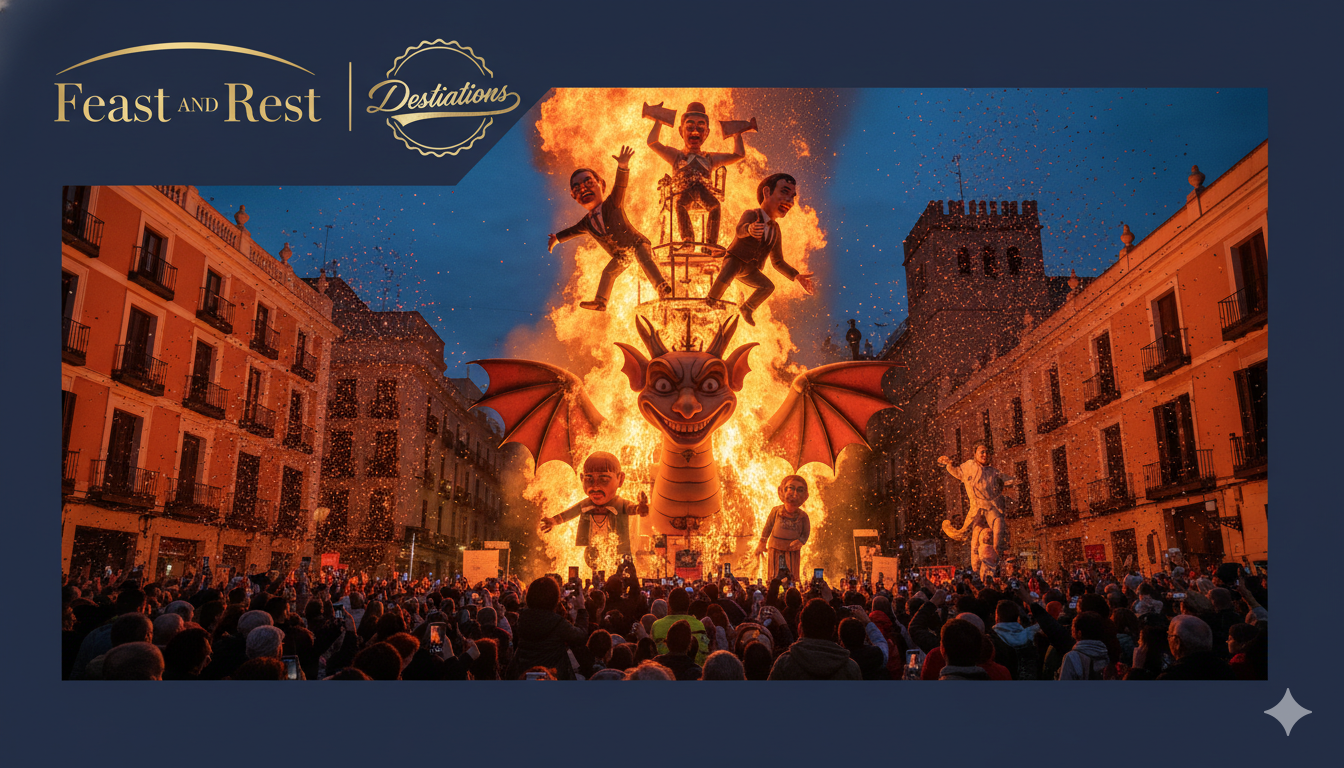
The Las Fallas 2026 schedule marks a return to one of Europe’s most intricate and pyrotechnic-heavy cultural celebrations, running officially from March 1 to March 19, 2026. This UNESCO cultural heritage festivals Spain entry transforms the city of Valencia into a sprawling open-air museum where over 700 satirical monuments, or falla monuments, are erected and subsequently burned. Beyond the smoke and fire, the festival is a deep expression of Valencian identity, featuring traditional Valencian dress and music, religious flower offerings, and a vibrant Valencia street food during Fallas scene dominated by pumpkin fritters and chocolate.
For the cultural traveler, Las Fallas is a multi-sensory experience where the Falla monuments meaning—rooted in social satire and neighborhood pride—collides with the thunderous “Mascletà” firecracker shows. The festival reaches its emotional peak during the La Crema ceremony time, a staggered series of burnings on the night of March 19 that symbolizes renewal. Planning for this event requires specific Valencia March travel tips, as the city’s population triples, most central streets close to traffic, and local life revolves entirely around the activities of local neighborhood fallas groups.
The Core Rituals: Las Fallas 2026 Schedule
The Las Fallas 2026 schedule follows a centuries-old liturgical and secular timeline that begins weeks before the first match is struck. While the daily “Mascletà” (rhythmic gunpowder explosions) starts on March 1 at 2:00 PM in the Plaza del Ayuntamiento, the “Main Week” occurs from March 15 to 19. During these five days, the city remains awake 24 hours a day, fueled by brass bands and the scent of gunpowder.
| Date (2026) | Event Name | Significance |
| March 1–19 | La Mascletà | Daily 2:00 PM pyrotechnic symphony in Plaza del Ayuntamiento. |
| March 15 | La Plantà (Infantil) | Final assembly of children’s monuments by local commissions. |
| March 16 | La Plantà (Grande) | Completion of the giant monuments, some reaching 30 meters. |
| March 17–18 | Ofrenda de Flores | Thousands of falleros in traditional dress offer flowers to the Virgin. |
| March 18 (Night) | Nit del Foc | The “Night of Fire,” featuring the festival’s largest fireworks display. |
| March 19 | La Cremà | The final burning of all monuments, concluding the festival. |
UNESCO Cultural Heritage: Falla Monuments Meaning
The heart of the festival lies in the Falla monuments meaning, which has evolved from simple 18th-century street bonfires into sophisticated artistic critiques. Each monument is composed of several “ninots” (individual figures) that satirize politicians, celebrities, and social trends. These are built by specialized “Falla Artists” in the Ciutat de l’Artista Fallero, using wood, papier-mâché, and increasingly, eco-friendly rice-paste materials.
According to UNESCO, which inscribed the festival as Intangible Cultural Heritage in 2016, the event fosters collective creativity and safeguards traditional crafts. One “ninot” is saved from the fire every year through a popular vote—the ninot indultat—and is placed in the Fallero Museum. For visitors, understanding that these million-euro structures are designed specifically to be destroyed is essential to grasping the Valencian philosophy of “out with the old, in with the new.”
Culinary Traditions: Valencia Street Food During Fallas
Navigating the festival requires stamina, often provided by the specific Valencia street food during Fallas. While Valencia is the global home of paella, the festival season introduces a specific “fried” sub-culture. Temporary wooden huts (puestos) appear on nearly every corner, specializing in buñuelos de calabaza (pumpkin fritters).
These fritters are traditionally paired with thick Spanish hot chocolate or horchata—a refreshing tiger nut milk originating from the nearby Alboraya region. For a more substantial meal, local neighborhood fallas groups often host outdoor paella competitions over wood fires, though these are typically private club events. Visitors should look for verbenas (street parties) where public food stalls serve fartons (sweet pastries) and mistela (a sweet local dessert wine).
The Grand Finale: La Crema Ceremony Time
The most vital piece of planning data is the La Crema ceremony time. On the night of March 19, the feast of Saint Joseph, the city is methodically set ablaze. This process is staggered to allow the Valencia Fire Brigade to oversee each burning safely. In 2026, the schedule is expected to follow the traditional timing:
8:00 PM: Burning of the Fallas Infantiles (Children’s monuments).
8:30 PM: Burning of the First Prize winner of the Children’s Special Section.
9:00 PM: Burning of the Municipal Children’s Falla in Plaza del Ayuntamiento.
10:00 PM: Burning of all large Fallas across the city.
10:30 PM: Burning of the First Prize winner of the Special Section.
11:00 PM: The final burning of the Municipal Falla in the city center.
Why This Matters: The Power of Local Neighborhood Fallas Groups
The festival’s sustainability is entirely dependent on the local neighborhood fallas groups, known as comisiones falleras. There are over 350 of these associations in Valencia, each with its own “Casal” (clubhouse). These groups function year-round as social hubs, collecting dues to fund the monuments and organizing the intricate parades.
For the traveler, these groups are the gatekeepers of traditional Valencian dress and music. During the Ofrenda, you will see women wearing hand-woven silk “Fallera” gowns, some costing upwards of €10,000, and men in “Saragüell” or “Torrentí” suits. The music, provided by roving brass bands playing pasodobles, creates a constant acoustic backdrop that defines the atmosphere of March in Valencia.
Practical Planning: Valencia March Travel Tips
Successfully attending Las Fallas requires a balance of curiosity and preparation. Using these Valencia March travel tips can mitigate the challenges of the massive crowds:
Ear Protection: The “Mascletà” reaches 120 decibels. If standing in the Plaza del Ayuntamiento, keep your mouth slightly open to equalize pressure on your eardrums.
Mobility: Central Valencia becomes almost entirely pedestrian. Use the Metrovalencia, which runs 24 hours during the main days, and avoid taxis or rental cars.
Footwear: You will likely walk 15–20 kilometers daily to see the “Special Section” monuments spread across neighborhoods like Ruzafa, El Pilar, and Campanar.
Booking: Accommodations for the Las Fallas 2026 schedule should be secured at least six months in advance, as city-center hotels reach 100% occupancy by February.
Societal and Sustainability Impact
In recent years, the UNESCO cultural heritage festivals Spain community has faced scrutiny regarding the environmental impact of burning polystyrene monuments. The Valencia City Council and the Junta Central Fallera have begun incentivizing the use of sustainable materials such as cork, wood, and experimental balsa. Furthermore, the festival provides a massive economic injection, estimated at over €700 million, supporting local silk weavers, florists, and pyrotechnicians who keep these centuries-old guilds alive.
The festival acts as a social glue, bridging generations. As local expert and former Fallera Mayor, Estefanía López, once noted, “The Falla is not just the monument; it is the neighborhood coming together to tell a story.” This community-driven model is precisely why the festival remains a hallmark of global cultural tourism.
Stay inspired with Feast and Rest!
Source and Data Limitations
This report is based on the official 2026 festival calendar provided by the Junta Central Fallera and Visit Valencia (the city’s official tourism board). Cultural significance and UNESCO criteria were verified through the UNESCO Intangible Cultural Heritage database (Entry 00859). Traditional culinary data reflects regional standards from the Guild of Masters of Horchata and historical food reports from the Valencian Academy of Gastronomy. While the La Crema ceremony time is officially set by the municipality, individual burning times in specific neighborhoods may experience slight delays (15–30 minutes) based on Fire Brigade availability and weather conditions (specifically high winds). Travel tips regarding decibel levels and transport are based on 2024–2025 logistical reports and current 2026 infrastructure updates for Metrovalencia. Seasonal temperature data (15°C–22°C) is sourced from AEMET (State Meteorological Agency of Spain). Information on sustainable materials refers to ongoing pilot programs in the Ciutat de l’Artista Fallero.