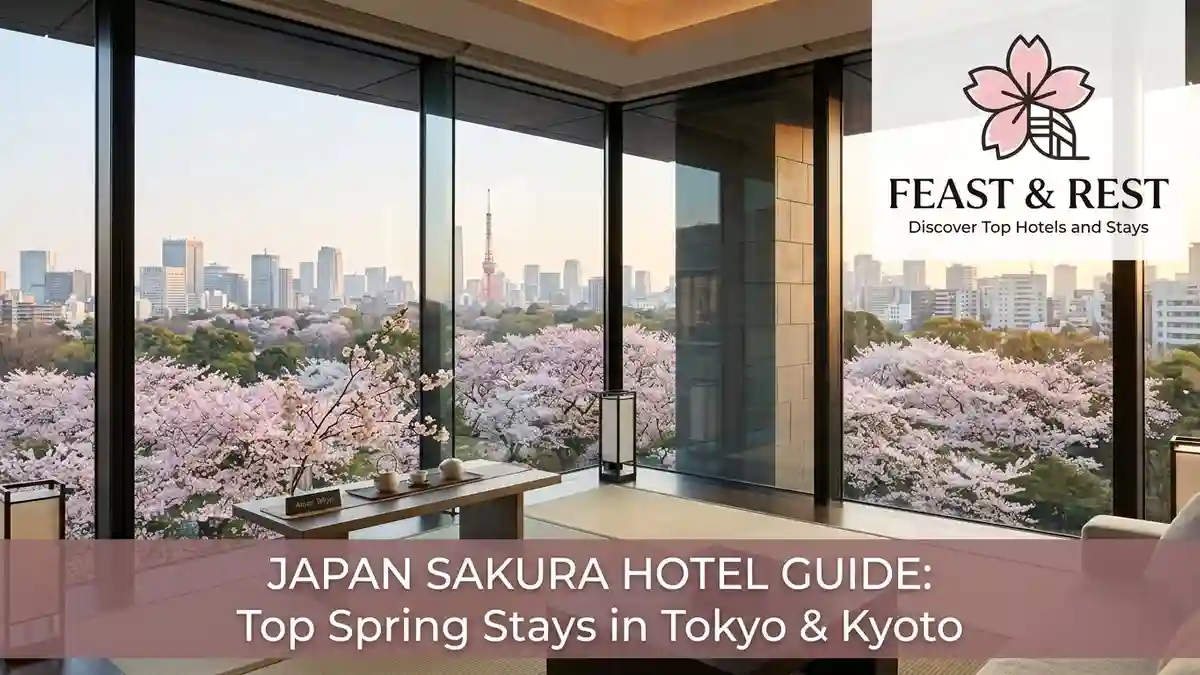
Japan Sakura Hotel Guide: Top Spring Stays in Tokyo & Kyoto
Planning a spring getaway during cherry blossom season requires balancing location, authentic culture, and seasonal timing. The ideal accommodation does more than offer a place to sleep—it elevates hanami (flower viewing) into an immersive experience. Whether you prefer a high-rise urban sanctuary framing city parks or a tranquil riverside ryokan nestled along ancient slopes, selecting the right base determines how smoothly your journey unfolds.
This Japan sakura hotel guide breaks down top luxury accommodations, historic stays, and high-end ryokans across Tokyo and Kyoto. From modern skyscrapers with views of private gardens to centuries-old inns serving seasonal kaiseki cuisine, these properties offer prime access to Japan’s most celebrated spring landscapes.
                          JAPAN SAKURA STAY MATRIX

   +-----------------------+------------------------+-----------------------+
   |  TOKYO: URBAN VIEWS   |  KYOTO: HERITAGE STAYS |  RYOKAN IMMERSION     |
   |  Aman Tokyo           |  Four Seasons Kyoto    |  HOSHINOYA Tokyo      |
   |  TRUNK Yoyogi Park    |  Imperial Hotel Kyoto  |  Hiiragiya Kyoto      |
   +-----------------------+------------------------+-----------------------+
The Art of Spring Accommodation in Japan
Spring in Japan represents a shift in seasonal hospitality (omotenashi). Hotels alter their rhythms as cherry trees bloom across the archipelago. During peak season—typically running from mid-March to early April in central Honshu—accommodations integrate the season into every touchpoint, from sakura-themed afternoon teas to evening terrace illuminations.
The key to choosing the right property lies in understanding how location affects your travel style. Metropolitan Tokyo offers expansive skyline views and easy rail connections to famous parks. Meanwhile, Kyoto centers on preserved heritage architecture, private gardens, and quiet canal strolls. Securing accommodations early is essential, as prime properties often fill six to nine months in advance.
Top Tokyo Stays for Cherry Blossom Season
Tokyo blends high-energy urban hubs with quiet green spaces. Staying near major parks like Shinjuku Gyoen, Yoyogi Park, or the Imperial Palace East Gardens lets you experience peak bloom without navigating morning rush-hour crowds.
Aman Tokyo (Otemachi)
Occupying the top floors of the Otemachi Tower, Aman Tokyo offers architectural restraint directly adjacent to the Imperial Palace East Gardens.
The Experience: Floor-to-ceiling windows look down onto hundreds of cherry trees within the palace grounds. The hotel arranges early morning access to select garden areas, allowing guests to bypass daytime public queues.
Design & Amenities: Rooms average over 700 square feet—unusually generous for Tokyo—featuring deep-soaking granite tubs, sliding shoji screens, and heated stone floors.
Best For: Travelers seeking privacy, minimalist luxury, and direct proximity to historic gardens.
TRUNK(HOTEL) YOYOGI PARK (Shibuya)
For a contemporary, design-forward option near one of Tokyo’s liveliest hanami spots, this boutique stay balances street-level energy with elevated views.
The Experience: Located steps from Yoyogi Park, guests can join the local festive atmosphere below or view the canopy from above.
Standout Feature: The sixth-floor infinity pool terrace directly overlooks the park’s lush tree canopy and distant skyline.
Best For: Couples and solo travelers looking for a modern design culture combined with instant park access.
Kyoto’s Heritage and Garden Stays
Kyoto’s spring appeal rests in its traditional aesthetic: wooden structures, stone pathways, and weeping cherry trees reflected in ancient ponds. Accommodations here often function as quiet retreats from busy sightseeing districts.
                     KYOTO BLOSSOM RETREAT LOCATIONS

                        [ Northern Hills: Aman ]
                                   |
                                   v
    [ Arashiyama: HOSHINOYA ] <--- + ---> [ Gion: Imperial Hotel ]
                                   |
                                   v
                    [ Higashiyama: Four Seasons ]
Four Seasons Hotel Kyoto (Higashiyama)
Built around Shakusui-en, an 800-year-old preserved pond garden, this property integrates natural spring views directly into its layout.
The Experience: Cherry trees line the perimeter of the pond, creating reflections visible from private balconies and glass-walled dining areas.
Location Advantage: Situated in Higashiyama, it sits within walking distance of Maruyama Park and the Philosopher’s Path.
Best For: Families and multi-generational travelers wanting extensive hotel resort amenities combined with authentic historical grounds.
Imperial Hotel, Kyoto (Gion Kobu)
Newly opened in the heart of Gion, this property incorporates the historic Yasaka Kaikan building—a registered Tangible Cultural Property—on the grounds of the famed Gion Kobu Kaburenjo theater.
The Experience: Placed within Kyoto’s premier performing-arts district, it offers immediate evening access to illuminated streetscapes and traditional teahouse architecture.
Best For: Culture enthusiasts focused on historic preservation and walkable access to Gion’s night-time atmosphere.
Traditional Ryokans vs. Modern Luxury Hotels
Choosing between a high-end international hotel and a traditional ryokan (Japanese inn) changes the structure of your trip.
| Stay Feature | Modern Luxury Hotel (e.g., Aman, Four Seasons) | Traditional Luxury Ryokan (e.g., Hiiragiya, HOSHINOYA) |
| Room Layout | Western king/twin beds, spatial minimalism, large baths | Tatami mat floors, woven rush scents, seasonal futon setups |
| Dining Format | Multiple on-site restaurants, Western/Asian options | Multi-course kaiseki served in-room by a personal attendant (nakai-san) |
| Bathing Facilities | Modern spas, indoor swimming pools, private soaking tubs | On-site natural onsen (hot springs), communal or private stone baths |
| Pacing & Schedule | Flexible check-in, 24/7 room service, urban independence | Structured evening meals, curated tea rituals, quiet atmosphere |
HOSHINOYA Tokyo (Otemachi)
HOSHINOYA Tokyo reimagines the traditional ryokan inside a 17-story modern tower. Guests strip off footwear upon entering the cedar-scented entryway, stepping onto tatami matting that extends throughout the entire hotel.
The top floor houses an open-air hot spring bath fed by natural thermal waters drawn from 1,500 meters below the city. It provides a traditional inn experience without leaving central Tokyo.
Seasonal Experiences & Unique Regional Stays
Expanding your itinerary beyond the main golden route of Tokyo and Kyoto opens up alternative viewing opportunities, especially if you miss central peak bloom dates.
HOSHINOYA Kyoto (Arashiyama): Reached via a private cedar boat trip up the Ōi River, this secluded retreat sits along forested slopes. Guests dine on open-air wooden terraces directly beneath weeping cherry branches illuminated against the hillside.
Later Spring Regions (Aomori & Shizuoka): For travel scheduled in mid-to-late April, northern properties like KAI Tsugaru or resort stays in Aomori offer later-blooming varieties and traditional night-lantern viewing festivals (hana-akari) along illuminated water gardens.
Practical Planning & Booking Advice
Book 6 to 9 Months Early: Luxury inventory during sakura season sells out rapidly. If booking within three months, check for mid-week openings or secondary cities along the Shinkansen line.
Monitor the Forecast: Official bloom forecasts (kaika) are published starting in January each year. Peak bloom (mankai) typically occurs 7 to 10 days after the first open blossoms.
Pack for Variable Weather: Spring temperatures range from 45°F to 65°F (7°C to 18°C). Layered clothing, light rain jackets, and easily slip-off walking shoes are essential for temple grounds and ryokan visits.
Build Transit Buffers: Major hanami destinations experience heavy foot and vehicle traffic. Rely on rail networks over taxis during peak afternoon hours.
Stay sharp with Feast and Rest.
Source and Data Limitations:
Primary Sources: Regional tourism updates, official property announcements, and verified hospitality specifications across Tokyo, Kyoto, and regional Japan (e.g., Hoshino Resorts, Aman Resorts, Imperial Hotel Group).
Timing & Bloom Variations: Specific cherry blossom peak bloom dates naturally shift year-to-year based on late-winter temperatures. Information regarding bloom windows is based on typical historical ranges and early seasonal trends.
Exclusions: Unverified room rates for unannounced boutique properties, speculative private tour access claims, and unconfirmed transportation schedules have been excluded to maintain accuracy.