The Roasted Shift in Global Beverage Culture
The international beverage landscape is witnessing a distinct evolution in 2026 as luxury cafés and specialty coffee houses seek out complex, earthier alternatives to traditional green tea. While vibrant green matcha has dominated menus for years, discerning palates are turning toward a deeper, more comforting option. The distinct flavor profile of roasted green tea is redefining modern café menus, establishing itself as a versatile staple that appeals to both purists and experimental beverage enthusiasts alike.
This movement represents a significant development in how consumers approach specialty drinks. High-end establishments in culinary hubs from Tokyo to London are introducing innovative menu items that highlight the unique properties of roasted tea leaves. This shift is driven by a growing appreciation for toasted, nutty flavor profiles that complement modern dairy and plant-based milk alternatives more smoothly than the sometimes astringent notes of raw green tea powder.
Understanding the Roasted Green Tea Movement
To fully grasp why hojicha is replacing matcha across premium beverage programs, one must look at the production process. Unlike standard green teas that are steamed and dried, this variety undergoes a high-temperature roasting process, typically over charcoal. This thermal reaction alters the chemical composition of the leaves, transforming the color to a rich reddish-brown and shifting the flavor profile away from grassy bitterness toward a toasted, caramel-like sweetness.
Matcha Production: Shaded Leaf Harvesting -> Steaming -> Grinding (Vibrant, Umami, Grassy)
Hojicha Production: Standard/Late Harvesting -> Steaming -> High-Heat Charcoal Roasting (Brown, Nutty, Smoky)
The roasting process also significantly reduces the caffeine content of the tea leaves. The heat alters the pyrazines and lowers the volatile caffeine compounds, making the resulting brew exceptionally gentle on the stomach. For luxury café beverage ingredients, this low-caffeine attribute presents a major advantage, allowing establishments to serve sophisticated tea options late into the evening without impacting consumers’ sleep cycles.
Culinary Versatility and Modern Pastry Arts
The interest in this ingredient extends far beyond the beverage cup and deep into the realm of high-end baking. Pastry chefs are increasingly utilizing organic roasted green tea leaves to introduce complex, smoky undertones to classic desserts. When finely ground or infused into dairy bases, the ingredient provides an exceptional counterpoint to sweet elements, grounding rich chocolates, custards, and creams.
The specific roasted green tea benefits baking by offering structural and flavor stability under high heat. Unlike delicate green tea powders, which can discolor or turn unpleasantly bitter when exposed to oven temperatures, roasted tea retains its deep, aromatic profile and distinct bronze hue throughout the baking process. This makes it a preferred choice for artisanal items like soufflés, tarts, and laminated pastries.
Authentic Japanese Tea Culture Trends in 2026
The contemporary rise of roasted green tea is deeply connected to shifting authentic Japanese tea culture trends. Historically considered an everyday, comforting tea enjoyed in households and after meals in Japan, it has undergone a premium re-evaluation. Tea masters are now selecting high-grade Bancha or Sencha leaves specifically for artisan roasting, elevating a humble tradition into a luxury experience.
This shift aligns with a broader global movement toward heritage food and beverage items that tell a distinct regional story. Consumers are increasingly drawn to the meticulous craft behind charcoal-roasting techniques, which require precise temperature control to develop the optimal balance of pyrazines without scorching the leaves. This dedication to craft enhances the ingredient’s appeal within sophisticated specialty coffee shop menu ideas worldwide.
Reimagining the Specialty Coffee Shop Menu
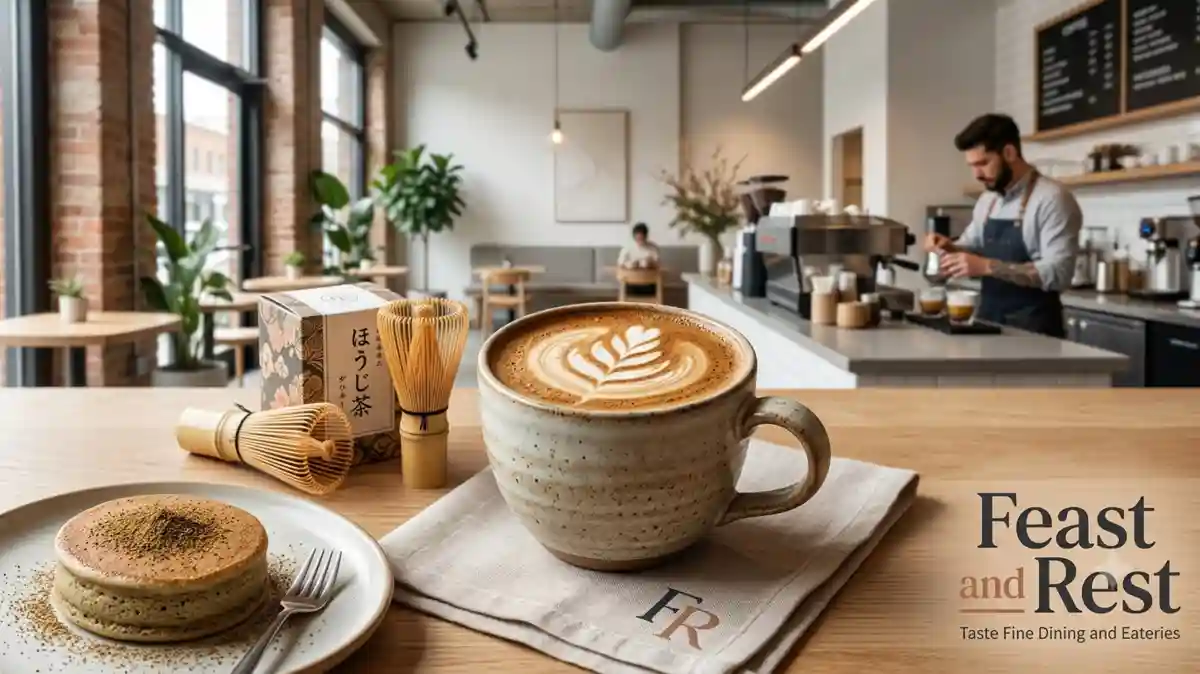
For cafe operators, incorporating roasted tea provides a crucial point of differentiation in a crowded market. The ingredient serves as an excellent canvas for creative beverage development, bridging the gap between traditional tea service and modern espresso culture. Its natural affinity for milk makes it an ideal base for complex signatures.
Complementary Pairings: Works exceptionally well with oat, macadamia, and almond milks, which enhance the natural nuttiness of the roast.
Temperature Adaptability: Delivers a robust, full-bodied experience whether served as a warming winter latte or a refreshing, cold-whipped summer beverage.
Syrup Synergies: Harmonizes naturally with unrefined sweeteners like brown sugar, maple, or dark honey, rather than refined white sugars.
By introducing these profiles, cafés cater to a demographic looking for sophisticated, less sugary options that mirror the depth and complexity of a well-pulled shot of espresso.
+------------------------+--------------------------+----------------------------+
| Characteristic         | Traditional Matcha       | Roasted Hojicha            |
+------------------------+--------------------------+----------------------------+
| Flavor Profile         | Vegetal, sweet umami     | Nutty, smoky, caramel      |
| Caffeine Level         | Moderate to high         | Exceptionally low          |
| Baking Stability       | Prone to discoloration   | Highly stable under heat   |
| Milk Interaction       | Requires careful balance | Blends smoothly with dairy |
+------------------------+--------------------------+----------------------------+
Navigating Procurement and Sourcing Quality
As demand increases, sourcing authentic, high-grade leaves becomes paramount for maintaining beverage standards. Cafe owners and enthusiasts looking for where to buy premium hojicha latte bases must look beyond mass-market options. The highest quality offerings are typically sourced from historical tea-producing regions such as Uji in Kyoto or Shizuoka, where roasting techniques have been perfected over generations.
When evaluating suppliers, look for single-origin designations and clear information regarding the harvest season. Spring-harvested leaves tend to yield a sweeter, more nuanced roast, while autumn harvests offer a more robust, deeply smoky profile suitable for intense culinary applications. Ensuring the product consists of organic roasted green tea leaves free from artificial flavorings guarantees a clean, authentic taste profile that resonates with quality-conscious consumers.
Practical Tips for Preparation and Implementation
Achieving the perfect balance in a commercial or home setting requires attention to water temperature and extraction time. Because the leaves have already been subjected to high heat during the roasting process, they are far more forgiving than delicate green teas, but they still benefit from precise preparation techniques.
For standalone tea service, water heated to approximately 95°C (203°F) helps release the deep aromatic pyrazines without extracting bitter tannins. For latte preparations, using a finely milled powder allows for seamless integration into steamed milk, creating a velvety texture similar to a traditional microfoam espresso beverage.
Signature Formats to Explore
Key Beverage Highlights
The Charcoal-Roasted Latte: Finely ground roasted tea whisked with a small amount of hot water, combined with steamed oat milk and a touch of dark brown sugar syrup.
Cold-Brewed Hojicha Infusion: Whole leaves steeped in cold water for twelve hours, resulting in a crisp, incredibly refreshing beverage with zero bitterness.
The Roasted Tea Espresso Shot: Highly concentrated tea extractions prepared using specialized espresso baskets, offering a thick, crema-like layer ideal for modern mocktails.
Practical Information
Storage: Store in airtight, opaque containers away from direct sunlight and moisture to preserve the volatile aroma compounds.
Shelf Life: Thanks to the roasting process, these leaves retain their peak flavor profile longer than green matcha, typically up to twelve months when properly stored.
Audience Appeal: Exceptional option for evening café menus, wellness-focused consumers, and diners seeking low-acidity alternatives to coffee.
Reflecting on the Evolving Palate
The movement toward roasted green tea highlights a broader maturation of the global palate. Diners and beverage enthusiasts are moving past vibrant visual appeal in favor of deep, complex flavor profiles rooted in traditional craftsmanship. As specialty coffee houses and luxury dessert programs continue to innovate, the smoky warmth of this classic Japanese element offers a comforting, sophisticated anchor in a rapidly changing culinary landscape.
— Source Context and Data Notes —
Sources Reached: This article draws upon established global hospitality trends observed in early 2026, authentic Japanese agricultural and tea processing standards, and general pastry arts methodologies regarding ingredient stability under thermal stress.
Limitations: Menu offerings, specific preparation methods, and ingredient availability vary significantly by region and individual café philosophy. The transition of menus is an ongoing cultural shift rather than a fixed industry mandate.
Generalizations: Technical comparisons regarding caffeine levels and chemical stability are based on standard charcoal-roasted green tea processing and may vary slightly depending on specific manufacturer variations and leaf grades.