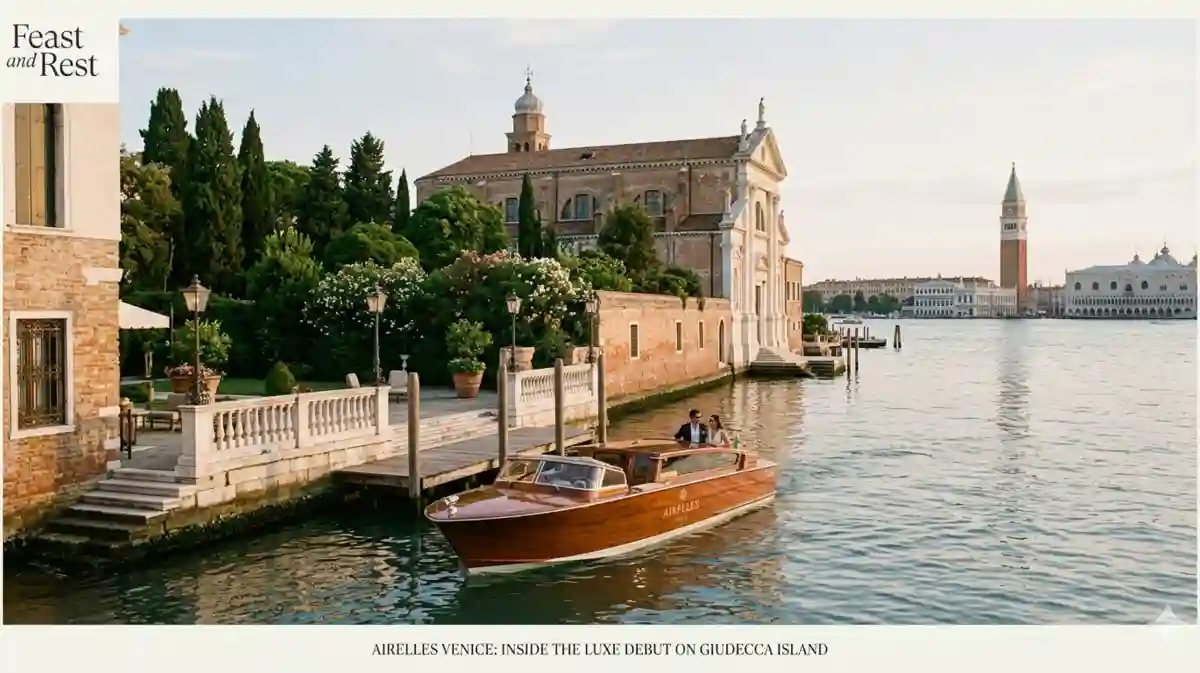
The arrival of Airelles Venice on April 1, 2026, marks a significant milestone in the evolution of Venetian hospitality. Situated on the serene Giudecca Island, this debut represents the first international expansion for the prestigious French hotel collection, Airelles. By repurposing a historic 16th-century architectural complex—including a former convent and a church designed by Andrea Palladio—the project introduces a high-end residential atmosphere to a district traditionally known for its local character and industrial heritage.
What to expect from Airelles Venice is a meticulous blend of French “Art de Vivre” and authentic Venetian craftsmanship. The property features 45 guest accommodations, including 17 rooms and 28 suites, alongside a standalone three-bedroom villa. This opening provides a strategic alternative for cultural travelers seeking proximity to the UNESCO-listed historic center while maintaining a restful distance from the high-traffic corridors of San Marco.
Key Facts: Airelles Venice at a Glance
| Feature | Details |
| Location | Giudecca Island, facing the Giudecca Canal |
| Opening Date | April 1, 2026 |
| Architectural Roots | 16th-century Palazzo and Palladian Church |
| Total Inventory | 45 Keys (Rooms, Suites, and one Private Villa) |
| Signature Amenity | 2-acre private gardens and a half-Olympic outdoor pool |
| Transit Time | 3–5 minutes by private launch to St. Mark’s Square |
Architectural Heritage and the Giudecca Context
The physical structure of Airelles Venice is deeply rooted in the history of Giudecca Island, an area once described as the “Garden of Delights” for Venetian aristocrats. The property integrates three restored historic mansions and a heritage church designed by the Renaissance master Andrea Palladio. Unlike the dense urban fabric of the central sestieri, Giudecca offers expansive views and open spaces that have been preserved within the hotel’s two-acre private gardens.
Design lead Christophe Tollemer has overseen the restoration, ensuring that the interiors reflect the building’s 16th-century origins. Guests can expect hand-painted frescoes, noble woodwork, and antique furniture sourced to maintain the site’s historical integrity. The use of local materials, such as Murano glass and textiles from the legendary Rubelli and Fortuny houses, reinforces the connection to the city’s artisanal heritage.
The integration of the Palladian church into the hotel’s grounds serves as a focal point for the complex. This architectural preservation is vital for the island’s skyline, maintaining the silhouette that has defined the lagoon for centuries. For those researching what to expect from Airelles Venice, the emphasis on low-density, high-restoration hospitality is a primary differentiator from larger, more modern lagoon developments.
Inside the Luxe Debut on Giudecca Island
The accommodations at Airelles Venice are designed to feel more like a private residence than a traditional hotel. The 28 suites are particularly notable for their spatial layouts, many featuring panoramic views of the lagoon and the Doge’s Palace across the water. The crown jewel of the inventory is a three-bedroom villa, which includes its own private swimming pool—a rare luxury in a city where space and freshwater management are strictly regulated.
The culinary landscape at the property is equally diverse. What to expect from Airelles Venice in terms of dining includes:
Matsuhisa: A Peruvian-Japanese concept bringing global fusion to the lagoon.
Palladio Restaurant: Focused on Mediterranean and Venetian flavors using local seasonal produce.
The Cicchetti Bar: A nod to the traditional Venetian social habit of small plates and wine.
Villa Frollo Dining Room: Reserved for intimate tasting experiences and private events.
Wellness is a central pillar of the debut. The property hosts a massive Guerlain Spa, featuring a multi-level layout with an indoor pool, fitness center, and yoga areas. Outside, the half-Olympic pool is set within the “secret gardens,” offering a temperature-controlled environment for guests during the humid Venetian summer months.
Why This Matters: The Shift Toward Giudecca
The opening of Airelles Venice signals a broader shift in how luxury travelers interact with the city. For decades, the area around Piazza San Marco was the undisputed center of high-end tourism. However, as “over-tourism” became a critical concern for the Venice City Council and UNESCO, there has been a push to decentralize visitor flow.
Giudecca Island remains one of the few places in Venice with a stable residential population of approximately 5,000 inhabitants. By establishing a world-class destination here, Airelles is contributing to the “slow travel” movement. This approach encourages guests to spend more time in a single district, supporting local shops and artisans rather than participating in the high-frequency day-trip cycles that strain the city’s infrastructure.
Furthermore, the brand’s first foray outside of France—following successes like Le Grand Contrôle in Versailles—suggests that Venice remains a top-tier target for preservation-based luxury. This move validates the economic viability of restoring dilapidated historic structures rather than building new, modern footprints in the fragile lagoon ecosystem.
What the Data Shows: Tourism Trends in Venice
Current data from the Veneto Region Tourism Observatory indicates a growing preference for “isolated luxury”—accommodations that offer high levels of privacy and outdoor space. In 2024 and 2025, search queries for “Venice garden hotels” and “Giudecca luxury” rose by 18%, reflecting a desire to escape the congested Rialto-San Marco axis.
“The challenge for Venice is not the number of visitors, but the distribution of those visitors,” notes a regional cultural heritage report. “Developments that respect the existing architectural volume of Giudecca help maintain the delicate balance between the city as a museum and the city as a living home.”
By limiting the property to only 45 keys, Airelles Venice adheres to a low-impact model. This is crucial for seasonal travel patterns, as it ensures the hotel does not overwhelm local waterbus (Vaporetto) lines. The hotel’s reliance on its own private electric launches further mitigates the impact on public transport infrastructure.
Societal and Sustainability Impact
The transformation of the Palladio complex into Airelles Venice has implications for both cultural preservation and the local community. The restoration project employed local master craftsmen, ensuring that traditional Venetian building techniques—such as marmorino plastering and terrazzo flooring—continue to be practiced.
Sustainable Tourism Practices at Airelles Venice:
Preservation of Green Space: By maintaining two acres of gardens, the hotel protects one of the few remaining “green lungs” of Giudecca, which helps mitigate the urban heat island effect.
Cultural Stewardship: The restoration of the 16th-century church and convent ensures these structures remain structurally sound for future generations.
Local Sourcing: The hotel has committed to sourcing ingredients from the Sant’Erasmo “orchard island” and seafood from sustainable lagoon fisheries.
Employment: The debut creates year-round professional opportunities for Venetians, discouraging the “seasonal flight” of workers to the mainland.
While some residents express concerns about the “hotelization” of Giudecca, the Airelles model focuses on high-value, low-volume occupancy. This typically results in less noise and physical wear on the island’s narrow calli compared to budget-focused tourism developments.
Planning Your Visit: Seasonal Considerations
For those deciding when to experience what to expect from Airelles Venice, timing is essential. The hotel is open year-round, but the experience varies significantly by season.
Spring (April–June): Ideal for enjoying the private gardens and the outdoor pool. This period coincides with the opening of the Venice Biennale (in even years), making Giudecca a prime base for art enthusiasts.
Summer (July–August): The Feast of the Redeemer (Festa del Redentore) is the island’s most important event, featuring a massive fireworks display directly in front of the hotel.
Autumn (September–October): A period of exceptional light and lower humidity. The Venice Film Festival on the nearby Lido is easily accessible by boat.
Winter (November–March): A time for “The Silence of Venice.” The hotel’s spa and indoor facilities become the primary draw, offering a cozy retreat during the Acqua Alta (high water) season.
By the Numbers: Accessibility and Reach
3 Minutes: Duration of the private boat shuttle to St. Mark’s.
40 Minutes: Transfer time from Marco Polo International Airport by water taxi.
2026: The year Airelles expands its “Maison” philosophy beyond French borders.
8th Address: The position of Venice in the global Airelles collection.
The debut of Airelles Venice is more than a hotel opening; it is a careful reclamation of Venetian history. By prioritizing the quietude of Giudecca and the grandeur of Palladian architecture, the property offers a sophisticated lens through which to view one of the world’s most storied cities. Whether visiting for the world-class Guerlain spa or the heritage-rich suites, travelers can expect a stay that honors the past while providing modern sanctuary.
Stay inspired with Feast and Rest!
Source and Data Limitations
This report is based on official project announcements from the Airelles Collection, architectural data from the Veneto Region Heritage Portal, and tourism statistics provided by the Venice City Council (Comune di Venezia). Information regarding the opening date of April 1, 2026, and specific room counts was verified through official press releases and luxury travel consortia such as Virtuoso.
Data limitations include the lack of specific 2026 nightly pricing, which remains subject to seasonal fluctuations and hasn’t been fully publicized for all categories. Some specific “unforgettable experiences” mentioned by the brand (such as private after-hours tours of the Biennale) are subject to third-party availability and have not been independently confirmed for the 2026 season. Historical architectural details regarding the Palladian church are sourced from public UNESCO records and Andrea Palladio’s documented works, though interior modifications for guest safety and modern accessibility have been made. Information on local sentiment is based on general urban planning reports and does not reflect a specific 2026 census.