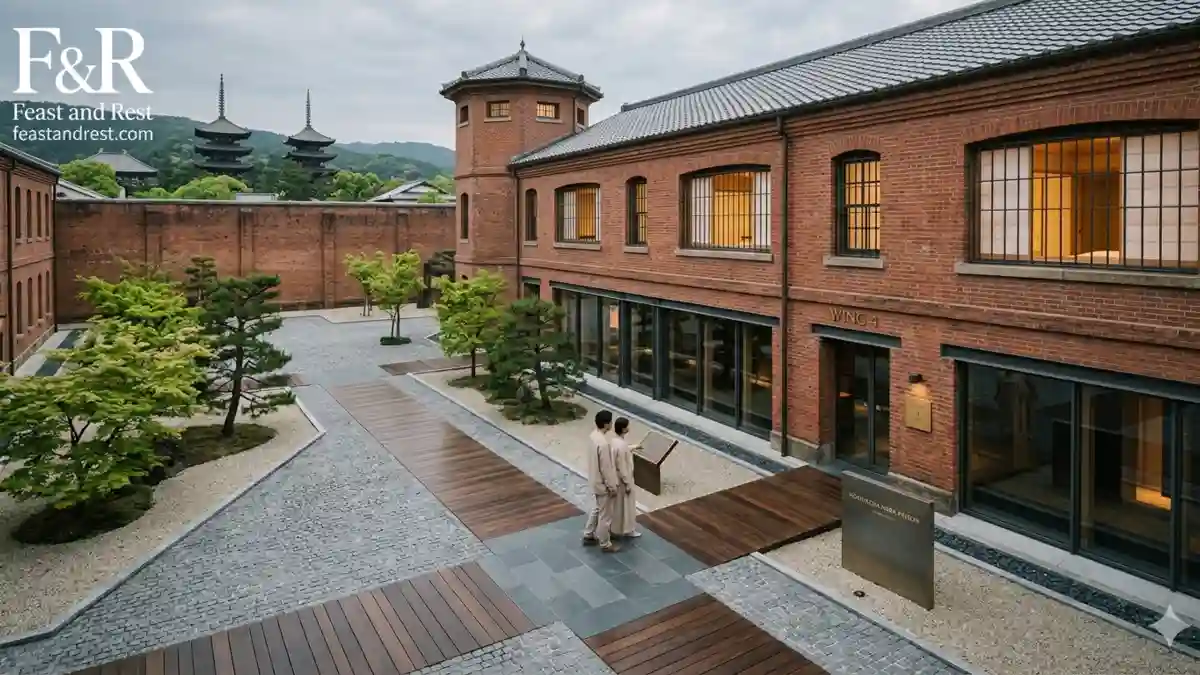
The Nara Prison Transformation: Inside Japan’s Newest Hoshino Luxury Escape represents a landmark shift in Japan’s approach to heritage tourism, converting a century-old penitentiary into a premier hospitality destination. This ambitious project, led by Hoshino Resorts, is set to open its hotel component, HOSHINOYA Nara Prison, on June 25, 2026, following the launch of an onsite museum in April. The initiative preserves the red-brick Romanesque architecture of the Meiji Era, specifically the only surviving structure of the “Five Great Prisons” designed by architect Keijiro Yamashita. For cultural travelers, the site offers a rare intersection of penal history, high-concept design, and the evolving narrative of Japanese modernization.
Featured Snippet: What is the Nara Prison Transformation?
The Nara Prison Transformation is a cultural preservation project that repurposes the National Important Cultural Property (Nara Prison) into a luxury hotel and museum. Operated by Hoshino Resorts under its flagship HOSHINOYA brand, the site features 48 luxury suites created from former solitary cells and a dedicated museum exploring Japan’s judicial history. It is the first project of its kind in Japan to combine penal heritage with high-end international tourism.
Heritage and the Meiji Legacy
Within the first few months of 2026, the Japan National Tourism Organization (JNTO) and the Agency for Cultural Affairs have highlighted the Nara project as a cornerstone of “slow travel” in the Kansai region. The prison, originally completed in 1908, served as a symbol of Japan’s judicial modernization during a period when the nation sought to abolish unequal treaties with Western powers. By involving experts like Mitsuhiro Nomura from the Japan Cultural Heritage Consultancy, the transformation has prioritized seismic retrofitting and the conservation of the iconic Haviland-style radial wings.
The Architectural Vision of the Nara Prison Transformation
The architectural integrity of the site is defined by its radial design, where five detention wings extend from a central watchtower. This layout, known as the Haviland System, allowed guards to monitor all corridors from a single pivot point. The Nara Prison Transformation: Inside Japan’s Newest Hoshino Luxury Escape ensures that this historic footprint remains visible, even as the interiors are reimagined for guest comfort.
The original red bricks were manufactured by the inmates themselves in kilns built on the prison grounds. These 100-year-old hand-laid walls have been meticulously preserved and paired with modern wood paneling and glass. High-vaulted ceilings and iron pillars, once synonymous with confinement, now provide the structural foundation for minimalist luxury suites that emphasize space and light.
Defining the Guest Experience
Unlike standard luxury developments, the HOSHINOYA Nara Prison focuses on thematic immersion. The property features 48 suites, including the “10-Cell” and “11-Cell” deluxe signature suites. These rooms are created by merging multiple original solitary cells into a single 70-square-meter living area. This specific design choice allows the hotel to maintain the rhythm of the original windows and doors while providing the amenities expected of a five-star escape.
Why This Matters: A New Era for Heritage Tourism
The Nara Prison Transformation: Inside Japan’s Newest Hoshino Luxury Escape serves as a case study for the global “adaptive reuse” movement. Historically, many of Japan’s Meiji-era buildings were demolished to make way for modern infrastructure. The decision to preserve Nara Prison reflects a maturing tourism market that values historical depth over new construction.
| Key Fact | Detail |
| Official Name | HOSHINOYA Nara Prison |
| Opening Date | June 25, 2026 (Hotel); April 27, 2026 (Museum) |
| Total Suites | 48 |
| Designation | National Important Cultural Property |
| Architect | Keijiro Yamashita (Original); Yasui Architects (Restoration) |
Analytical reports from Hoshino Resorts suggest that international travelers, particularly from Western markets, are now staying an average of 3.35 nights at HOSHINOYA properties. By offering a museum and immersive historical programming, this project aims to extend the stay of visitors in Nara, who traditionally visit only for a few hours to see the deer in Nara Park or the Great Buddha at Todai-ji Temple.
What the Data Shows: Tourism Trends in Nara
Data from the 2025 Inbound Travel Report indicates that while growth in Tokyo is moderating, the Kansai region is seeing a surge in “deep exploration” travelers. The Nara Prison Transformation: Inside Japan’s Newest Hoshino Luxury Escape is strategically positioned to capture this demographic.
Shift to Regional Hubs: Inbound growth to non-urban prefectures rose by 17% in 2025, with Nara becoming a primary beneficiary of the “slow travel” trend.
Economic Impact: The restoration project has created local jobs in specialty construction and will continue to support the Nara economy through the onsite “Wakakusa” gift shop, which features handicrafts produced by prison work programs.
Heritage Value: UNESCO-listed sites in Nara now have a complementary modern attraction that bridges the gap between ancient history and the Meiji-era’s industrial rise.
The pricing strategy also reflects this premium positioning. While the museum remains accessible to the public with tickets starting at ¥2,500, the hotel rates are expected to start around US$230–$250 per person, per night, targeting high-net-worth cultural tourists.
Cultural Programming and Educational Value
The Nara Prison Museum, scheduled to open in April 2026, is a vital component of the Nara Prison Transformation: Inside Japan’s Newest Hoshino Luxury Escape. Developed under the guidance of museography expert Adrien Gardère, the museum is divided into preservation and exhibition areas. It does not shy away from the site’s original purpose, offering insights into the Japanese penal system and the daily lives of inmates through a series of “inmate perspectives.”
Guided Access: Hotel guests receive exclusive early access to the museum before public hours.
Cultural Workshops: Programs include perfume-blending sessions and gramophone-accompanied evening drinks, echoing the Western influences of the early 1900s.
Artistic Reflection: Temporary exhibitions will explore the concept of “freedom” through the lens of local and international artists.
By integrating these elements, the project avoids the pitfalls of “dark tourism” and instead fosters a contemplative environment. As Hoshino Resorts CEO Yoshiharu Hoshino noted in a recent preview, the focus is on “retention and depth,” ensuring that the site’s history is honored rather than erased.
Sustainability and Local Community Impact
Sustainability in the Nara Prison Transformation: Inside Japan’s Newest Hoshino Luxury Escape is measured by both environmental and social metrics. The restoration used specialized seismic retrofitting to ensure the building survives for another century without needing resource-heavy reconstruction.
The project also focuses on “co-existence” with the local community. By repurposing a facility that was once closed off from the public, the transformation opens a 106,000-square-meter grounds for guided tours and educational visits. This provides a new “allure” for the Hannyaji-cho district, potentially decentralizing the heavy foot traffic found in the city’s more famous temple districts.
“The primary requirement was to maintain its current state… if visitors feel that it is a magnificent and beautiful building, I am personally satisfied,” said Mitsuhiro Nomura, chief conservator, regarding the delicate balance of modern utility and historical preservation.
Practical Planning for Cultural Travelers
For those planning to visit the Nara Prison Transformation: Inside Japan’s Newest Hoshino Luxury Escape, timing is essential. The museum opens on April 27, 2026, making it an ideal spring destination for those interested in architecture. The hotel opens in late June, coinciding with the peak of the early summer travel season.
Access: The site is located in Hannyaji-cho, easily accessible via bus or a short taxi ride from JR Nara Station or Kintetsu Nara Station.
Seasonality: Autumn and Spring remain the most popular times for Nara due to the foliage and cherry blossoms, though the hotel’s climate-controlled museum wings make it a viable year-round cultural destination.
Booking: Reservations for HOSHINOYA Nara Prison typically open several months in advance through the official Hoshino Resorts website.
The transformation stands as a testament to Japan’s ability to evolve while remaining rooted in its complex history. It is no longer just a place of confinement, but a site of luxury, education, and architectural wonder.
Stay inspired with Feast and Rest!
Source and Data Limitations
Information for this report is derived from official 2026 press releases by Hoshino Resorts, the Nara Prison Museum project archives, and the 2025 Hoshino Resorts Inbound Travel Report. Specific architectural details regarding the Haviland System and seismic retrofitting were verified via the Japan Cultural Heritage Consultancy and the Agency for Cultural Affairs. Opening dates (April 27, 2026, for the museum and June 25, 2026, for the hotel) are current as of April 2026. While Hoshino Resorts has provided preliminary suite counts (48) and historical context (Meiji Five Great Prisons), specific nightly rates are subject to seasonal fluctuations and demand-based pricing models common in the luxury sector. Unverified claims regarding specific guest reviews or future expansion phases have been excluded to maintain factual integrity. Historical dates regarding Keijiro Yamashita’s contributions are based on the National Important Cultural Property registry.