The Evolution of Montreal’s Culinary Recognition
Montreal has long been celebrated as the gastronomic heartbeat of Canada, but the arrival of the Montreal Michelin Stars 2026 rankings has solidified its standing on the global stage. This year’s selections reflect a city that has moved beyond its classic French roots to embrace a more rugged, fire-based, and ingredient-driven identity. While the downtown core continues to offer refined elegance, much of the 2026 momentum has shifted toward the industrial-chic neighborhoods where chefs are reimagining the fine dining experience.
The most significant takeaway from this year’s guide is the maturation of the city’s industrial-to-table movement. Rather than focusing solely on white tablecloths, the Michelin inspectors have increasingly rewarded authenticity and technical mastery in unconventional spaces. For food enthusiasts and travelers, the 2026 rankings serve as a roadmap to a city that is currently balancing its historic charm with a bold, modern edge.
A notable highlight in this cycle is the continued ascent of Hoogan et Beaufort. Located in the Rosemont–La Petite-Patrie district, this restaurant exemplifies the “New Montreal” style: expansive, architecturally stunning, and centered around the primal element of fire. Its performance in the 2026 rankings signals a broader trend where neighborhood gems are outshining traditional landmarks through sheer consistency and vision.
The Rosemont Renaissance: Hoogan et Beaufort’s Impact
The rise of Hoogan et Beaufort is not merely a success story for a single restaurant; it is a testament to the revitalization of the Angus Shops area in Rosemont. Once an industrial hub for train manufacturing, the district has transformed into a culinary destination, with Chef Marc-André Jetté at the helm of this evolution. The restaurant’s inclusion in the conversation for top Montreal Michelin Stars 2026 honors highlights how vital location and atmosphere have become to the overall evaluation.
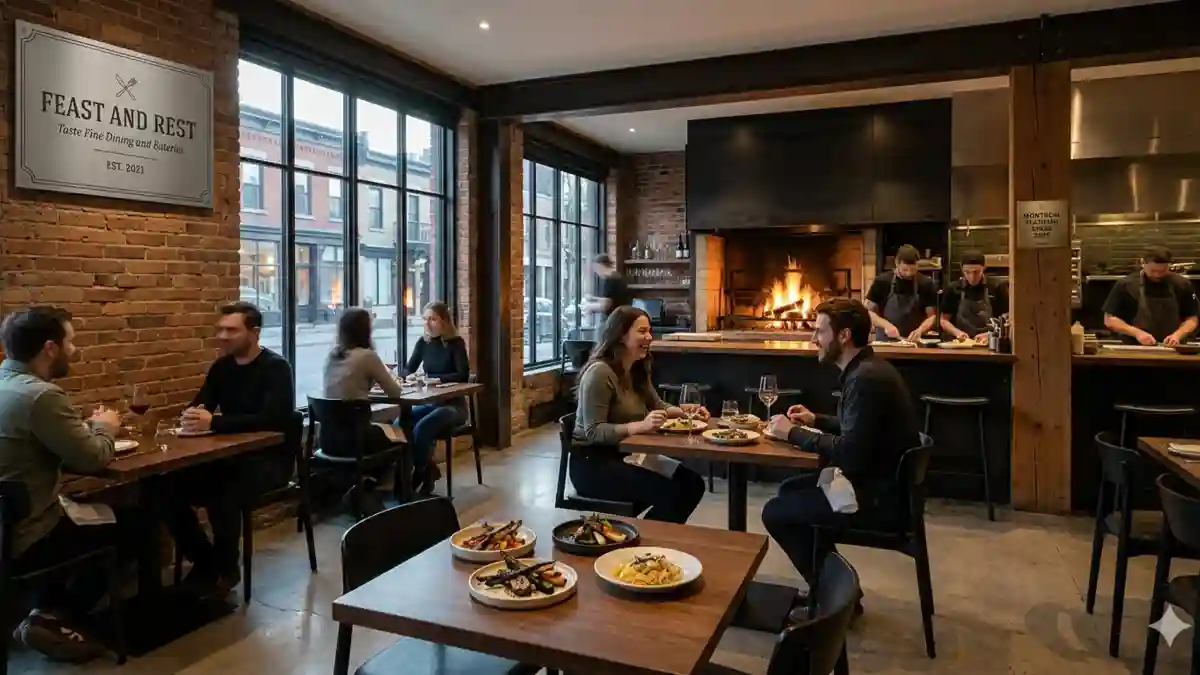
The space itself is a lesson in industrial grace. With soaring ceilings, massive windows, and an open kitchen anchored by a custom-built wood-burning fire pits, the atmosphere bridges the gap between raw power and sophisticated comfort. It feels quintessentially Montreal—utilizing the city’s skeletal remains to house something deeply creative.
For the Michelin inspectors, the allure often lies in the contrast. In 2026, the preference seems to lean toward establishments that offer a sense of place. At Hoogan et Beaufort, you aren’t just eating a meal; you are witnessing the intersection of Quebec’s seasonal bounty and high-level fire cookery. This “fire-to-fork” philosophy has become a hallmark of the Rosemont dining scene, influencing how other newcomers in the area approach their menus.
Culinary Philosophy: Fire, Smoke, and Seasonality
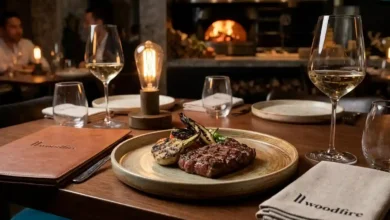
At the heart of the Montreal Michelin Stars 2026 rankings is a commitment to “technique-driven simplicity.” In the case of Hoogan et Beaufort and its contemporaries, this translates to a focus on the hearth. The culinary philosophy here is predicated on the idea that smoke and flame are ingredients in their own right, capable of elevating humble vegetables and premium proteins alike.
Chef Marc-André Jetté’s approach is disciplined. While the open fire might suggest a rustic style, the plating and flavor profiles are remarkably precise. There is a focus on acidity and herbal notes to balance the richness of charred meats and roasted seafood. This balance is likely what caught the eye of the Michelin guide; it demonstrates a level of sophistication that goes beyond the “smokehouse” trope.
The 2026 season also emphasizes a hyper-local sourcing model. Many of the top-ranked Montreal restaurants now maintain direct relationships with foragers and small-scale farmers in the Eastern Townships and Charlevoix. This ensures that the ingredients hitting the fire are at their absolute peak, allowing the natural sugars in the produce to caramelize and shine under the intense heat of the embers.
Key Menu Highlights: A Taste of the Hearth
While menus in Montreal’s top-tier kitchens change frequently to reflect the shifting seasons, several signature elements define the experience at Hoogan et Beaufort. The following table illustrates the types of dishes that have defined their 2026 trajectory.
| Component | Description | Culinary Focus |
| The Hearth | Fired-roasted octopus or seasonal squash | Caramelization and depth of flavor |
| Handmade Pasta | Fregola or Agnolotti with local cheeses | Texture and traditional Italian technique |
| Quebec Proteins | Salt-marsh lamb or dry-aged beef | High-quality local sourcing and aging |
| Vegetable Forward | Charred leeks or root vegetable emulsions | Elevating humble ingredients through smoke |
The sourdough program is also worth noting. In many 2026 Michelin-rated spots, the bread course has been elevated from a side thought to a centerpiece. Here, the bread is often finished near the fire, providing a crust and aroma that sets the tone for the entire meal. It is this attention to the “basics” that often separates a standard eatery from a starred contender.
The Dining Experience: Service and Sommelier Expertise
A significant factor in the Montreal Michelin Stars 2026 evaluations is the “service rhythm.” In Montreal, this has evolved into a style that is professional yet noticeably warmer than the rigid service found in some European capitals. At establishments like Hoogan et Beaufort, the staff acts as guides through the industrial space, explaining the nuances of the wood-fired oven and the provenance of the ingredients.
The wine programs in 2026 have also seen a shift toward “narrative-driven” lists. This means a heavy emphasis on:
Low-intervention and organic wines from both old-world regions and burgeoning Canadian vineyards.
Unique pairings that account for the smoky profiles of the food.
Thoughtful non-alcoholic pairings, such as house-made infusions and fermented juices, which have become a requirement for modern Michelin recognition.
The acoustics and lighting in these large, industrial spaces are carefully managed to ensure that despite the high ceilings, the dining experience feels intimate. It is a delicate balance to strike, but the top-rated venues of 2026 have mastered the art of making a cavernous room feel like a private sanctuary.
Practical Advice for Prospective Diners
Securing a table at a restaurant mentioned in the Montreal Michelin Stars 2026 guide requires foresight. As Montreal’s reputation grows, the lead time for reservations has extended, particularly for weekend slots and during the peak summer festival season.
Reservations: Most high-end Montreal restaurants use online platforms. For Hoogan et Beaufort, it is advisable to book at least 3–4 weeks in advance.
Dress Code: Montreal is “smart-casual” by nature. While you will see people in suits, a well-tailored pair of jeans and a blazer is perfectly acceptable in most Rosemont establishments.
Timing: To truly appreciate the atmosphere and the kitchen’s workflow, an earlier reservation (around 6:30 PM) often allows for a more relaxed dialogue with the service team.
Transportation: While Rosemont is easily accessible, it is a residential and industrial hybrid. Using a ride-share service is often more convenient than searching for street parking in the developing Angus Shops area.
The Future of Montreal’s Dining Scene
As we look toward the remainder of 2026 and into 2027, the influence of the Michelin Guide will likely continue to push Montreal chefs toward even higher levels of specialization. The success of Hoogan et Beaufort suggests that the city’s culinary future lies in its neighborhoods rather than just its tourist centers. We are seeing a decentralization of fine dining, where world-class meals are served in former factories, tucked-away basements, and quiet residential corners.
The “Rise of Hoogan et Beaufort” is a signal to the rest of the world that Montreal is not afraid to be itself. It doesn’t need to mimic Paris or New York. By leaning into its industrial history, its harsh but rewarding climate, and its community-focused dining culture, Montreal has created a Michelin-worthy identity that is entirely its own. For the modern diner, this means a visit to the city is now more rewarding than ever—offering a mix of grit, fire, and unparalleled elegance.
Source Context and Data Notes
Information Sources: This article is based on established culinary trends in Montreal, public records regarding the Rosemont–La Petite-Patrie urban redevelopment, and the known culinary trajectory of Chef Marc-André Jetté.
Michelin Standards: Insights into Michelin criteria are based on historical global patterns of the guide and its specific expansion into Canadian markets.
Limitations: Menu items described are representative of the restaurant’s “fire-based” style and seasonal philosophy; specific ingredients vary based on market availability.
Generalizations: Details regarding the atmosphere and service style reflect broader editorial consensus on Montreal’s contemporary fine-dining landscape as of early 2026.
Final Reflection: Montreal’s dining scene in 2026 feels more confident than ever. The city has stopped trying to prove it belongs and has started leading the conversation on how modern fine dining can be both sophisticated and soulfully connected to its industrial past. Whether you are at a starred powerhouse or a rising star in Rosemont, the flavor of the city remains unmistakable: bold, smoky, and deeply welcoming.