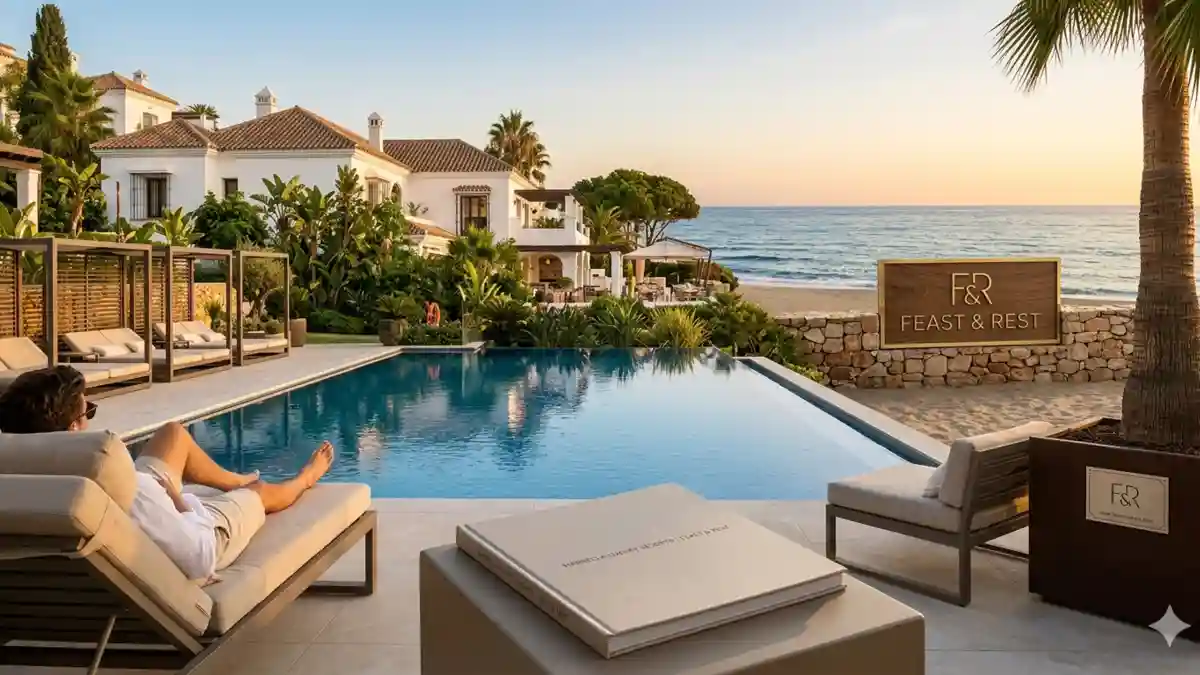
The landscape of Marbella luxury resorts in Spain has evolved into an international benchmark for high-value cultural tourism and premium hospitality. Long recognized for its temperate microclimate and coastal geography, this enclave on the Costa del Sol is shifting structurally away from seasonal tourism toward a permanent, year-round model. As Spain approaches national arrival benchmarks near 100 million international visitors, municipal and regional metrics indicate that luxury travelers are prioritizing longer stays, historical context, and architectural preservation. This transition repositions the region from a traditional summer retreat into a sophisticated node for heritage access and premium residential travel.
Understanding this market requires looking at the specialized micro-environments that form the local hospitality ecosystem. A primary example is the Golden Mile, a prominent coastal stretch that bridges the historic center with the modern marina infrastructure.
Definition & Core Scope: Marbella luxury resorts in Spain refer to an elite tier of five-star grand luxury hotels, branded boutique residences, and high-end wellness estates concentrated along the Costa del Sol. This specialized ecosystem blends traditional Andalusian architectural heritage with modern premium hospitality infrastructure.
What the Data Shows: Record Economic Momentum
Recent figures from the Spanish National Institute of Statistics (INE) highlight a distinct trend: visitor spending in the luxury segment is growing significantly faster than total arrival volumes. In prime booking periods, Marbella achieved the highest Average Daily Rate (ADR) and Revenue Per Available Room (RevPAR) nationwide among all major Spanish destinations, outstripping traditional urban hubs.
According to regional data compiled by the Andalusian Official Tourism Board and local analytical briefs, hotel profitability in the area experienced a 32% increase over a two-year trailing period. International arrivals dominate the luxury sector, with significant demand originating from the United Kingdom, the United States, and Eurozone professionals. Additionally, the Arab Tourism Organization officially recognized the municipality as Europe’s leading destination for specific high-net-worth demographics, citing safety, multi-lingual infrastructure, and premium service consistency.
Why This Matters: The Structural Shifts in Hospitality
This economic performance highlights a deeper structural evolution in how travelers engage with Marbella luxury resorts in Spain. The traditional summer peak is broadening into a continuous multi-season travel pattern, heavily supported by the region’s climate and the presence of specialized cultural tourism assets.
Extended Off-Peak Seasons: Affluent travelers are increasingly booking shoulder months (March to May and September to November) to engage in heritage access and outdoor recreational pursuits like professional golf and maritime excursions.
Integration of Branded Residences: Major international architectural firms and premium fashion houses are actively developing blended resort-residence models, extending typical lengths of stay from days to months.
Diversification of Source Markets: The rapid growth of long-haul markets, particularly premium travelers from North America and the Middle East, has reduced reliance on traditional European domestic cycles.
Cultural and Architectural Heritage Integration
The modern identity of Marbella luxury resorts in Spain relies on preserving and highlighting local history. Premium coastal properties intentionally design their layouts to mirror classic Andalusian architectural forms, incorporating whitewashed walls, internal cool-water courtyards, and native citrus groves.
This design approach encourages travelers to look beyond the coast and explore the city’s historical core. The Old Town (Casco Antiguo), situated at the foot of the Sierra Blanca mountain range, features a preserved Renaissance-era layout.
The historic center, centered around the 16th-century Plaza de los Naranjos and the ancient Moorish defensive walls, provides vital cultural context. Modern destination planning intentionally connects coastal resort guests with this interior heritage through curated historical tours, tastings of local Malaga Designation of Origin wines, and culinary programs centered on regional gastronomy like ajoblanco and traditional olive oils.
Planning Insights for High-Value Destination Selection
For travelers navigating destination planning, the luxury infrastructure is distributed across distinct zones. Each area satisfies specific priorities regarding privacy, accessibility, and recreational focus.
| Luxury Zone | Primary Focus | Notable Features |
| The Golden Mile | High-end lifestyle & beach access | Historic 5-star properties, coastal promenades, fine dining hubs |
| Puerto Banús | Maritime lifestyle & luxury retail | Deep-water superyacht moorings, designer boutiques |
| Nueva Andalucía | Sporting excellence & tranquility | High density of championship golf courses, secluded valleys |
| Sierra Blanca Foothills | Ultra-privacy & security | Gated residential enclaves, panoramic Mediterranean views |
Accommodation pricing follows clear seasonal travel variations. Peak occupancy occurs from late June through August, where five-star grand luxury rates regularly exceed €800 per night, requiring reservations up to six months in advance. The shoulder months of spring and autumn offer excellent value, with rates averaging €350 to €500 per night, milder temperatures, and uncrowded historical sites.
Societal and Sustainability Impact
The expansion of Marbella luxury resorts in Spain has created important dialogues regarding sustainable tourism practices and community impact. The high-value tourism model helps limit environmental strain by prioritizing higher per-capita spending over sheer visitor volume. This economic focus directly supports the local economy, increasing hospitality employment by 15% during peak periods.
However, the local government and environmental organizations face the ongoing challenge of balancing resort development with natural preservation. Protecting the Sierra Blanca ecosystem and managing water resources across the region’s premium golf courses remain central policy priorities. Current sustainable initiatives focus on installing greywater recycling systems in major resorts and implementing strict coastal management guidelines to protect the 26 kilometers of municipal beaches.
Stay inspired with Feast and Rest!
Source and Data Limitations
The analysis provided in this report is based on official data released by the Spanish National Institute of Statistics (INE) tracking hotel profitability, ADR, and RevPAR metrics. Additional baseline arrival statistics were sourced from the Andalusian Official Tourism Board (Consejería de Turismo de Andalucía) and the Arab Tourism Organization’s 2026 destination evaluations. Property and luxury market growth trends are aligned with the Marbella Property Market Report compiled by industry specialists. Figures regarding international travel spending reflect official year-end completions and early-year economic projections issued by the Spanish Ministry of Industry and Tourism. This report excludes unverified commercial claims, individual resort promotional pricing, and speculative future real estate timelines beyond established institutional master plans.