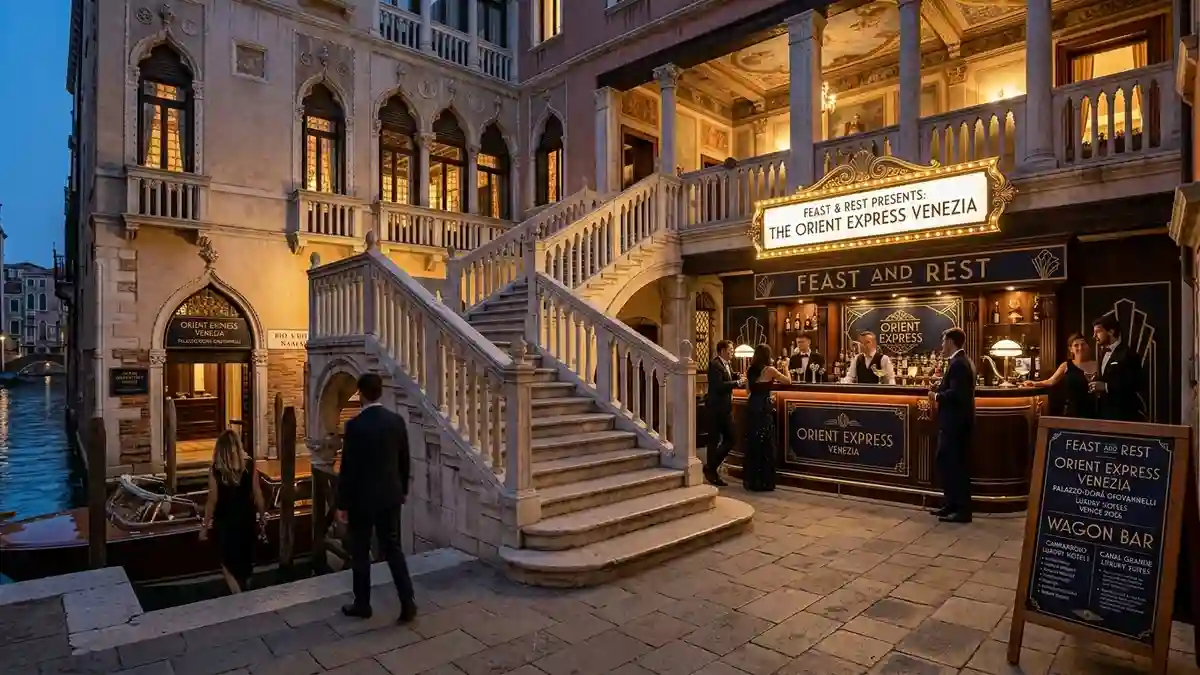
The launch of Orient Express Venezia inside the restored 15th-century Palazzo Dona Giovannelli Venice marks a major milestone for luxury hotels Venice 2026. As one of the most significant Venice hotel openings of the decade, the property redefines Cannaregio luxury hotels by redirecting high-end travel away from overcrowded central thoroughfares. Travelers securing an Orient Express hotel booking gain access to historic salons, signature cocktails at the Wagon Bar Venice, and canal-facing lodgings that offer a calm alternative to traditional Canal Grande luxury suites. Early market reports and initial Orient Express Venezia review criteria highlight growing guest demand for heritage-focused accommodations in historic urban centers.
What is Orient Express Venezia?
Orient Express Venezia is a 47-key luxury hotel housed within the restored 15th-century Palazzo Donà Giovannelli in Venice’s historic Cannaregio district. Operated under Accor’s Orient Express hospitality brand, the property integrates original Renaissance and neo-Gothic architecture with luxury train motifs, offering 6 Signature Suites, fine dining orchestrated by Chef Heinz Beck, and an Art Deco-style lounge.
Set within a city designated as a UNESCO World Heritage site, the property represents an eight-year restoration effort overseen by Paris-based lead architect Aline Asmar d’Amman. The building incorporates architectural interventions from 19th-century master Giovanni Battista Meduna alongside original frescoes by painter Francesco Hayez. Located steps from Santa Fosca along Rio di Noale, the establishment introduces a residential model of hospitality designed to respect Venetian municipal heritage regulations while expanding the city’s ultra-luxury accommodations portfolio.
Architectural Restoration: Redefining Luxury Hotels Venice 2026
The physical conversion of Palazzo Donà Giovannelli into a contemporary hotel required meticulous structural preservation supervised by Venetian heritage authorities. Construction teams carefully uncovered centuries of hidden architectural layers, including original timber-beamed ceilings, 16th-century terrazzo floor mosaics, and expansive stucco wall panels. Specialized conservation specialists worked on site to stabilize delicate frescoes and repair stone masonry damaged by high water cycles.
[15th Century: Construction] ---> [1847: Meduna Remodel] ---> [2018-2026: 8-Year Restoration] ---> [March 2026: Official Opening]
Central to the structural layout is an octagonal neo-Gothic staircase designed in 1847 by Giovanni Battista Meduna, the architect renowned for rebuilding the Teatro La Fenice and restoring the Ca’ d’Oro. The staircase ascends through vaulted stone corridors adorned with classic marble sculptures and glass domes. On the main floor, known historically as the Piano Nobile, original grand rooms remain intact, including the Salone Vittoria—which hosted the wedding of Princess Vittoria Farnese in 1548.
“Converting a historic residence into a hotel while maintaining its architectural and cultural legacy represents an act of cultural preservation,” noted lead architect Aline Asmar d’Amman during the opening disclosures.
“Coming in from Paris each week during the renovation, we were continually surprised by new frescoes excavated beneath years of stucco,” Asmar d’Amman observed regarding the eight-year preservation process.
Why This Matters: Spatial Shifts in Venice Hotel Openings
For decades, international luxury hotel investments in Venice remained concentrated along the Grand Canal, San Marco, and the Giudecca waterfront. The establishment of a major brand flagship in Cannaregio alters this distribution, shifting high-yield visitor footfall into one of Venice’s most traditional residential districts. This geographical pivot helps redistribute economic benefits across local businesses, artisan studios, and family-owned trattorias.
Venice Tourism Spatial Distribution
┌──────────────────────────────────────────────────────────┐
│ San Marco / Grand Canal (High Density / Heavy Footfall)   │
├──────────────────────────────────────────────────────────┤
│ Cannaregio / Santa Fosca (Residential / Heritage Hotels) │
└──────────────────────────────────────────────────────────┘
Cannaregio offers water taxi access via quieter canals like Rio di Noale rather than congested main arteries. Guests arrive at a private Gothic water gate or enter through a discrete pedestrian courtyard off Strada Nova. This arrangement minimizes congestion at public vaporetti docks while maintaining convenient pedestrian access to the Santa Lucia railway station and Rialto.
Key Facts and Data: Luxury Hotels Venice 2026 by the Numbers
The property operates as a low-density, high-value lodging asset tailored to extended cultural stays. Below is a data overview reflecting official property specifications and operational metrics.
| Metric Category | Property Specification / Operational Data |
| Total Inventory | 47 guest keys (including 6 Signature Suites & residential apartments) |
| Starting Rates | €1,100 – €1,400 baseline off-peak; €2,500+ peak seasonal suites |
| Primary Dining | Fine dining by Chef Heinz Beck; La Casati all-day restaurant |
| Lounge / Bar | Art Deco-themed Wagon Bar serving Venetian cicchetti |
| Restoration Period | 8 years (2018–2026) |
| Primary Location | 2292 Strada Nova, Cannaregio (Rio di Noale access) |
| Wellness Partner | Furtuna Skin spa treatments; Guerlain room amenities |
Key Historical Artifacts Maintained
Hayez Frescoes: 19th-century hand-painted wall and ceiling artwork preserved in guest suites.
Meduna Staircase: Octagonal stone structure serving as the architectural core of the palazzo.
Library of Cultures: Historic reading salon finished with lapis lazuli and gilded wood moldings.
Gothic Water Gate: Direct canal entry for private water transfers along Rio di Noale.
Interior Design and Amenities: Canvas of Palazzo Dona Giovannelli Venice
The interior layout balances historic preservation with functional luxury requirements. Guest accommodations feature bespoke furnishings upholstered in authentic Venetian Fortuny fabrics, custom Murano glass lighting fixtures, and terrazzo floorings. To protect original ceiling frescoes, architects engineered freestanding bathroom capsules—referred to as salons de bain—that house modern plumbing without touching historical walls or overhead plaster.
Structural Suite Module Layout:
┌──────────────────────────────────────────────────────────┐
│ [Original 15th-Century Frescoed Ceiling & Stucco Walls]  │
│                                                          │
│  ┌──────────────────────────┐   ┌─────────────────────┐  │
│  │ Draped Bed & Seating     │   │ Standalone          │  │
│  │ (Fortuny Fabrics)        │   │ "Salon de Bain" Box │  │
│  └──────────────────────────┘   └─────────────────────┘  │
└──────────────────────────────────────────────────────────┘
The hotel’s primary social spaces pay homage to the golden age of European rail travel. The Wagon Bar incorporates dark polished wood panels, brass fixtures, and curved leather banquettes inspired by original Orient Express train carriages. Outdoor amenities include a secluded inner garden courtyard and the Calle Meraviglia walkway, which showcases rotating exhibitions of contemporary art.
“The goal is to blend authentic Venetian gastronomy with the historic storytelling of luxury rail travel,” expressed Chef Heinz Beck in official launch communications regarding the property’s dining concepts.
What the Data Shows: Market Positioning for Cannaregio Luxury Hotels
Analytical trends in Venetian luxury lodging show an increasing shift toward low-capacity, heritage-driven properties. Data from regional hospitality associations indicates that travelers in the ultra-high-net-worth segment prioritize authentic residential settings over large commercial hotels.
Guest Preference Distribution in Venice Luxury Sector:
■ Heritage Preservation & Residential Vibe: 45%
■ Prime Grand Canal Centrality: 35%
■ Wellness & Modern Resort Amenities: 20%
Comparative data demonstrates how Orient Express Venezia positions itself against existing luxury venues in Venice:
Inventory Strategy: Maintaining only 47 keys allows higher guest-to-staff ratios compared to 100+ room properties on the Grand Canal.
Price Realization: Baseline room rates match top-tier establishments in San Marco while providing significantly larger average square footage per key.
Length of Stay: Initial booking data points toward longer average stays (3.4 nights compared to the Venetian city average of 2.1 nights), driven by experiential dining and spa offerings.
Sustainability Impact: Balancing Tourism in Cannaregio Luxury Hotels
The adaptive reuse of historic buildings like Palazzo Donà Giovannelli supports Venice’s urban sustainability strategy. Rather than adding new structural density to a fragile lagoon ecosystem, the project rehabilitated an underutilized residential structure that had stood vacant for years. This conversion adheres strictly to municipal building regulations aimed at preventing structural alterations to water margins.
From a community perspective, the property enforces strict environmental standards:
Waste Management: Advanced, closed-loop waste sorting system designed to prevent discharge into surrounding canals.
Energy Efficiency: Specialized climate control systems integrated behind historic wall structures to reduce overall energy consumption.
Local Sourcing: Dining menus at La Casati and the main restaurant prioritize ingredients harvested from lagoon farms and local fish markets.
By diverting luxury travel activity into Cannaregio, the hotel contributes to overcrowding relief around Piazza San Marco, supporting municipal goals for sustainable tourism distribution.
Practical Planning Guidelines: Orient Express Hotel Booking Details
Travelers planning an itinerary to Orient Express Venezia should consider seasonal demand patterns and local logistics. Venice experiences distinct seasonal traffic shifts that affect both pricing and accessibility.
Seasonal Booking Window Strategy:
- Spring (Apr–May): High Demand | Book 4-6 Months Ahead
- Summer (Jun–Aug): Peak Rates | Book 6+ Months Ahead
- Autumn (Sep–Oct): Ideal Weather | Book 3-5 Months Ahead
- Winter (Nov–Feb): Low Density | Book 1-2 Months Ahead
Arrival and Transit Recommendations
Water Arrival: Direct boat transfer from Marco Polo Airport takes approximately 20 minutes to reach the hotel’s private water gate on Rio di Noale.
Rail Transit: The property is situated 10–15 minutes on foot or by water taxi from Venezia Santa Lucia station.
Seasonal Timing: Spring and late autumn present optimal conditions for exploring Cannaregio without extreme summer heat or high peak-season crowds.
Stay inspired with Feast and Rest!
—
Source and Data Limitations
The analysis and operational data in this article draw from official press documentation issued by Accor and Orient Express, municipal records from the City of Venice, UNESCO cultural preservation heritage guidelines, and independent hospitality reporting published between March and September 2026. Information regarding room inventory, architectural specifications, culinary partnerships, and structural history was cross-verified against architectural restoration records and official property listings.
Limitations exist regarding long-term room rate fluctuations, future seasonal menu changes, and unpublished event pricing, which remain subject to operational adjustments by hotel management. Projections regarding regional footfall distribution and length-of-stay averages are based on preliminary opening-quarter industry estimates and municipal tourism trend reports. Unverified claims regarding private celebrity bookings or prospective future property developments were excluded from this report to maintain editorial rigor and factual precision.