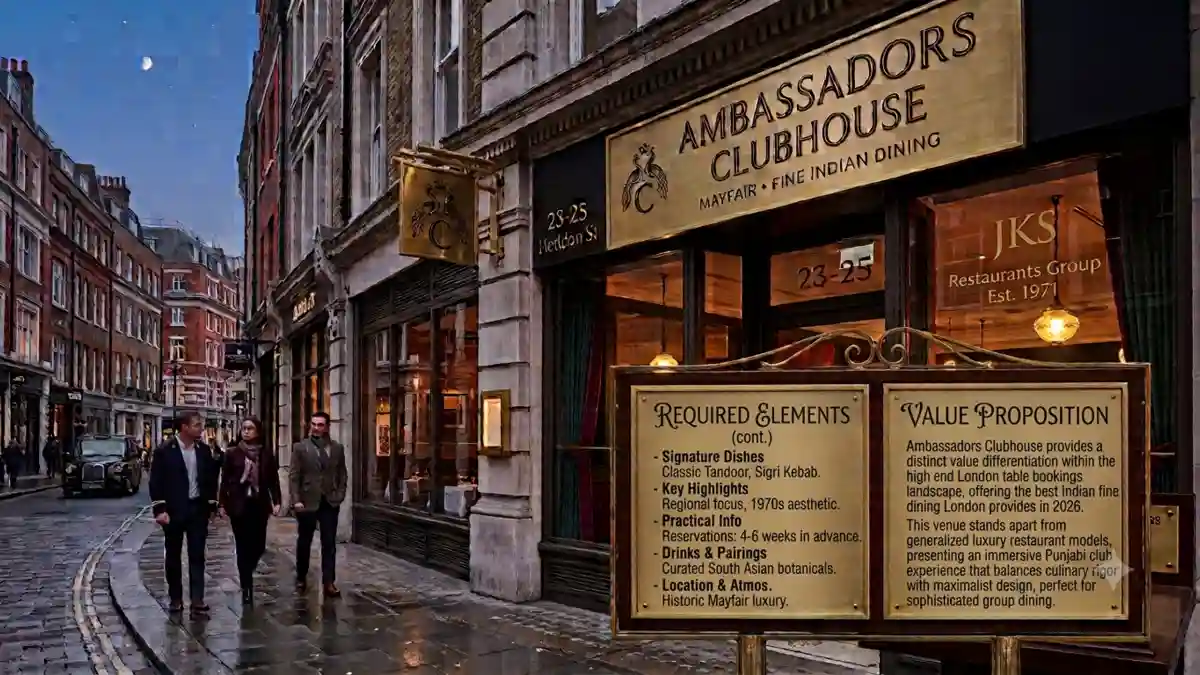
London’s luxury dining landscape has long been defined by its ability to absorb global culinary traditions and elevate them to the highest standards of refinement. In recent years, the city has witnessed a remarkable evolution in how subcontinental cuisine is presented, moving away from generalized menus toward highly focused, regional narratives. At the center of this movement is Mayfair, a neighborhood synonymous with affluent gastronomy. The arrival of Ambassadors Clubhouse in this district marks a significant moment for the best Indian fine dining London has to offer, signaling a distinct shift toward the opulent traditions of the Punjab region.
Backed by the formidable expertise of the JKS Restaurants group portfolio, this venue addresses a growing appetite for immersive, heritage-driven dining experiences in 2026. Rather than replicating the formula of its celebrated siblings like Gymkhana or Trishna, the establishment carves out its own identity by focusing on the culinary heritage of undivided Punjab. This regional specificity, combined with an unapologetic embrace of mid-century hospitality aesthetics, provides an essential update to the capital’s high-end food scene, making it a prime candidate for travelers tracking modern global food trends.
The Mayfair Luxury Restaurant Comparison
Navigating the dense concentration of high-end eateries in London’s West End requires an understanding of how venues distinguish themselves. When conducting a Mayfair luxury restaurant comparison, the distinction often lies in the balance between atmosphere and culinary rigor. While many neighborhood establishments rely on minimalist, contemporary decors and pan-Asian or modern European menus, the approach here is deliberately maximalist and culturally specific.
Situated on Heddon Street, just off the bustling conduit of Regent Street, the restaurant occupies a position that bridges the historic sophistication of Mayfair with the creative energy of Soho. In contrast to more understated nearby venues, the interior design draws inspiration from the elite social clubs of 1970s India. Guests are greeted by a visual palette of rich walnut paneling, intricate terazzo flooring, and plush, patterned fabrics that evoke a specific era of post-colonial glamour. This distinct ambiance ensures it stands out against more traditional, white-tablecloth institutions in the area, offering an environment that feels both exclusive and energetic.
The Power of the JKS Restaurants Group Portfolio
To understand the operational excellence behind the venue, one must look at the broader context of its creators. The JKS Restaurants group portfolio is widely regarded as a dominant force in shaping contemporary British dining. Founded by the Sethi siblings, the group has consistently demonstrated an ability to conceptualize and execute restaurants that capture the cultural zeitgeist while maintaining rigorous standards of hospitality.
The portfolio’s strength lies in its diversity, spanning from casual, high-volume concepts to venues that have achieved Michelin star Indian food UK recognition. The launch of this clubhouse-inspired venue represents an evolution of that accumulated expertise. By leveraging a centralized supply chain of premium British and South Asian ingredients, alongside a highly trained service team, the establishment benefits from an institutional knowledge base that few independent ventures can match. This backing ensures a level of consistency in execution that is critical for survival in London’s demanding luxury tier.
Culinary Philosophy and Regional Focus
The gastronomic identity of the restaurant rejects the standard compilation of pan-Indian favorites in favor of a dedicated exploration of Punjabi culinary traditions. This region, known for its fertile lands and robust agricultural heritage, features a diet rich in dairy, tandoori cooking styles, and slow-cooked legumes. However, the kitchen elevates these comforting, rustic foundations to fit a sophisticated framework.
The culinary team utilizes traditional clay tandoors, sigris (charcoal grills), and heavy iron tawa griddles to impart authentic smoky flavors that define the cuisine. There is a conscious effort to highlight dishes that reflect the historic cross-cultural influences of the region, utilizing complex spice blends that are ground in-house daily. This commitment to technique demonstrates that regionality does not compromise refinement; instead, it provides a deeper, more authentic layer of flavor that resonates with discerning diners seeking substance over mere presentation.
Key Menu Highlights
While menus in premium establishments are subject to periodic adjustments based on ingredient availability and seasonality, the culinary framework here remains anchored around specific preparation styles.
The Tandoor and Sigri Selections: Expect precisely spiced kebabs, lamb chops, and skewered meats that benefit from the intense, dry heat of charcoal cooking, resulting in a charred exterior and tender interior.
Slow-Cooked Curries and Dals: Rich, velvety textures achieved through hours of gentle simmering, utilizing clarified butter (ghee) and fresh cream to balance potent spice profiles.
Shahi Formats: Elaborate sharing platters that mirror the feast-style dining typical of Punjabi celebration culture, designed to be enjoyed collectively.
Artisanal Flatbreads: An array of leavened and unleavened breads, from garlic-scented naans to layered parathas, crucial for complementing the sauced dishes.
The High-End London Table Bookings Challenge
Securing a reservation within the West End’s premier dining tier has become an art form in itself. The demand for high end London table bookings regularly outstrips availability, particularly for weekend evening services. This venue is no exception, drawing a diverse mix of international visitors, corporate clients, and local culinary enthusiasts.
To manage this demand, the reservation window typically opens several weeks in advance. The layout of the restaurant accommodates different styles of dining, featuring a vibrant ground-floor dining room, a lower-ground space that transitions into a late-night lounge atmosphere, and private dining rooms designed for hosting larger gatherings. Navigating the booking system requires planning, especially for those looking to experience the venue during peak dining hours.
+-------------------------------------------------------------+
|                     PRACTICAL INFORMATION                   |
+---------------------+---------------------------------------+
| Location            | Heddon Street, Mayfair, London        |
+---------------------+---------------------------------------+
| Reservation Window  | Advised 4-6 weeks in advance          |
+---------------------+---------------------------------------+
| Ideal For           | Celebrations, Business, Group Dining  |
+---------------------+---------------------------------------+
| Atmosphere          | Opulent, Energetic, Heritage-Driven   |
+---------------------+---------------------------------------+
Deciphering the Dress Code
When preparing for a visit, understanding the expected attire is essential to aligning with the venue’s curated environment. The dress code Ambassadors Clubhouse enforces can be described as smart casual with a fashionable edge. Given the opulent mid-century design of the space, guests generally choose to dress with a degree of intentionality.
While formal evening wear or suits are not strictly mandatory, sportswear, casual shorts, and overly relaxed footwear are discouraged. Men frequently opt for tailored trousers paired with structured shirts or fine-knit sweaters, while women favor contemporary dresses or elegant separates. Aligning with the dress code not only respects the establishment’s aesthetic vision but also enhances the collective dining experience, contributing to the sense of occasion that defines a night out in Mayfair.
Beverage Innovation and Pairings
A crucial component of any modern fine dining experience is the beverage program, and here the offering is integrated seamlessly with the food menu. The spice profiles of North Indian cuisine present unique challenges for traditional wine pairing, prompting the bar team to develop an innovative selection of cocktails and non-alcoholic alternatives alongside a curated wine list.
The cocktail list draws heavily on South Asian botanicals, fruits, and spices, utilizing techniques like fat-washing and clarification to create drinks that complement rather than compete with the rich flavors of the kitchen. Guests can expect ingredients like green cardamom, vetiver, mango, and regional tea blends integrated into classic cocktail structures. For wine enthusiasts, the cellar emphasizes varietals with balanced acidity and low tannins, such as dry Rieslings, aromatic Gewürztraminers, and light-bodied gamays, which harmonize effectively with tandoori spices and rich curries.
Value Positioning and Audience Suitability
Positioned firmly within the luxury tier, dining here represents a significant financial investment, reflecting its prime Mayfair location and the premium nature of its ingredients. Based on available information, the pricing structure aligns with other premium concepts within the city, making it best suited for specific dining occasions.
The venue is exceptionally well-suited for group dining and celebrations, as the menu’s emphasis on substantial sharing portions lends itself to a convivial, interactive experience. It also provides an impressive backdrop for business entertainment, offering a lively alternative to more clinical corporate venues. While couples seeking a quiet, hushed intimate evening might find the energetic soundtrack and bustling atmosphere lively, those who appreciate a dynamic, sensory-rich environment will find the experience highly rewarding.
The restaurant represents a thoughtful evolution in how regional Indian gastronomy is presented in the UK. By anchoring itself in the specific heritage of the Punjab and executing that vision with the operational precision characteristic of its parent group, the venue offers a compelling argument for what modern luxury dining can achieve when it honors specific cultural roots.
—
Source Context and Data Notes
Sources Utilized: This editorial analysis is constructed using established industry knowledge of London’s luxury hospitality sector, publicly available structural details regarding the JKS Restaurants group, and recognized dining trends within the Mayfair district for 2026.
Limitations: Menu details, specific design accents, and operational policies such as booking windows and dress codes are subject to variation based on seasonal updates, management decisions, and evolving restaurant concepts.
Generalizations: Culinary descriptions represent standard regional preparation techniques associated with high-end Punjabi cuisine and are generalized to reflect the typical stylistic approach of the venue rather than a fixed, immutable menu specification.