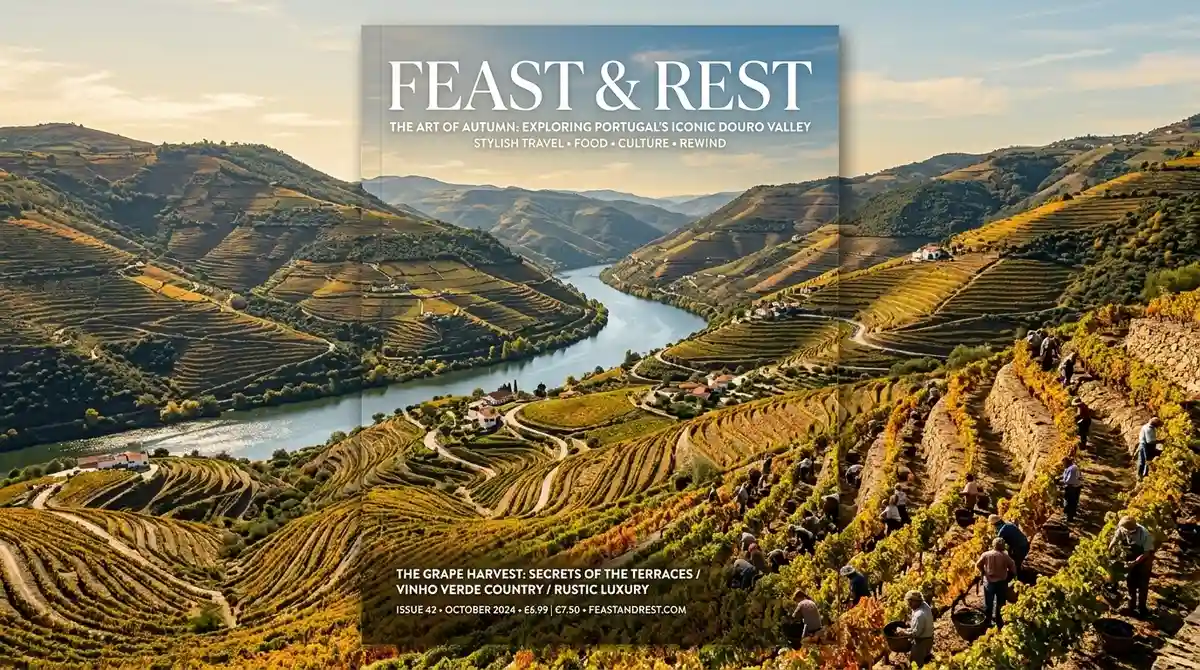
The annual grape harvest, known locally as the vindima, represents a pivotal period for northern Portugal’s viticultural economy, heritage tourism, and agricultural management. For travelers planning a Douro Valley grape harvest guide itinerary, understanding the regional rhythm of this seasonal transition provides essential context for navigating local transport, vineyard visits, and accommodation availability.
Running from mid-September through early October, the harvest mobilizes hundreds of historic quintas across the world’s oldest demarcated wine region. A typical Porto to Douro day trip allows visitors to witness traditional grape picking and artisanal foot-treading in stone lagares. When designing comprehensive Portuguese wine tasting itineraries, balancing time between the riverfront estates and high-altitude vineyards offers a complete perspective on this UNESCO-listed landscape.
The Douro Valley grape harvest guide serves as a practical roadmap for autumn travel in Europe, framing the region’s agricultural routines, geographic sub-zones, and logistical considerations. The annual harvest in the Portugal wine harvest season represents the culmination of a microclimatic cycle that shapes both fortified Port and dry Douro DOC table wines. Visiting historic Douro River valley quintas during this period requires advance preparation, as estate-based accommodations and specialized harvest events reach peak capacity months prior. Whether taking part in a Douro Valley harvest festival or reserving the best wine tours Portugal offers, travelers gain direct insight into centuries of human adaptation along steep, schist-lined slopes.
The Douro Valley (Alto Douro) is a demarcated wine region in northeastern Portugal recognized by UNESCO as a living cultural landscape. Encompassing over 250,000 hectares—with roughly 38,000 hectares under vine—it is defined by dramatic hand-built terraces (socalcos) that cut through schist and granite bedrock along the Douro River and its tributaries.
Douro Valley Regional Overview
- UNESCO Classification: Alto Douro Wine Region (Listed 2001)
- Demarcation Year: 1756 (World's first legally regulated appellation)
- Key Sub-Regions: Baixo Corgo, Cima Corgo, Douro Superior
- Dominant Grape Varieties: Touriga Nacional, Touriga Franca, Tinta Roriz
- Harvest Window: Mid-September to Early October
Institutional Framework and Heritage Significance
The historical foundation of the Douro Valley rests on regulatory decisions made over two centuries ago. In 1756, the Marquês de Pombal established the Companhia Geral da Agricultura das Vinhas do Alto Douro, creating the world’s first legally demarcated wine region, marked by 335 granite boundary pillars (marcos pombalinos). Today, the Port and Douro Wine Institute (Instituto dos Vinhos do Douro e do Porto, or IVDP) oversees compliance, quality control, and production quotas across all three sub-regions: Baixo Corgo, Cima Corgo, and Douro Superior.
"The Douro landscape is not merely a natural wonder; it is a monument to human labor, where generations of winemakers carved stone terraces to harvest grapes under some of Europe's most challenging climatic conditions."
— Instituto dos Vinhos do Douro e do Porto (IVDP) Heritage Overview
According to data published by Turismo de Portugal, the Douro region experiences a concentrated influx of cultural tourists during autumn. Visitors are drawn by the unique convergence of physical labor, community tradition, and seasonal landscape transformations. UNESCO’s 2001 World Heritage inscription highlights that the region has produced wine for over 2,000 years, evolving from Roman viticulture through monastic estates to today’s commercial quintas.
Key Facts: Douro Valley Viticulture
- Total Region Area: ~250,000 hectares
- Area Under Vine: ~38,000 hectares
- Vineyard Slope Gradient: Up to 60 degrees on steep terraces
- Primary Soil Type: Metamorphic Schist (retains moisture, reflects heat)
- Regulatory Body: Port and Douro Wine Institute (IVDP)
Why This Matters: The Dual Identity of Douro Wines
For centuries, the Douro Valley was known almost exclusively for fortified Port wine shipped downriver to the cellars of Vila Nova de Gaia. Over the past three decades, a major structural shift has taken place. Today, approximately half of the grapes harvested go into high-quality, non-fortified red and white table wines designated as DOC Douro.
| Sub-Region | Microclimate Characteristics | Harvest Timing | Viticultural Focus |
| Baixo Corgo | Cooler, higher rainfall (~1,200 mm/year) | Late September to October | Early-ripening varieties, table wines |
| Cima Corgo | Moderate rain, hot summers | Mid-to-Late September | Heart of Port estates, top Single-Quinta wines |
| Douro Superior | Arid (<400 mm rain), summer >40°C | Early September | Concentrated reds, organic farming initiatives |
Understanding this geographic distinction is essential for planning an autumn itinerary. The ripening process begins in the hot, eastern Douro Superior near the Spanish border before moving west toward the cooler Baixo Corgo, dictating when specific quintas begin picking.
What the Data Shows: Seasonal Logistics and Visitor Traffic
The peak harvest window creates distinct operational constraints across regional transportation networks and hospitality sectors. Rail service along the Linha do Douro—which connects Porto’s Campanhã station to Peso da Régua, Pinhão, and Pocinho—sees elevated passenger numbers throughout September.
By the Numbers: Douro Harvest Travel
- Peak Travel Window: September 10 – October 5
- Advance Booking Lead Time: 2 to 4 months for estate stays
- Train Travel Duration: ~2 hours (Porto Campanhã to Pinhão)
- Daily High Temperatures: 25°C to 35°C in late summer
- Authorized Grape Varieties: Over 100 indigenous red and white grapes
"The annual vindima represents the single most important economic and cultural event in northern Portugal's interior, demanding precise operational coordination between vineyard managers, traditional picking crews, and international visitors."
— Regional Tourism Board of Porto and North Portugal (TPNP)
Practical Planning and Quinta Selection
Participating in or observing harvest operations requires selective planning. While many large estates offer structured tourist programs—including morning vineyard picking, traditional communal lunches, and evening lagar treading—smaller family-run quintas may restrict public access during intense picking days.
Harvest Itinerary Checklist
- Transportation: Book Linha do Douro rail tickets or arrange a rental car early.
- Footwear: Wear closed-toe, high-traction boots for steep, uneven schist terraces.
- Estate Reservations: Confirm picking and treading slots directly with quintas.
- Temperature Prep: Pack lightweight, breathable layers for hot afternoons and cool valley mornings.
Major centers such as Pinhão and Peso da Régua act as primary logistical hubs. Pinhão sits at the bend of the Douro River in the Cima Corgo, within walking distance or short drives to historic properties like Quinta do Bomfim and Quinta da Roêda. Peso da Régua offers extensive hotel infrastructure and houses the Douro Museum, which provides critical historical framing before visiting active estates.
Societal Impact and Environmental Sustainability
The Douro Valley faces severe structural challenges from climate change and rural depopulation. Summer heat spikes regularly exceed 40°C, accelerating grape sugar accumulation and forcing vineyard managers to adjust picking schedules earlier into September.
Furthermore, the steep terraced topography limits mechanical harvesting. Over 60% of vineyards in the Douro are planted on slopes exceeding a 30% gradient, making hand-harvesting necessary. Regional initiatives led by the IVDP and local agricultural cooperatives focus on sustainable vineyard management, preserving biodiversity corridors along non-farmed valley walls, and supporting fair wage practices for seasonal harvest workers. Sustainable wine tourism directly funds the continuous maintenance of hand-built dry-stone walls, preventing soil erosion across the region.
Stay inspired with Feast and Rest!
—
Source and Data Limitations
This analytical destination report draws upon official historical data, regulatory frameworks, and regional tourism reports published by the Port and Douro Wine Institute (IVDP), UNESCO World Heritage Centre, and Turismo de Portugal. Harvest timing metrics and climatic figures reflect historical averages across the three sub-regions (Baixo Corgo, Cima Corgo, Douro Superior). Specific harvest start dates vary annually based on microclimatic conditions, rainfall patterns, and individual estate production goals. Unverified commercial claims regarding specific tour operators or private estate schedules have been excluded in favor of generalized planning parameters.