Miyagawa-cho Luxury Hotels: Kyoto’s Quiet Heritage Quarter
Miyagawa-cho luxury hotels offer a rare blend of intimate history and high-end hospitality along the tranquil east bank of Kyoto’s Kamo River. While neighboring Gion attracts vast crowds, Miyagawa-cho remains one of the city’s most authentic hanamachi (geisha districts). Discerning international travelers seeking a refined stay in a high-end hotel in Gion district or its historic fringes will find an evolving landscape of boutique properties and restoration projects. Whether planning a trip for the autumn foliage or the 2026 spring cherry blossom season, staying in this district provides unprecedented access to traditional teahouse culture, stone-paved lanes, and quiet luxury.
The Cultural Rise of Miyagawa-cho Luxury Stays
The neighborhood of Miyagawa-cho stretches south from Shijo-dori toward Gojo-dori, framed by traditional wooden machiya townhouses and historic teahouses. For decades, this district operated quietly behind closed doors, dedicated almost entirely to the performing arts of geiko and maiko. In recent years, thoughtful urban preservation guidelines have allowed selective luxury developments to take root without disrupting the area’s historic architectural profile.
Choosing Miyagawa-cho luxury hotels gives travelers a distinct advantage over staying in larger commercial hubs like Kawaramachi or Kyoto Station. According to project details from local heritage initiatives, the goal has been to balance modern hospitality standards with strict architectural conservation. Guests walk out of minimalist hotel lobbies directly onto flagstone paths where the soft click of wooden geta sandals replaces city traffic noise.
Prime Location and Setting in Higashiyama
Situated within Kyoto’s coveted Higashiyama Ward, Miyagawa-cho sits at the intersection of cultural heritage and urban convenience. The district runs parallel to the Kamo River, placing guests within easy walking distance of major historical sights while preserving a residential calmness.
Transport Connections: A 5-minute walk brings travelers to Keihan Gion-Shijo Station, offering direct rail links to Osaka and Northern Kyoto. Hankyu Kyoto-Kawaramachi Station is accessible just across the Shijo Bridge.
Walkable Landmarks: Kennin-ji Temple—Kyoto’s oldest Zen temple—borders the district to the east. Yasaka Shrine, Kiyomizu-dera, and the historic Minamiza Kabuki Theatre are all within a 10- to 15-minute stroll.
Riverbank Proximity: The nearby Kamo River promenade provides an ideal setting for early morning walks or evening relaxation under illuminated cherry trees.
Architectural Vernacular: Traditional Machiya Meets Modern Minimalism
What sets a luxury stay in Gion or Miyagawa-cho apart is the meticulous attention to architectural context. Local regulations strictly govern building heights, exterior timber finishes, and roof tile designs. Inside these accommodations, architects seamlessly weave traditional Japanese carpentry with modern acoustic insulation and climate control.
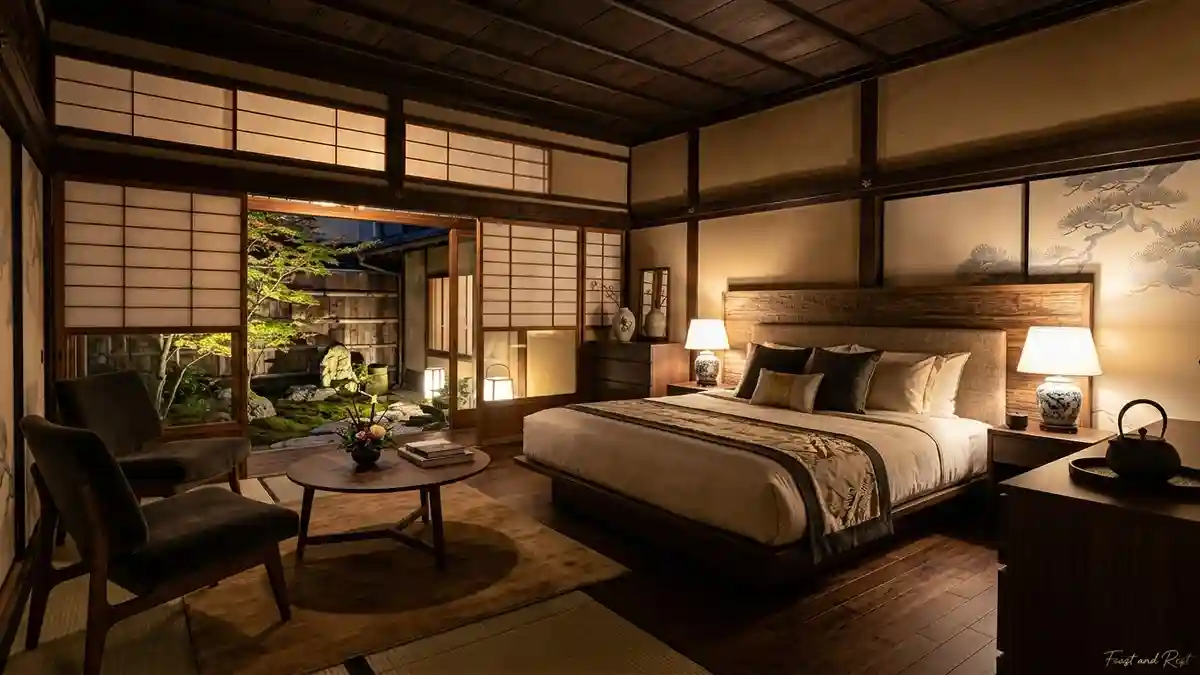
Properties such as Rinn Miyagawacho Grande incorporate subtle design nods to the neighborhood’s artistic heritage, utilizing color palettes inspired by maiko kimonos and the natural muted blues of the Kamo River. Meanwhile, restoration-style accommodations—like converted kyomachiya townhouses—preserve original dark wood beams, interior courtyard gardens (tsuboniwa), and paper shoji screens while embedding floor heating and deep soaking tubs.
Rooms, Suites, and Private Sanctuary Layouts
Accommodations across Miyagawa-cho luxury hotels are carefully engineered to maximize space and quietude. Rather than high-rise towers with hundreds of keys, most stays here range from intimate 15-room boutique properties to standalone, ultra-private villa units.
| Room Category | Average Size | Unique Architectural Features | Ideal Traveler |
| Superior / Deluxe Twin | 22–25 m² | Custom timber joinery, low-profile bedding, river or garden views | Couples & solo luxury travelers |
| Machiya Townhouse Suites | 70–80 m² | Two-story layout, private tsuboniwa garden, tatami loft, kitchenettes | Families & multi-generational groups |
| Onsen / Hinoki Suites | 45–60 m² | Private aromatic hinoki (cypress) wood tubs or natural spring baths | Wellness seekers & honeymooners |
In-room amenities frequently emphasize local craftsmanship. Guests can expect hand-dyed linens, persimmon-tannin dyed fabrics, locally crafted ceramic tea sets, and custom-blended green tea leaves sourced from Uji.
Dining and Culinary Immersion Near Miyagawa-cho
Staying in Miyagawa-cho puts guests at the heart of Kyoto’s most exclusive culinary map. While many traditional teahouses (ochaya) in the core district operate strictly by invitation, hotel concierges in the area provide invaluable guidance and bookings for neighboring high-end establishments.
Seasonal Kaiseki: Multi-course dining that highlights seasonal hyper-local produce, delicate broth, and artistic presentation.
Riverfront Dining (Kawatoko): During summer months (May through September), nearby riverfront restaurants erect temporary wooden platforms over the Water of the Kamo River for open-air dining.
Intimate Teppanyaki & Chef Counters: Small 8-to-10-seat counters tucked into nearby laneways serve premium Wagyu beef and seasonal seafood prepared directly before guests.
Craft Cocktail Lounges: Discreet bars concealed behind unmarked wooden doors specialize in Japanese whisky, craft gin, and tea-infused cocktails.
Wellness, Onsen Facilities, and Concierge Services
Wellness in Miyagawa-cho is defined by slow, sensory relaxation rather than large commercial gym facilities. Deep bath culture is central to the experience. Many properties offer deep-soaking wooden tubs in-room, while newer high-end projects, such as the announced Capella Kyoto, are expected to introduce dedicated hot spring (onsen) facilities and holistic spa treatments inspired by traditional Japanese wellness rituals.
Concierge services at boutique luxury properties in this district excel at tailor-made cultural access. Guests can arrange private tea ceremony demonstrations, guided historic walks through Higashiyama, or private reservations at elusive local dining spots through their hotel desk.
Practical Planning Tips for Your Miyagawa-cho Stay
Planning a visit to Miyagawa-cho requires a bit more foresight than booking a standard city-center hotel due to limited room inventories and high seasonal demand.
Key Amenities at a Glance
In-Room: Aromatic hinoki baths, tatami lounge areas, high-speed Wi-Fi, Nespresso and tea-making facilities.
Services: Multi-lingual concierge, luggage transfer to Kyoto Station, private cultural tour bookings.
Property Features: Traditional Japanese courtyard gardens, security keycard access, on-site or adjacent seasonal dining.
Seasonal Considerations
Peak travel periods occur during spring cherry blossoms (late March to early April) and autumn foliage (November). It is highly recommended to reserve accommodations 5 to 8 months in advance for these months. Winter offers a quieter, highly atmospheric alternative with crisp air, fewer crowds, and lower seasonal rates.
Etiquette and Photography
Miyagawa-cho is an active working district for geiko and maiko. Guests should note that photography is strictly prohibited on private side streets throughout Gion and Miyagawa-cho to protect the privacy of residents and performers. Always observe local signage and enjoy watching performers pass by from a respectful distance without blocking their path.
Stay sharp with Feast and Rest.
Source and Data Limitations
Information Sources: Publicly available lodging registries, official property details for Rinn Miyagawacho Grande, Rinn Miyagawa-cho Tsubaki, and regional press announcements regarding luxury hospitality developments in Kyoto’s Higashiyama Ward.
Project Timelines & Delays: Certain long-term luxury resort projects in Miyagawa-cho (such as Capella Kyoto) have experienced shifting opening timelines due to historical site excavation and strict local preservation approvals.
Excluded Claims: Specific night-by-night pricing, exact room availability, and unverified promises of guaranteed private meetings with geiko or maiko were deliberately excluded to maintain strict factual accuracy.