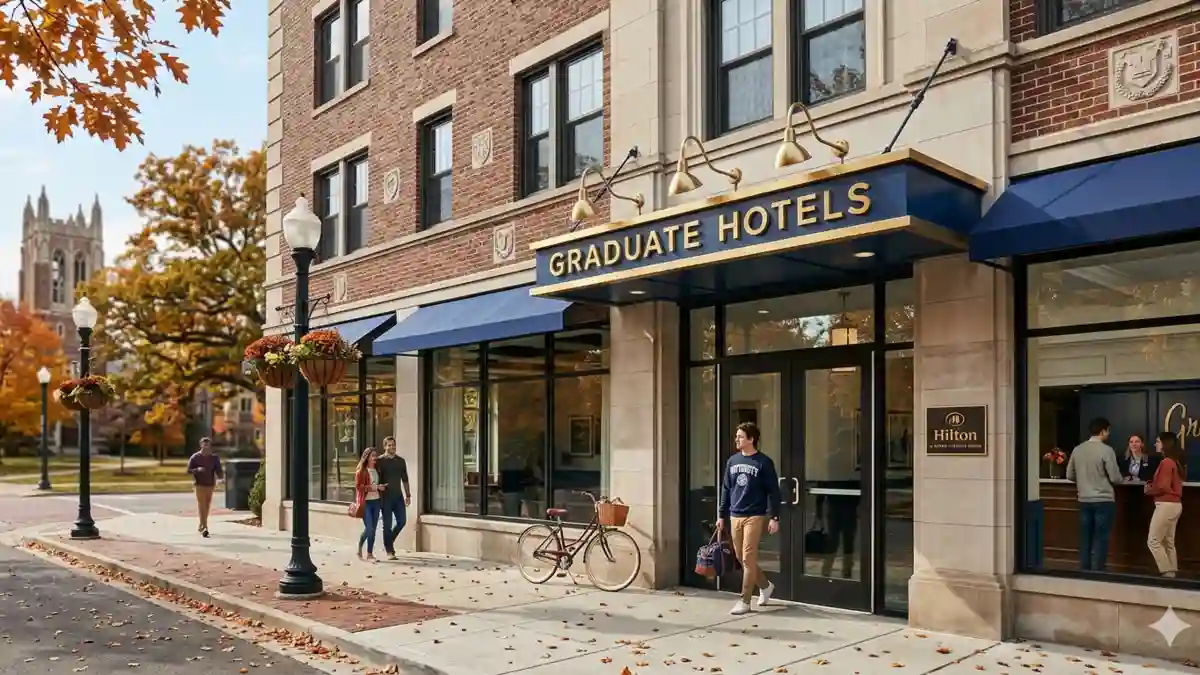
The landscape of American university travel is undergoing a significant transformation, driven by a growing demand for specialized, character-rich lodging. For years, visiting parents, returning alumni, and academic professionals were often limited to standardized highway motels or generic suburban chains. However, the emergence of dedicated campus lifestyle hotel brands has shifted expectations entirely. Leading this specialized segment is the expansion of Graduate hotels by Hilton, a concept tailored specifically to the unique energy, history, and nostalgia of major university communities. By blending localized design with upscale hospitality standards, these properties have rebalanced what it means to stay near a major campus.
When planning university travel lodging, modern travelers increasingly look for accommodations that reflect the identity of the destination itself. Whether visiting for a high-stakes football game, a graduation ceremony, or a research symposium, the physical environment of a hotel plays a substantial role in the overall travel experience. This shift has elevated upper midscale hotel concepts from simple utility spaces into central hubs for community engagement. According to recent hospitality market observations, integrating local school colors, historic collegiate milestones, and regional artwork into the guest experience allows these boutique spaces to act as cultural conduits rather than mere places to sleep.
Understanding the Campus Lifestyle Hotel Brands Space
The boutique hospitality market has traditionally focused on major metropolitan areas or luxury resort destinations. Yet, some of the most vibrant cultural and economic ecosystems exist within mid-sized university cities. These locations experience massive influxes of visitors tied directly to the academic calendar, creating a distinct seasonal demand. Within this environment, campus lifestyle hotel brands have found a highly receptive audience by catering to individuals who want their lodging to mirror the traditions of the university they are visiting.
Rather than deploying a uniform design language across every location, successful operators in this niche treat each property as an individual narrative project. A stay in an elite Midwestern college town feels distinct from a visit to a historic Southern campus or a coastal research hub. This hyper-local approach ensures that the hotel becomes an extension of the campus tour itself, appealing directly to travelers who hold a deep sentimental connection to the area.
The Strategic Vision of the Chris Nassetta Lifestyle Portfolio
The broader hospitality industry took note when major global brands began acquiring and scaling these specialized regional concepts. A key turning point occurred with the integration of these university properties into the Chris Nassetta lifestyle portfolio, marking a deliberate move by Hilton to capture the boutique academic travel market. By absorbing an established niche brand into a massive global network, the acquisition bridges the gap between independent boutique charm and institutional reliability.
+-----------------------------------------------------------+
|               The Evolution of Campus Lodging             |
+-----------------------------------------------------------+
| Standard Chains           | Upper Midscale Concepts       |
| • Uniform layout          | • Hyper-local design themes   |
| • General highway access  | • Direct campus proximity     |
| • Basic amenities         | • Curated regional culinary   |
| • Standard loyalty points | • Institutional backing       |
+-----------------------------------------------------------+
For frequent travelers, this corporate backing solves a common dilemma associated with boutique hotels: the variance in service quality and the lack of standardized loyalty benefits. Under global corporate stewardship, guests can maintain their elite loyalty status and redeem points while enjoying an environment that feels entirely independent and non-corporate. This dual benefit has solidified the brand’s position among business travelers and academic consultants who require predictable operational standards alongside a distinct local atmosphere.
Design and Architecture of College Town Boutique Accommodation
The defining characteristic of a premium college town boutique accommodation is its visual storytelling. The interior design typically avoids the minimalist aesthetic common in modern urban hotels, opting instead for a layered, maximalist approach that evokes nostalgia. Public spaces are frequently styled to resemble grand university libraries, historic athletic clubs, or mid-century student lounges.
Curated Artwork: Guest corridors and lobby walls are often lined with vintage campus photography, local maps, and portraits of notable historical figures from the university’s past.
Custom Furniture: From plaid-patterned headboards to writing desks reminiscent of old dorm rooms, the furniture is purposefully selected to trigger a sense of collegiate heritage.
Architectural Integration: Many properties adapt existing historic structures—such as former school buildings, local banks, or heritage hotels—preserving the original facade while modernizing the interior infrastructure.
This meticulous attention to detail changes the hotel from a passive lodging choice into an active talking point for guests. Returning alumni find familiar nods to their undergraduate days, while first-time international visitors receive a crash course in the local community’s unique identity.
Rooms, Suites, and Collegiate Nostalgia
The guest rooms within Graduate hotels by Hilton function as curated capsules of local history. Based on available information regarding standard room configurations, layout choices prioritize comfort while maximizing thematic details. Standard rooms often feature bedside lamps shaped like school mascots, rotary-style telephones, and custom-woven blankets featuring regional patterns.
+-----------------------------------------------------------+
|               Typical Room Types & Target Guests          |
+-----------------------------------------------------------+
| Graduate King/Queen   | Ideal for couples or solo academic|
|                       | travelers requiring a quiet desk. |
+-----------------------+-----------------------------------+
| Stadium View Suites   | Premium rooms overlooking campus  |
|                       | landmarks, built for families.    |
+-----------------------+-----------------------------------+
| Multi-Room Quarters   | Tailored for multi-generational   |
|                       | alumni groups traveling together. |
+-----------------------------------------------------------+
Beyond the aesthetic appeal, these rooms are engineered for modern functionality. High-speed wireless internet, ample charging stations hidden within vintage-style desks, and premium bedding ensure that the functional needs of a business traveler or visiting professor are fully met. The bathrooms often contrast the retro bedroom styling with bright, modern tiling, high-pressure rainfall showerheads, and premium bath amenities.
Culinary Experiences Rooted in Local Tradition
Dining venues within university-focused hotels are rarely designed as afterthought spaces meant only for hotel guests. Instead, they are structured to serve as neighborhood gathering points where students, professors, and locals interact. Coffee shops mimicking old-school campus diners occupy the lobby spaces by day, transitioning into vibrant cocktail lounges by night.
The menus in these establishments frequently highlight regional culinary traditions and source ingredients from local farms and purveyors. For instance, a property located in the American South might emphasize slow-cooked barbecue or heritage grain biscuits, while a New England location might anchor its menu around coastal seafood and regional ciders. By capturing the local culinary identity, these restaurants successfully draw in the surrounding community, creating an energetic, authentic atmosphere that hotel guests can enjoy without leaving the property.
Optimizing Alumni Sports Weekend Stays
The true test of any university-adjacent hotel occurs during major athletic events. Planning alumni sports weekend stays requires an entirely different level of operational preparation than standard weekday business travel. During these high-density weekends, the hotel transforms into a focal point for pre-game tailgates, post-game celebrations, and multi-generational family reunions.
Operational Insight: Premium campus hotels often adjust their lobby programming during major game weeks, hosting local pep bands, showcasing vintage sports memorabilia exhibitions, or setting up dedicated shuttle routes directly to the stadium gates.
Because demand during these weekends is exceptionally high, properties that offer seamless logistical support stand out. Features like expansive luggage storage for tailgating gear, late-night dining options after evening games, and central courtyard spaces for outdoor gatherings make a noticeable difference in the guest experience. For the returning graduate, the hotel serves as a comfortable, upscale basecamp that keeps them connected to the energy of the weekend without the chaos of typical student areas.
Practical Guide to Booking University Travel Lodging
Securing the right room during peak academic seasons requires a strategic approach. High-value dates such as spring graduations, autumn homecoming weekends, and major conference dates often see hotels booking out up to a year in advance. Travelers looking to secure premium accommodations should keep several operational realities in mind.
Booking Windows and Rates
For standard mid-week academic visits, booking windows behave like typical urban hotels, with reasonable availability found three to4 weeks out. However, for key collegiate events, dynamic pricing models are heavily enforced. Rates can fluctuate significantly, and many properties implement minimum stay requirements—typically a two-night minimum for football weekends.
Transportation and Accessibility
Campus-adjacent properties excel in walkability, often allowing guests to bypass the severe traffic and parking shortages associated with major university events. When evaluating a potential stay, check if the property offers complimentary bicycle rentals or dedicated campus pedestrian paths. If driving is necessary, verify valet and self-parking structures ahead of time, as university town parking infrastructure can be restrictive during public festivals.
Essential Amenities at a Glance
To summarize what sets these upper midscale hotel concepts apart from traditional lodging options, the following matrix outlines the core amenities typically available to guests:
| Category | Premium Campus Lifestyle Amenities | Benefit to the Traveler |
| Lobby Spaces | Communal study tables, curated book archives, local espresso bars | Provides a functional workspace and a lively local social scene. |
| Transportation | Complimentary retro cruiser bikes, local campus shuttle access | Eliminates the need for rental cars and avoids campus parking stress. |
| Room Features | Dedicated workstations, vintage-inspired decor, smart connectivity | Blends nostalgic aesthetic comfort with modern professional utility. |
| Event Spaces | Flexible meeting rooms, retro-themed ballrooms, rooftop terraces | Ideal for hosting alumni reunions, academic receptions, or post-game events. |
The Long-Term Value of the Hilton Undergraduate Hotel Movement
The evolution of the Hilton undergraduate hotel concept highlights a permanent shift in consumer behavior. Travelers are no longer satisfied with disconnected, placeless hospitality when visiting communities that possess a deep sense of identity. By leaning heavily into localized narratives while maintaining the structural reliability of a global hospitality network, these properties have created a sustainable model for university town travel.
For the modern traveler, choosing a specialized campus lifestyle hotel provides a more immersive, memorable connection to the destination. It turns a standard overnight stay into an active part of the journey, ensuring that the spirit of the university is felt from the moment you step into the lobby until you check out. As these concepts continue to expand into new academic markets globally, they set a fresh benchmark for what localized boutique hospitality can achieve.
Stay sharp with Feast and Rest.
Source and Data Limitations
Main Sources of Information: This overview is synthesized from publicly available hospitality industry reports, brand portfolio documentation regarding lifestyle lodging acquisitions, architectural design summaries of midscale boutique concepts, and general university travel pattern analyses.
Project Details and Delays: Specific future locations, exact room counts for unannounced properties, and regional opening dates are subject to change based on local construction timelines and real estate development schedules.
Conflicting Reports: While marketing materials often classify these properties as pure luxury boutique spaces, industry analysts generally categorize them within the upper midscale to upscale lifestyle segments based on service delivery and price positioning.
Excluded Data: Specific nightly pricing structures, direct promotional loyalty point promotions, and individual franchise financial performances were intentionally omitted to maintain a factual, evergreen, and consumer-focused editorial perspective.