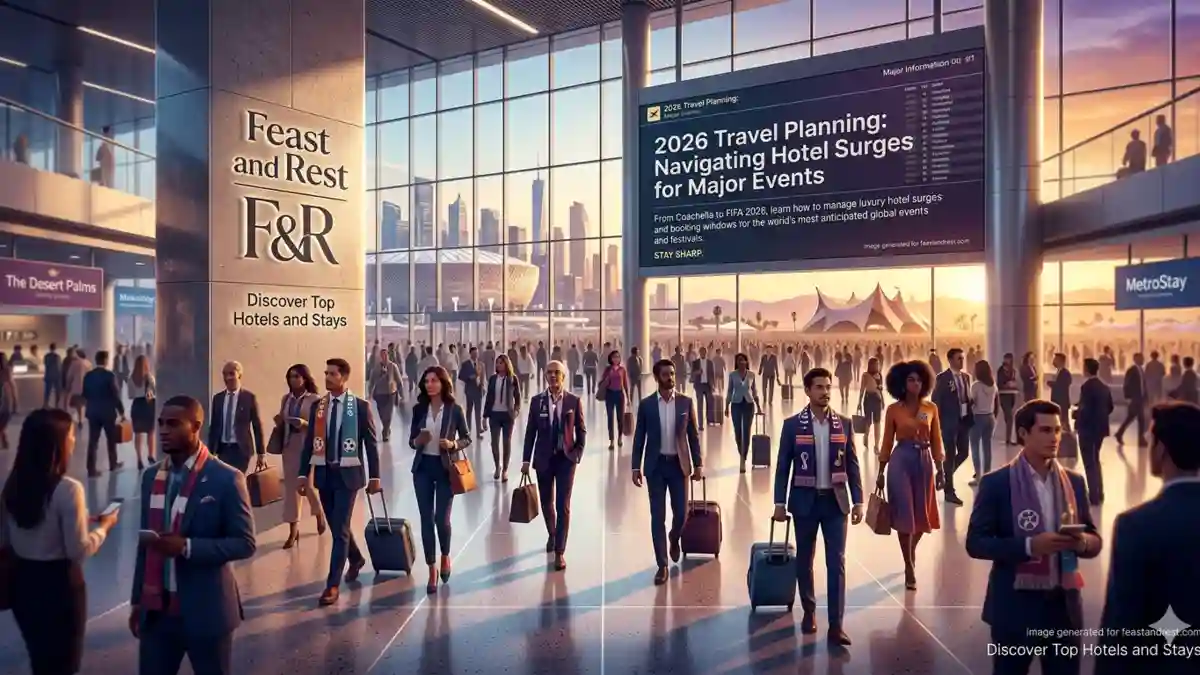
The 2026 travel calendar is shaping up to be one of the most significant in recent memory, placing unprecedented pressure on the global hospitality sector. For those planning to attend major gatherings, navigating hotel surges has become a critical skill, as dates for the Coachella Valley Music and Arts Festival intersect with the massive logistical footprint of the FIFA World Cup 2026. This unique convergence of music, sports, and seasonal tourism means that prime accommodations in North American hubs—ranging from Los Angeles and Vancouver to Mexico City—are seeing demand spikes much earlier than usual. Whether you are a solo traveler seeking a boutique experience or a family coordinating around a match schedule, understanding the rhythm of these surges is essential for securing a stay that balances proximity with value.
The 2026 Event Landscape and Hospitality Demand
The hospitality industry thrives on predictable cycles, but 2026 presents a “perfect storm” of high-profile occurrences. Traditionally, events like Coachella create localized price increases in the Greater Palm Springs area, but with the FIFA World Cup spanning three countries (USA, Canada, and Mexico), the ripple effect is expected to be continent-wide.
Based on available information regarding tournament schedules, hotel inventory in host cities is already being monitored by corporate sponsors and national teams. This early activity often leaves individual travelers facing “sold out” signs or tiered pricing models that can be difficult to decipher. The key to successfully navigating hotel surges during this period is recognizing that the “normal” booking window of 3 to 6 months is no longer sufficient. For these global events, a 12-month outlook is becoming the new standard for savvy travelers.
Coachella 2026: The Desert Hospitality Shift
While the music remains the primary draw, the logistics of staying in the Coachella Valley have shifted toward a more structured, “resort-cluster” model. Most attendees now choose between high-end desert estates or the convenience of shuttle-serviced hotels in Palm Desert and Indian Wells.
During the festival weeks, base rates for even modest mid-range hotels often triple. To navigate these surges, consider looking at properties that offer “festival packages” which include transportation. While the upfront cost is higher, the secondary costs of ride-sharing—which see their own surge pricing—often make the hotel package more economical. Reports suggest that boutique properties in North Palm Springs are increasingly popular for those wanting to escape the immediate festival “bubble” while remaining within a 30-minute drive of the Polo Club.
FIFA World Cup 2026: A Multi-City Challenge
The scale of the 2026 World Cup is unlike any previous iteration. With 16 host cities, the demand for rooms will fluctuate based on the luck of the draw—which teams play where. This uncertainty often leads to a “holding pattern” in hotel pricing.
Host City Saturation: Cities like New York (New Jersey), Los Angeles, and Dallas will likely see the highest density of international visitors.
The “Halo” Effect: Travelers are increasingly looking at “commuter cities”—locations 60 to 90 minutes outside the host city—to find reasonable rates.
Extended Stays: Many fans are planning 2-week itineraries, leading hotels to prioritize longer bookings over one-night stays.
Navigating hotel surges in this environment requires flexibility. If a downtown luxury hotel in a host city is priced beyond reach, look for properties near major transit hubs (like light rail or train lines) that feed directly into the stadium districts.
Understanding the Mechanics of Surge Pricing
Hotel surge pricing is rarely a flat increase; it is a dynamic algorithm based on real-time inventory. As a room category nears 80% occupancy, the price for the remaining 20% often jumps significantly.
In 2026, we expect to see more “minimum stay” requirements, particularly during the World Cup knockout stages and Coachella weekends. It is reportedly common for hotels to mandate a 3-night or 4-night minimum. If your travel plans only require two nights, you might find it impossible to book online. In these cases, contacting the hotel’s “In-House Reservations” team directly can sometimes yield results that automated booking engines hide, especially for loyalty program members.
Key Amenities to Prioritize During High-Demand Events
| Amenity | Why it Matters in 2026 | Value Level |
| Guaranteed Shuttle | Avoids the stress and cost of ride-share surges. | High |
| Flexible Cancellation | Essential if event dates or personal plans shift. | Critical |
| On-site Dining | Host cities will have packed restaurants; a hotel meal is a safe backup. | Moderate |
| Early Check-in | Vital for international arrivals following long flights. | High |
Strategic Booking: When to Commit
The question of “when to book” is the most frequent query for 2026 travelers. While “last-minute deals” exist in the standard travel world, they are virtually non-existent during global event surges.
Phase 1 (12–14 months out): Identify your “anchor” cities. Even if you don’t have tickets yet, securing a refundable room is a low-risk strategy.
Phase 2 (8–10 months out): This is when most major chains release their full inventory. Watch for “Grand Opening” hotels that may be scheduled to finish construction in early 2026, as they often offer introductory rates even during busy periods.
Phase 3 (6 months out): The window for navigating hotel surges starts to close here. At this point, focus on secondary markets or alternative accommodation types like apart-hotels.
Luxury Stays vs. Boutique Alternatives
For travelers accustomed to luxury, 2026 will be a test of brand loyalty. Established names like Ritz-Carlton, Four Seasons, and Park Hyatt will likely be at capacity with corporate delegations.
However, the “Boutique Alternative” can offer a more curated experience. In cities like Toronto or Seattle, smaller design-led hotels often maintain a more “human” level of service during the chaos of a global event. These properties may not have the massive room counts of a Hilton or Marriott, but they offer a sense of place that isn’t overwhelmed by the crowds. When navigating hotel surges, look for these smaller “lifestyle” brands that prioritize guest experience over sheer volume.
Practical Planning Advice for 2026
To make the most of your 2026 travels, shift your focus from “finding a deal” to “securing value.” A hotel that is $100 more per night but sits within walking distance of a stadium or festival entrance can save you four hours of transit time and $150 in transport costs.
Loyalty Points: 2026 is the year to use your points. While hotels can raise cash prices, point redemptions are often capped or follow a more stable “category” system.
Bundled Travel: Look for travel agencies that bundle flights and hotels. These wholesale rates are often protected from the most aggressive retail surges.
The “Sunday Switch”: For Coachella specifically, rates often drop significantly on the Monday following the second weekend. If you can extend your stay by one day, you might find the average nightly cost decreases.
As we look toward 2026, the landscape of global travel is undoubtedly complex. By understanding the mechanics of navigating hotel surges and planning with a long-term horizon, you can ensure that your experience at these landmark events is defined by the memories you make, rather than the stress of the stay.
Stay sharp with Feast and Rest.
Source and Data Limitations
The insights provided in this article are based on the following parameters and observations:
Historical Data: Trends from previous FIFA World Cups (Qatar 2022, Russia 2018) and annual Coachella pricing cycles were used to project 2026 behaviors.
Industry Announcements: Information regarding host city selections and stadium locations is based on official FIFA 2026 communications.
Limitations: Specific nightly rates for 2026 are not yet fully loaded into all public booking systems, as many hotels only release inventory 330–365 days in advance.
Excluded Claims: We have intentionally excluded specific “guaranteed” price points or specific hotel availability tallies, as these are subject to rapid change based on real-time market fluctuations.
Conflict Reports: There are occasional conflicting reports regarding the exact completion dates of new hotel developments in major host cities; travelers are advised to verify the “opening status” of any new property before booking non-refundable rates.