
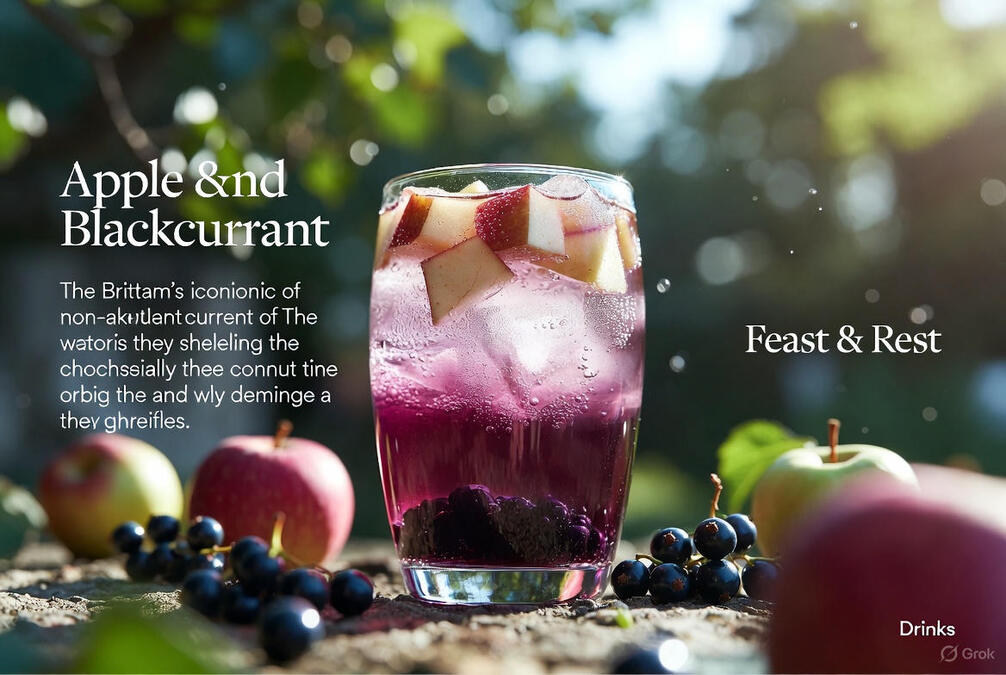
Britain’s love affair with Apple & Blackcurrant runs deep. This vivid purple drink – instantly recognisable by its sweet-sharp flavour – has quenched thirsts across generations. Whether served as a classic cordial diluted with still or sparkling water, or reinvented in craft mocktails, Apple & Blackcurrant remains one of the nation’s favourite non-alcoholic beverages. For travellers exploring the UK, seeking out an authentic glass is pure culinary tourism gold.
The Cultural Significance of Apple & Blackcurrant
The story of Apple & Blackcurrant as a mainstream drink begins in the early 20th century, but its roots go much further. Blackcurrants thrived in British kitchen gardens and were prized during World War II when the government distributed blackcurrant syrup to children as a vitamin C source. The most famous brand, Ribena (launched in 1938), literally means “blackcurrant” in Latin and turned the humble berry into a household name.
Apple entered the picture later, softening the intense tartness of blackcurrant and creating the now-iconic Apple & Blackcurrant combination that dominates supermarket shelves and pub squash guns alike. Today, it’s more than nostalgia – artisanal producers across England, Scotland, and Wales are reviving small-batch cordials using heritage apple varieties and hand-picked blackcurrants, making it a darling of the modern local beverages movement.
You’ll still find it poured at village cricket matches, school sports days, and summer festivals – the ultimate symbol of simple British refreshment.
Authentic Apple & Blackcurrant Cordial Recipe
Making your own Apple & Blackcurrant cordial is remarkably easy and infinitely superior to shop-bought versions. Here’s a traditional homemade recipe that foodies swear by:
Ingredients (makes ≈ 1.5 litres of cordial)
- 500g fresh or frozen blackcurrants
- 500g sharp cooking apples (Bramley ideally), peeled, cored & chopped
- 800ml water
- 500–700g granulated sugar (adjust to taste)
- Juice of 1 lemon
Method
- Place blackcurrants, chopped apples, and water in a large pan. Bring to a gentle simmer and cook for 20–25 minutes until completely soft.
- Mash the fruit lightly, then strain through a jelly bag or muslin overnight (do not squeeze or the cordial will be cloudy).
- Measure the juice – you should have about 1 litre. For every 500ml of juice, add 350–450g sugar (depending how sweet you like it).
- Heat gently until the sugar dissolves, add lemon juice, then bring just to the boil. Skim any scum.
- Pour into sterilised bottles while hot. Seal and store in the fridge for up to 3 months (or water-bath can for pantry storage).
To serve: dilute 1 part cordial with 4–6 parts still or sparkling water over ice. Garnish with apple slices and fresh blackcurrants when in season.
This non-alcoholic recipe is endlessly adaptable – try infusing with elderflower, ginger, or fresh mint for summer craft mocktails.
Where to Experience Apple & Blackcurrant on Your Travels
The UK is dotted with spots to taste exceptional Apple & Blackcurrant drinks:
- The Cotswolds, England – Farm shops and delis sell small-batch versions made with local fruit. Look out for Bottlegreen or Belvoir Fruit Farms presses.
- Kent “Garden of England” – Visit blackcurrant farms near Maidstone (some open for summer picking) and try limited-edition cordials at farm cafés.
- Scottish Highlands – Cairn O’Mohr winery produces award-winning non-alcoholic sparkling Apple & Blackcurrant using Perthshire berries.
- London – Trendy spots like Borough Market stalls and modern British cafés now serve Apple & Blackcurrant spritz mocktails with botanical sodas.
- Wales – Farmers’ markets in the Wye Valley often feature Welsh blackcurrant and heritage apple blends.
Food and drink festivals such as the Ludlow Food Festival (Shropshire) or Aldeburgh Food & Drink Festival (Suffolk) frequently showcase artisanal producers pouring their latest batches.
Insider Tips for Foodie Travellers
- Ask for “double concentrate” versions in traditional cafés – they’re richer and more intense.
- Pair with strong British cheese (mature Cheddar or Wensleydale) – the sweet-tart profile cuts through the richness beautifully.
- Visit in late June–July when blackcurrants are harvested; some farms offer “pick your own” followed by cordial-making workshops.
- Look for “whole fruit” cordials that cook the apples and berries together – they have deeper flavour than juice-based versions.
- For a modern twist, order an Apple & Blackcurrant mocktail in craft bars – many use house-made syrup with sparkling water and fresh herbs.
Few drinks capture the spirit of the British countryside quite like. Its jewel-bright colour, perfect sweet-sour balance, and centuries-old heritage make it more than just refreshment – it’s a taste of place. Whether you’re sipping a ice-cold glass at a village fete, mixing your own homemade batch, or discovering a new artisanal producer on your travels, this humble cordial delivers pure joy in every purple drop.
Next time you’re planning a British foodie adventure, make your mission. One taste and you’ll understand why generations have fallen for this iconic local beverage. Cheers to your next delicious discovery!



Yo, just checked out 32wingame. Pretty slick site, man! Definitely giving it a look. Check it out yourself 32wingame.