
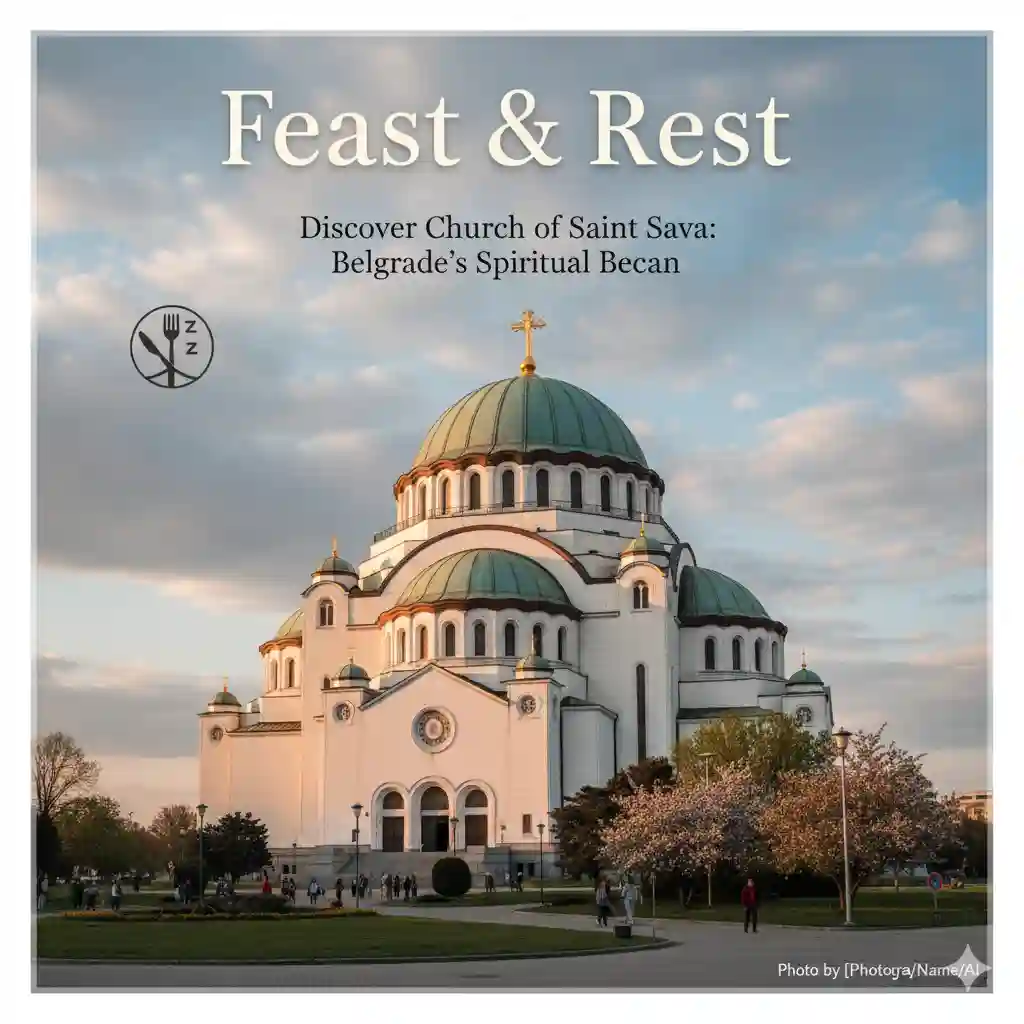
In the bustling heart of Belgrade, Serbia, the Church of Saint Sava emerges as a towering symbol of resilience and devotion, drawing travelers from around the world to one of the top travel destinations in the Balkans. As the largest Orthodox church in the region, this Neo-Byzantine masterpiece isn’t just a religious site—it’s a vibrant hub for cultural tourism that encapsulates centuries of Serbian history and spirit. Whether you’re a history buff chasing heritage sites or a wanderer seeking the soul of a city, the Church of Saint Sava offers an immersive escape into tradition and beauty. Imagine standing beneath its massive dome, where echoes of ancient chants mingle with the modern pulse of Belgrade, inspiring you to weave this gem into your next travel itinerary.
This Church of Saint Sava travel guide will take you on a journey through its storied past, stunning landmarks, and the lively cultural experiences that make it a must-visit. From hidden gems tucked in nearby parks to global festivals that light up the plateau, discover why this destination continues to captivate and why it’s perfect for those craving authentic cultural adventures.
A Tapestry of History and Serenity Of Saint Sava
The Church of Saint Sava, perched on the Vračar plateau, is more than a tourist spot—it’s the beating heart of Serbian Orthodox identity, blending a unique vibe of solemn grandeur with the lively energy of contemporary Belgrade. Construction began in 1935 as a tribute to Saint Sava, the 13th-century monk who founded the Serbian Orthodox Church and became its patron saint. The site holds profound emotional weight: in 1595, Ottoman forces burned Saint Sava’s relics here in a brutal act of suppression, fueling a national resolve that echoes through its walls today.
Over decades marred by wars and political upheavals, the church’s story mirrors Serbia’s own path to revival. World War II halted progress, turning the half-built structure into an unlikely parking lot for occupying forces. Communist-era bans sidelined it further until 1985, when construction resumed amid massive public fervor—a liturgy drew 100,000 faithful, signaling a cultural renaissance. By 1989, its colossal 4,000-tonne dome was hoisted into place, a feat of engineering that rivals global icons. Today, with its exterior complete since 2017 and interiors adorned in shimmering mosaics, the Church of Saint Sava stands at 82 meters tall, capable of holding 10,000 worshippers—a serene heritage site amid the city’s dynamic flow.
What sets this top travel destination apart is its dual role: a place of quiet reflection for pilgrims and a vibrant anchor for cultural tourism. Stroll its marble-clad facade, inspired by Istanbul’s Hagia Sophia, and feel the weight of Byzantine legacy. The surrounding plateau buzzes with locals picnicking or debating politics in nearby cafes, infusing the area with Belgrade’s renowned “city vibe”—a mix of resilience, humor, and unpretentious warmth. As one of the best cultural sites in the Balkans, it invites you to ponder Serbia’s journey from medieval empire to modern nation, making every visit a step into living history.
Landmarks and Hidden Gems: Architectural Marvels and Serene Escapes
At the core of any Church of Saint Sava travel guide lies its own awe-inspiring presence, but the real magic unfolds in the interplay of iconic landmarks and understated treasures nearby. Dominating the skyline, the church itself is a Neo-Byzantine triumph: its Greek Cross layout, vast 30-meter dome, and facades of gleaming white Greek marble create a visual symphony visible from miles away. Step inside to marvel at the Carrara marble iconostasis, a 100-tonne barrier etched with intricate reliefs, or gaze up at the ongoing mosaic project—over 140 million tesserae depicting biblical scenes, crafted by Russian artisans. For panoramic views, climb to the galleries or the crypt, where the air hums with whispered prayers.
Yet, the Church of Saint Sava shines brightest when paired with its satellite wonders, turning a single visit into a tapestry of tourist spots. Just steps away lies Tašmajdan Park, a lush hidden gem where manicured lawns and ancient Roman quarries (from which the church’s stone was sourced) offer a tranquil contrast to urban hustle. Wander its paths to discover St. Mark’s Church, a smaller but equally evocative 1930s edifice with frescoes glowing in soft light—perfect for those seeking quieter heritage sites.
Venture a short walk to the National Library of Serbia, a modernist behemoth bordering the plateau, housing rare manuscripts that whisper of Saint Sava’s scholarly legacy. For a true off-the-beaten-path thrill, seek out the Karađorđe Monument in the plateau’s mound—a bronze equestrian statue honoring the First Serbian Uprising leader, often overlooked amid the church’s shadow. These cultural gems extend to the nearby Slavija Square, where Art Nouveau buildings frame lively street scenes, blending seamlessly into your exploration of top attractions in the area.
Don’t miss the subtle charms of Skerlićeva Street, lined with indie bookstores and vintage shops—a hidden gem for book lovers tracing Serbia’s literary soul. Together, these spots elevate the Church of Saint Sava from a standalone icon to the gateway for discovering Belgrade’s layered heritage sites, where every corner reveals a story waiting to be uncovered.
Cultural Experiences: Festivals, Traditions, and Timeless Rituals
The Church of Saint Sava isn’t merely observed—it’s felt, especially during the cultural tourism highlights that pulse through its veins. At the forefront is Saint Sava Day on January 27, a national holiday that transforms the plateau into a sea of celebration. As Serbia’s patron of education and culture, Saint Sava inspires schoolchildren nationwide to recite poems, perform folk dances, and sing hymns under the church’s watchful dome. Picture families lighting beeswax candles before his icon, their flames flickering against the marble as choirs belt out ethereal chants—a global festival that draws thousands for processions, traditional koljivo (wheat berry pudding) feasts, and storytelling sessions evoking his 12th-century travels.
Beyond this annual spectacle, the church anchors everyday Serbian customs like the Slava, the UNESCO-recognized family patron saint feast. Though intimate, these gatherings often spill onto the plateau, where relatives share žito (boiled wheat sweetened with nuts) and rakija toasts, honoring ancestral ties in a ritual of gratitude and community. For deeper immersion, join a vesper service, where incense swirls and golden icons illuminate tales of Orthodox saints— a profound nod to the church’s role in preserving Balkan spiritual heritage.
Seasonal rhythms add layers: during Orthodox Easter, the church hosts midnight liturgies with fire-lit processions, while summer evenings feature open-air concerts blending Byzantine chants with modern Serbian folk. These experiences underscore why the Church of Saint Sava ranks among the best cultural sites for travelers, offering not just sights but soul-stirring connections to global festivals and traditions that have endured empires and eras.
Insider Tips: Crafting Your Perfect Visit Of Saint Sava
To make the most of your Church of Saint Sava adventure, timing and savvy planning are key—think of this as your personalized destination guide for seamless cultural tourism. Spring (April-May) or autumn (September-October) reigns supreme, when mild weather enhances plateau strolls without summer crowds or winter chills. Arrive early morning to beat tour groups, allowing quiet moments in the nave before the day’s energy builds.
Craft a half-day travel itinerary starting with a guided audio tour (available via apps) to unpack the architecture’s secrets, then descend to Tašmajdan Park for a coffee at a hidden gem like the quaint lakeside kiosk, savoring burek (flaky pastry with cheese) amid blooming tulips. Lunch nearby on classic Serbian fare—try ćevapi (grilled minced meat rolls) at a no-frills spot on Bulevar Oslobođenja, where locals linger over ajvar (roasted pepper relish). Afternoon? Hop a short tram to Belgrade Fortress for river views, looping back for sunset from Slavija Square, when the church’s dome glows golden.
Pro tips: Wear modest attire for entry (shoulders and knees covered), and download a translation app for Cyrillic signs. For families, align with Saint Sava Day for kid-friendly cultural immersion; solo explorers, linger in the crypt’s museum for relic replicas. Sustainable travel shines here—opt for public buses or walks to minimize impact on this cherished heritage site. With these nuggets, your visit to one of the top travel destinations becomes a tailored tale of discovery, ripe for sharing on social feeds.
Ignite Your Wanderlust at the Church of Saint Sava
The Church of Saint Sava stands eternal as a beacon for travelers chasing cultural adventures, weaving history, artistry, and community into an irresistible narrative. From its Hagia Sophia-inspired spires to the joyous echoes of Saint Sava Day, this heritage site in Belgrade encapsulates the essence of top travel destinations—where every stone tells a story of triumph and every festival fuels the spirit. Whether uncovering hidden gems in Tašmajdan Park or savoring Slava traditions, it reminds us that true travel lies in connection, not checklists.
So, let the Church of Saint Sava spark your next quest: envision yourself amid its mosaics, heart full from a hymn’s swell, ready to embrace Serbia’s soul. Pack your curiosity, plot those travel itineraries, and step into a world where faith and culture collide in breathtaking harmony. Your dream vacation awaits—will you answer the call?




Been playing on sv88 for a bit. Their live dealer games are pretty awesome, great graphics too. Definitely recommend giving it a shot if you’re into that. Try it out at sv88. Cheers!