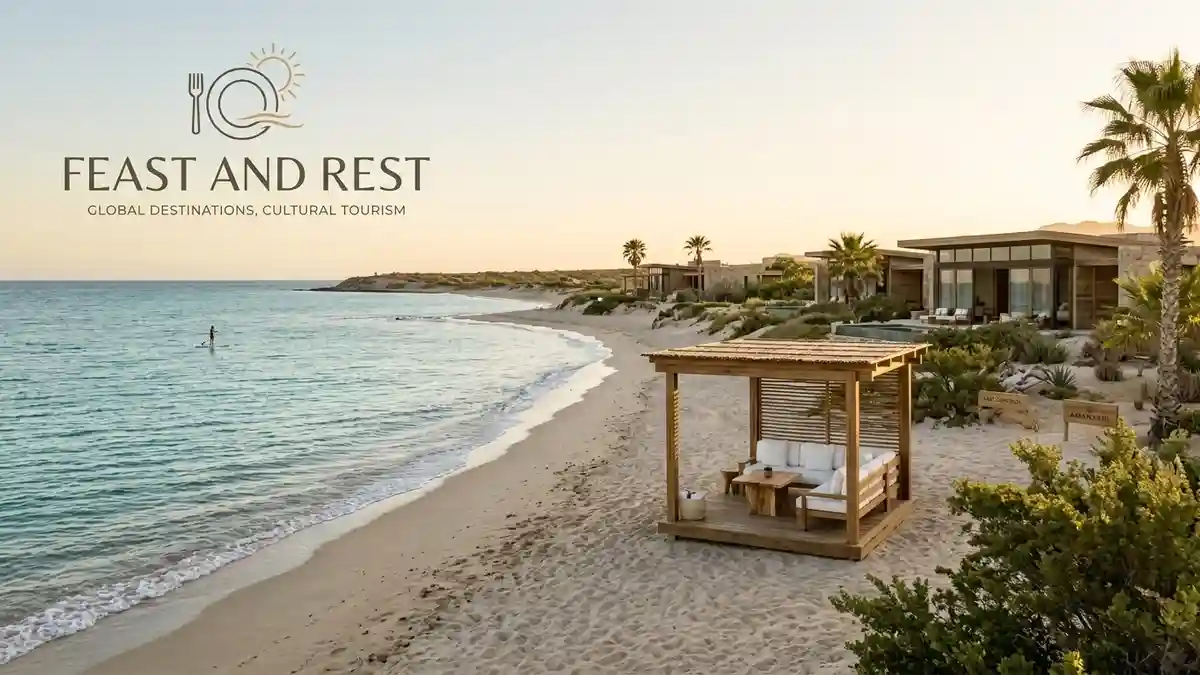
Planning a Mexico luxury wellness retreat on the Sea of Cortez requires actionable East Cape Baja luxury travel tips. This complete Amanvari Baja resort guide details how to book Amanvari Mexico alongside authentic Costa Palmas resort reviews. Navigating Baja eco-resort planning involves balancing an East Cape luxury hotel cost with premium experiences. From evaluating distinct Amanvari dining options to curating a Baja California fine dining guide, high-end vacationers need reliable insights. Whether gathering general Mexico high-end vacation tips or organizing coastal excursions, understanding the region’s evolving infrastructure remains essential.
Destination Definition: Baja’s East Cape
The East Cape (Cabo Este) stretches along the Sea of Cortez in Baja California Sur, located approximately 45 to 60 minutes northeast of Los Cabos International Airport (SJD). Unlike the Pacific coast, this corridor features calm, swimmable ocean waters, coastal freshwater estuaries, and desert ecosystems backed by the Sierra de la Laguna mountains. It represents the region’s primary sanctuary for low-density, environmentally conscious luxury tourism.
The transition of the East Cape from a quiet fishing enclave into an international luxury retreat reflects broader shifts in North American travel demand. According to data from the Baja California Sur Ministry of Tourism (SETUE) and the Los Cabos Tourism Board (FITURCA), discerning travelers increasingly seek high-privacy destinations that prioritize biological conservation.
The region borders the Cabo Pulmo National Marine Park, a UNESCO World Heritage site celebrated as one of North America’s most successful marine reserves. Additionally, architectural firms such as Elastic Architects and Heah & Co. have established low-impact building standards that integrate directly with native flora. Group leaders like Vlad Doronin, Chairman and CEO of Aman Group, have emphasized that privacy, space, and architectural restraint define this new era of Baja hospitality.
What the Data Shows: Regional Tourism Growth and Inventory Trends
Regional visitor metrics highlight a steady evolution in travel behavior across Baja California Sur. While Cabo San Lucas and San José del Cabo maintain high-density resort corridors, the East Cape limits development density to protect coastal estuaries and marine habitats.
The introduction of master-planned private communities like Costa Palmas—encompassing 1,500 acres with organic farms, a deep-water marina, and a Robert Trent Jones II golf course—has redefined luxury expectations. High-net-worth travelers are shifting away from urban hotel towers in favor of boutique, low-key Casita inventory that offers direct beach access.
By the Numbers: East Cape Hospitality & Conservation Metrics
18 Casitas: The total key count at Amanvari, marking the lowest accommodation density of any luxury property in the Americas.
3 Miles: Length of continuous, swimmable beachfront within the Costa Palmas development.
1,500 Acres: Total land area dedicated to the Costa Palmas estate, including 18 acres of organic orchards and agricultural land.
45–60 Minutes: Average drive time from Los Cabos International Airport (SJD) via Mexico Federal Highway 1.
1995: The year Cabo Pulmo was designated a National Marine Park, now preserving over 200 species of marine life.
East Cape Luxury Hotel Cost Structures and Booking Logistics
Navigating reservations and budgeting requires an understanding of regional supply dynamics. Due to strict key-count limits, properties across the East Cape experience near-capacity booking windows up to twelve months in advance, particularly during peak winter months.
nightly rates across top-tier East Cape properties vary significantly depending on seasonal climate conditions and marine activity cycles. Peak rates coincide with humpback whale migration and cooler winter temperatures, whereas summer months offer milder pricing alongside warmer water temperatures ideal for diving.
Seasonal Overview: Rates, Weather, and Marine Patterns
| Season | Months | Climate & Ocean Conditions | Inventory Demand & Cost Trajectory | Primary Travel Focus |
| Peak Season | November – April | Dry, 22°C–28°C, calm swimmable waters | Highest rates; early booking essential (6–12 months) | Whale watching, golf, desert hiking |
| Shoulder Season | May – July | Warm, 28°C–34°C, clear underwater visibility | Moderate rates; standard booking window (3–6 months) | Snorkeling, deep-sea fishing, diving |
| Quiet Season | August – October | Hot, 32°C–36°C, occasional tropical moisture | Softest rates; favorable opening offers | Wellness retreats, private escapes |
Travelers booking high-end stays in Mexico typically secure space through verified luxury travel advisor networks or directly through property concierge desks. Preferred partner channels frequently provide daily breakfast credits, property credits, and priority room upgrades without additional booking fees.
Architectural Philosophy and Mexico Luxury Wellness Retreat Standards
The architectural design of East Cape properties emphasizes environmental harmony and physical immersion. Structures utilize fair-faced white concrete hand-applied by local artisans, natural stone, timber, and expansive glass doors that dissolve boundaries between interior living areas and exterior landscapes.
At Amanvari, standalone Casitas rise on elevated stilts over freshwater estuaries or rest directly along the beach. This structural choice minimizes ground clearance impact and preserves the natural flow of local water channels.
“The resort, Aman-branded residences, and amenities bring the Aman lifestyle to one of Mexico’s most exceptional coastal locations for the first time. Combining a unique setting, thoughtful design, and architecture with generosity of space and intuitive service, this destination establishes a new benchmark for hospitality on Baja’s East Cape.”
— Vlad Doronin, Chairman and CEO of Aman Group
Wellness programming draws directly from indigenous Mesoamerican traditions and regional ecology. Spas incorporate outdoor Hydro Houses featuring traditional banya and hammam circuits alongside contemporary Temazcal sweat-lodge ceremonies. Daily practices emphasize grounding, purification, and native botanical remedies.
Culinary Heritage and the Baja California Fine Dining Guide
Gastronomy along the East Cape has evolved from simple coastal seafood stands into sophisticated, farm-to-table culinary programs. Leading resorts collaborate directly with regional farmers in Miraflores and Santiago to source organic produce, cold-pressed olive oils, and wild-harvested sea salt.
Culinary venues at Amanvari demonstrate the breadth of dining available across the Costa Palmas community:
Luma: Reimagines coastal Mexican recipes utilizing open-fire wood cooking, highlighting line-caught fish and regional spices.
Sensui: An intimate, 10-seat omakase counter serving raw fish preparations that combine Japanese techniques with Sea of Cortez seafood.
Arva: Serves signature Italian dishes rooted in simple, high-quality seasonal ingredients.
The Lounge & Nura: Offer relaxed beachfront mezcal tastings, botanical cocktails, and light coastal plates overlooking the ocean.
Why This Matters: Community Impact and Environmental Stewardship
The rapid rise of high-end travel along Baja’s East Cape brings both economic opportunities and critical conservation responsibilities. Unlike urban development models that strain public municipal resources, low-density resorts are held to strict environmental impact assessments by Mexico’s Secretariat of Environment and Natural Resources (SEMARNAT).
Developers operate private desalination facilities and solar energy arrays to avoid burdening local municipal infrastructure in La Ribera. Furthermore, local employment initiatives prioritize hiring from neighboring communities, providing specialized technical training in hospitality, culinary arts, and environmental management.
“Preserving the delicate ecological balance between the Sierra de la Laguna mountain range and the marine habitats of the Sea of Cortez is fundamental to sustainable tourism in Baja California Sur. Low-impact design ensures that economic growth directly supports environmental conservation.”
— Official Tourism and Conservation Report, Baja California Sur Secretariat of Tourism (SETUE)
Water management represents the most crucial aspect of regional sustainability. By constructing elevated structures that allow natural water runoff from the mountains to nourish desert estuaries, properties protect critical habitat for species such as the Peninsular Spiny Lizard and Xantus Hummingbird.
Essential East Cape Baja Luxury Travel Tips for Visitors
Planning a seamless itinerary to the East Cape requires attention to transportation, seasonal timing, and local environmental regulations.
Key Facts for Travelers
Airport Arrival: Arrive at San José del Cabo International Airport (SJD). Private SUV transfers take approximately 45 minutes; private helicopter transfers take 15 minutes directly to Costa Palmas helipads.
Currency & Logistics: Major credit cards are universally accepted at luxury resorts. Mexican Pesos (MXN) are recommended for small local purchases in nearby towns like La Ribera or Santiago.
Marine Preservation: Cabo Pulmo National Marine Park mandates reef-safe mineral sunscreen for all ocean swimming and snorkeling activities.
Climate Packing: Bring lightweight resortwear made from breathable linen or cotton for daytime activities, alongside light cashmere or jackets for cool desert evenings.
By balancing luxury accommodations with respectful environmental practices, travelers can experience one of North America’s most remarkable natural landscapes while supporting sustainable regional development.
Stay inspired with Feast and Rest!
—
Source and Data Limitations
This analytical destination report compiles official data, press announcements, and technical specifications provided by the Baja California Sur Ministry of Tourism (SETUE), the Los Cabos Tourism Board (FITURCA), Aman Group press releases, and the Costa Palmas master development planning office (August 2026 data updates). Environmental data regarding Cabo Pulmo National Marine Park is sourced from published UNESCO World Heritage records and SEMARNAT environmental impact evaluations. Projected room rates and seasonal occupancy trends reflect verified market surveys across luxury properties in Baja California Sur. Private financial disclosures, unverified commercial rates, and unconfirmed land developments have been intentionally excluded to maintain strict factual integrity.